

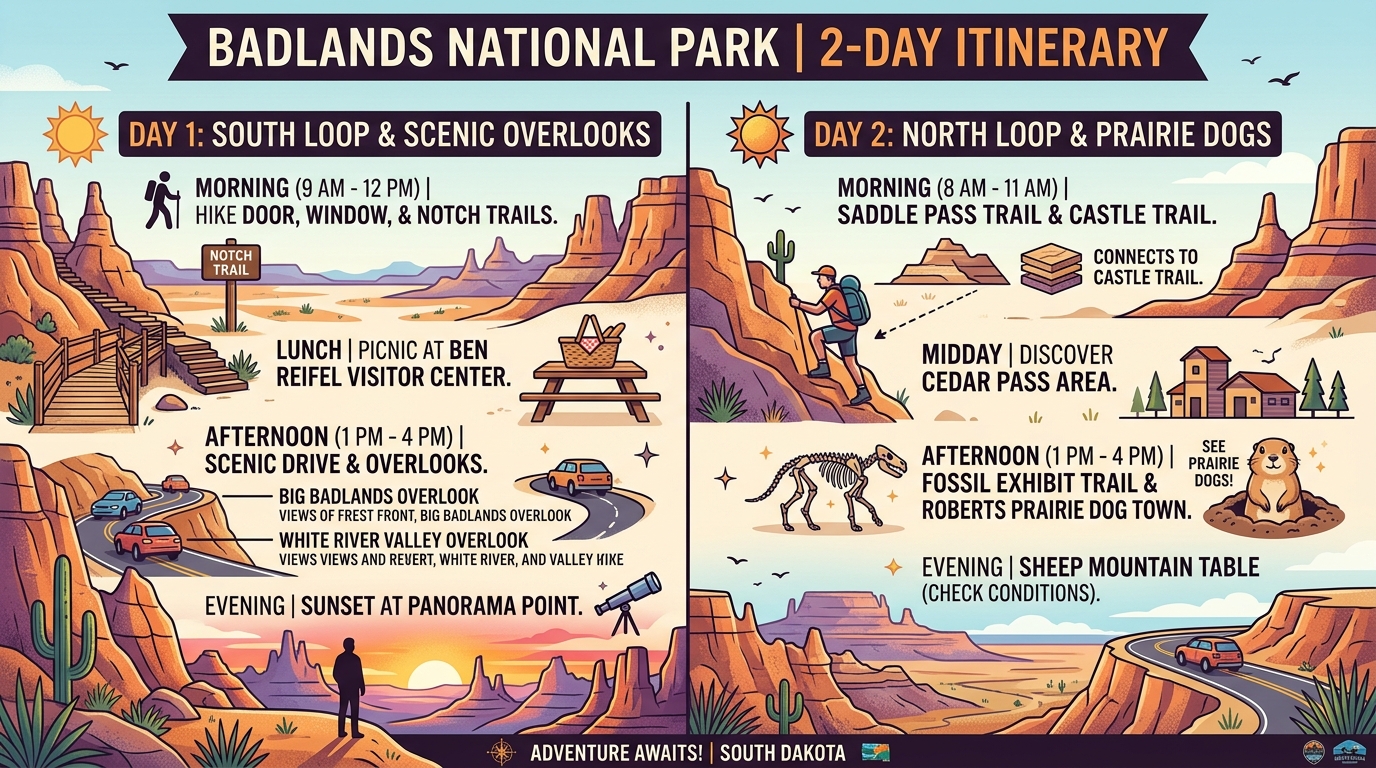
Planning a trip to South Dakota requires careful thought about how the landscape is laid out. A well-designed Badlands National Park Itinerary helps travelers navigate steep rock towers, sharp ridges, and vast mixed-grass prairies without wasting valuable time. Unlike heavily forested mountain parks where visitors hike deep into valleys or climb high peaks, Badlands National Park is heavily visited through scenic drives, short walks, and dramatic overlooks along the loop road. This means a good Badlands National Park itinerary must focus heavily on timing for the best sunlight, dealing with intense summer heat with very little shade, and managing the distinct north and south units of the park. Another major nuance is the wildlife, as bison, prairie dogs, and bighorn sheep are common sights right near the main roads, which changes how travelers pace their stops.
Understanding Badlands National Park Before You Go
Badlands National Park features distinct north and south sections, very hot summer weather, and unique terrain that surprises unprepared visitors.
Most online guides for a Badlands National Park itinerary offer generic advice like driving the loop and seeing the sunrise without explaining the practical challenges of the park. Common weaknesses include failing to warn visitors about the lack of water and shade on trails, ignoring the vast driving distances between the more heavily developed North Unit and the remote, tribal-managed South Unit on the Pine Ridge Indian Reservation, and glossing over how quickly sudden severe weather can change plans. A practical plan must set realistic driving times, warn about trail limits, and organize the days around how the park is actually laid out geographically rather than just listing random viewpoints.
Mastering the Scenic Drives and Overlook Light Angles
This section matters because capturing the sharp ridges and deep canyons depends entirely on positioning your vehicle at the right overlooks during morning and evening hours.
Driving the paved loop road requires patience and attention to changing light conditions. Morning sunlight illuminates the eastern walls with bright golden tones, while the afternoon sun casts dramatic shadows across the deep gulches and spires. Stopping at overlooks such as the Big Badlands Overlook early in the day gives photographers the clearest skies and coolest temperatures. Later in the afternoon, moving toward the yellow mounds and the western overlooks prevents harsh overhead glares and reveals the rich mineral layers hidden within the clay hills. For travelers interested in comparing how open arid landscapes and desert driving logistics shape travel pacing across different protected areas, reviewing a planned Saguaro National Park route offers helpful perspective on sun management and water preparation.
Navigating Footpaths, Ladders, and Exposed Terrain
This section matters because walking the park’s famous footpaths involves physical challenges like steep wooden ladders, narrow ridge edges, and total exposure to summer sun.
Exploring the short boardwalks and rugged dirt paths requires proper footwear and plenty of drinking water. The Notch Trail stands out because it features a steep wooden ladder and a cliffside path that demands steady balance. Meanwhile, the Castle Trail stretches across open prairie land where summer temperatures rise quickly and natural shelter does not exist. Walking these paths safely means carrying at least one gallon of water per person and turning back immediately if dark storm clouds begin gathering over the plains.
Venturing into the Remote Tribal Lands of the South Unit
This section matters because the remote South Unit offers a starkly different, less-visited experience that requires an understanding of tribal jurisdiction and unpaved road conditions.
Leaving the crowded North Unit behind opens up the quiet expanse of the South Unit within the Pine Ridge Indian Reservation. This tribal-managed land contains very few paved roads, minimal visitor services, and vast stretches of untouched wilderness. Cellular service drops completely in many pockets of this region, so drivers must carry offline maps, extra fuel, and dependable emergency gear. Respecting local tribal rules and staying on designated routes ensures that visitors preserve the cultural and historical integrity of this unique homeland.

Park Rules, Entrance Fees, and Essential Safety Guidance
According to the National Park Service, visitors must pay entrance fees and follow strict safety guidelines regarding heat, wildlife, and fragile rock formations.
Entering the park requires a valid entrance pass, which can be acquired at park entrance stations or online ahead of time. Summer temperatures routinely exceed ninety degrees Fahrenheit, making heat exhaustion a constant risk for unprepared explorers. Visitors must maintain a safe distance of at least one hundred yards from large animals like bison and bighorn sheep to avoid dangerous encounters. Furthermore, climbing on the steep clay formations can be hazardous due to loose rock and slippery surfaces after rainstorms.
Frequently Asked Questions
How many days do you need for Badlands National Park?
Two days are generally enough to drive the main loop road, complete the top short hikes, and explore parts of the remote South Unit.
When is the best time of year to visit?
Late spring and early fall offer the most comfortable weather for walking and driving without extreme summer heat.
Do I need a special permit to hike off-trail?
No special permit is required for day hiking, but visitors must respect closed areas and tribal lands in the South Unit.
Are pets allowed on the trails?
Pets are restricted to roadways, parking lots, and developed campground areas to protect local wildlife and fragile terrain.
Is there drinking water available along the loop road?
Water is available at the Ben Reifel Visitor Center, but you should carry your own supply while exploring remote overlooks.
Can I see bison close to the road?
Bison frequently wander near the loop road, but visitors must stay at least one hundred yards away from them at all times.
Disclaimer: Park fees, trail conditions, and operational hours can change over time. Always verify current details directly with official sources like the National Park Service before your trip.
I’m Muhammad Ubaid, founder of YBR Magazine. I research and write detailed guides on America’s National Parks — covering entry fees, permits, best times to visit, and planning tips — using official NPS sources and up-to-date information.