

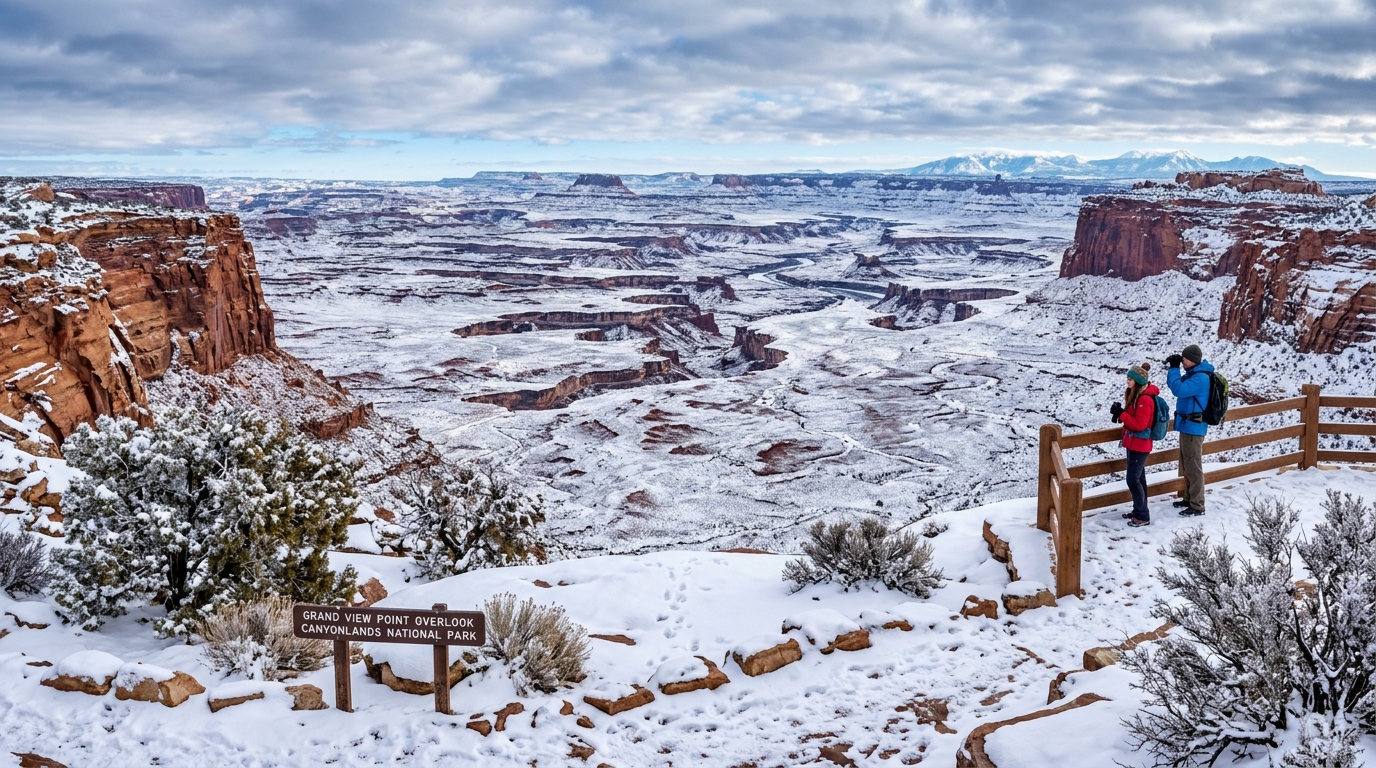
Visiting Canyonlands National Park in winter brings quiet trails and snow-dusted red rock vistas, but it also demands careful preparation for freezing desert conditions. While summer brings heavy crowds and intense heat, the winter season offers a starkly peaceful landscape for travelers who are prepared for cold weather. Understanding what to expect helps visitors enjoy the dramatic views without running into unexpected trouble from winter weather.
Solitude and Snow-Covered Red Rock Vistas
Visitors choose Canyonlands National Park in winter primarily to escape the heavy crowds and enjoy peaceful solitude among snow-covered red rock canyons.
The crisp, clear air often provides some of the best visibility of the entire year for photography and sightseeing. Without the scorching summer sun, exploring the park becomes much more comfortable as long as visitors wear proper winter layers. Photographers find that the contrast of white snow against orange sandstone creates some of the most striking visual compositions of the year. Wildlife viewing is also quite rewarding during these quiet months, as animals move more freely without heavy tourist traffic disrupting their natural habits. Visitors can take their time at famous overlooks like Grand View Point without fighting for parking spaces or listening to loud tour groups. This season rewards patient travelers who appreciate silence and wide-open spaces under vast desert skies.
High Desert Freezing Temperatures and Rapid Weather Shifts
Winter weather in Canyonlands National Park features daytime temperatures that frequently hover near freezing, with nights plunging well below zero.
Snowstorms can happen at any time during the winter months, covering slickrock hiking trails and making paths slippery and hard to follow. Visitors must check official weather forecasts through the National Park Service before setting out, as storms can move in quickly across the high desert plateau. Because the park sits at a high elevation, winds can whip across the canyons and make the air feel much colder than the thermometer suggests. Packing heavy coats, thermal underwear, waterproof gloves, and sturdy boots is essential for anyone planning to spend time outside vehicles. Hypothermia is a real risk for unprepared hikers who get caught in sudden temperature drops after sunset.
Backcountry Access Across Island in the Sky and The Needles
Winter conditions impact access and driving safety differently across the major districts of Canyonlands National Park.
The Island in the Sky district sits at a higher elevation, meaning it often sees more snow and colder wind chills than lower areas. Meanwhile, The Needles district requires long, remote drives on roads that can become impassable after winter precipitation. Travelers can plan their daily routes by reviewing details found in a detailed Canyonlands National Park itinerary guide before heading out into the remote backcountry. The Maze district remains nearly inaccessible for most casual visitors during winter due to extremely rough unpaved roads that hold snow and ice for weeks at a time. Each district requires a separate driving strategy because cell service is non-existent in many remote stretches, leaving motorists completely on their own if they get stuck in mud or snow drifts.
Muddy Dirt Roads and Freezing Facility Closures
Exploring Canyonlands National Park in winter comes with major practical downsides, including unpaved dirt roads that turn into thick, impassable mud when snow melts.
Many park restrooms and water stations close for the winter season to prevent pipes from freezing, meaning visitors must pack all their own drinking water. Cell service is also extremely limited throughout the park, so drivers should never rely on mobile phones for emergency navigation or assistance. Rangers strongly advise carrying emergency blankets, extra food, a physical paper map, and a small shovel in case your vehicle slides off the road. Checking the official National Park Service website for daily road condition reports is mandatory before attempting to drive any unpaved park routes.

Early Season Tranquility Versus January Deep Freezes
Choosing the best time within the winter season depends on whether you prefer early winter tranquility or the deep cold of January.
December often brings quiet trails and festive holiday road trips, while January delivers the coldest temperatures and the highest chance of fresh snowfall. According to the National Park Service, visitors should always verify current road statuses before driving into remote sections of the park. February brings slightly longer daylight hours and occasional warming trends, though freezing overnight temperatures remain standard across the entire region. Visitors who want the highest chance of photographing snow-covered canyons usually target mid-January right after a passing storm clears out.
Frequently Asked Questions About Canyonlands National Park in Winter
Is Canyonlands National Park open in winter?
Yes, Canyonlands National Park is open year-round, 24 hours a day, though certain visitor centers and facilities operate on reduced winter schedules.
How cold does it get in Canyonlands in winter?
Daytime temperatures often hover around 30 to 45 degrees Fahrenheit, while overnight lows regularly drop well below freezing.
Are the park roads plowed after a snowstorm?
Main paved roads in the Island in the Sky district are plowed after snowstorms, but unpaved backcountry roads are rarely plowed and often close due to mud or ice.
Is water available in the park during winter?
Most permanent water sources and park hydrants are turned off for the winter season, so visitors must bring all the drinking water they need.
Can you hike on snow-covered slickrock?
Hiking is possible, but snow-covered slickrock can be extremely slippery and hide trail cairns, making navigation much more difficult.
Do I need a four-wheel-drive vehicle?
Four-wheel-drive or all-wheel-drive is highly recommended if you plan on exploring any unpaved or backcountry roads during the winter months.
Disclaimer: Weather conditions and facility hours in national parks can change rapidly. Always check the official National Park Service website for the most current updates before starting your trip.

I’m Muhammad Ubaid, founder of YBR Magazine. I research and write detailed guides on America’s National Parks — covering entry fees, permits, best times to visit, and planning tips — using official NPS sources and up-to-date information.