


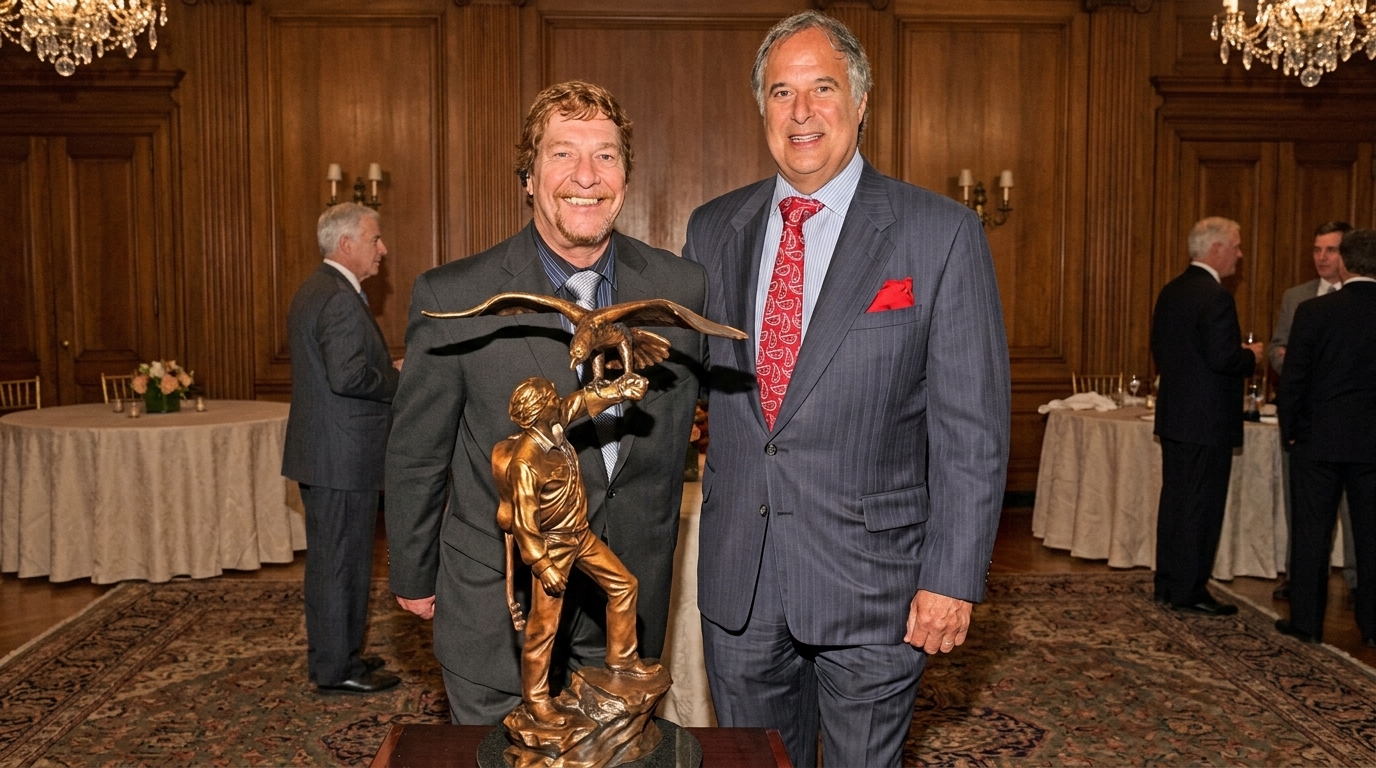
Millions of people know the voice behind “Take Me Home, Country Roads.” Far fewer know the name Ron Deutschendorf. He is the brother of singer John Denver, and he spent many years trying to protect the environmental mission his famous brother started. His name shows up in news reports, documentaries, and debates about Denver’s legacy. This article explains who he is, what he did, and why people still search for him today.
Who Is Ron Deutschendorf?
Ron Deutschendorf is the brother of John Denver, the American folk and country singer who sold more than 33 million records. Unlike his brother, Ron never built a career on stage. He is best known for his work with the Windstar Foundation, a nonprofit that Denver helped start. Over the years, Ron served as its president and later as the chairman of its board of trustees.
He also spoke for the family when the public wanted to hear from someone close to the singer. A Reuters photo from October 17, 1997, shows him speaking about his brother during a public event. That was the same day funeral services for Denver were held in Aurora, Colorado.
Ron keeps his personal life private. Because of that, many websites fill the gaps with guesses. The details below are the ones that can be confirmed through news reports and public records.
The Family Behind the Name
The family name is Deutschendorf. The singer was born Henry John Deutschendorf Jr. on December 31, 1943, in Roswell, New Mexico. His father, Henry John “Dutch” Deutschendorf Sr., was a pilot in the US Army Air Forces. He later set several air speed records in a Convair B-58 Hustler. His mother, Erma Louise, and his father both had roots in Oklahoma.
Life in a military family meant constant moving. The singer later wrote in his autobiography that this made it hard for him to make friends. Growing up this way often pulls siblings close, and the Deutschendorf brothers stayed connected for the rest of John’s life.
The stage name came later. A music-group founder told the young singer that “Deutschendorf” would not fit well on a poster. So Henry John Deutschendorf Jr. became John Denver, while Ron kept the family name.
Ron Deutschendorf and the Windstar Foundation
John Denver started the Windstar Foundation in 1976 together with Thomas Crum. The group focused on environmental education and humanitarian work. In the late 1970s, Denver bought a 957-acre ranch in Old Snowmass, Colorado, and made it the group’s home.
In its early years, Windstar attracted big names. Before Denver’s death, its events drew guests such as Al Gore, Ted Turner, and Olivia Newton-John. Later, a symposium at the Snowmass Conference Center featured Dr. Jane Goodall.
Ron became one of the people responsible for keeping this work going. He served as president of the foundation. He also sat on the board of the Windstar Land Conservancy, a separate nonprofit created in 1996 by Windstar and the Rocky Mountain Institute. Its job was to own and manage the land.
Life After 1997
John Denver died on October 12, 1997, when his small experimental aircraft crashed into Monterey Bay in California. For Windstar, the loss was more than emotional. It was a financial shock.
In a 2007 interview with the Vail Daily, Ron explained why fundraising had become so hard. When John was alive, people gave more freely because his name carried weight. Ron said that introducing himself as Ron Deutschendorf simply did not have the same effect. He also said the foundation went quiet for about three years after the crash.
The numbers from that period show the strain. For the fiscal year ending November 30, 2005, Windstar took in $80,634 but spent $140,996. That left a deficit of $60,362. Ron said memberships were the group’s biggest source of income.
There were also moments of remembrance. On September 23, 2007, more than 100 friends and family gathered near Pacific Grove, California, to unveil a bronze plaque close to the crash site. Ron was among those who attended. The plaque shows a relief of the singer’s face.
The 2012 Vote
The hardest chapter came in October 2012. The Windstar board voted to dissolve the foundation. Ron was chairman of the board of trustees, and he was on the losing side of that vote. He described the move as a complete surprise to him.
Not everyone saw it his way. Some Windstar supporters said they had struggled for years to keep the foundation alive. Karmen Dopslaff, a former board president, explained that they later learned from Crum that Denver himself had felt the foundation should be disbanded.
Ron’s view was different. He said his brother cared deeply about Windstar and would have gone to great lengths to save it. In his words, John would even have sold his prized Learjet to raise money.
The Land Sale

Right after the foundation closed, attention moved to the land. The conservancy listed the property for $13.5 million in September 2012. In spring 2013, it was sold for $8.5 million to a company called Five Valley Farm LLC.
The sale hurt many people because Denver had bought the land to protect it. Still, a legal safeguard remained in place. Of the 957 acres, 927 are covered by a conservation easement that bans development.
Opinions about the sale split into two groups. Some critics believed it went against the spirit of Denver’s vision. Others said it may have been legal but was handled badly. Ron agreed with the second view. He said the process was poor and argued that the new owners should have set aside permanent parking so the public could use the open space. The parking area sits on the 30 acres that are not covered by the easement, so there was no guarantee that access would last.
Where the Money Went
The sale money did not simply disappear. The Rocky Mountain Institute and the Windstar Land Conservancy split the proceeds. The institute used its half to help build a new green office in Basalt, Colorado.
The conservancy put its whole share, $4,078,042 after costs, into the John Denver Aspen Glow Fund. The Aspen Community Foundation runs the fund. In its first six months, it gave nearly $2 million to nine causes. The grants included:
- $1 million to the Rocky Mountain Institute for a clean-energy project in China
- $75,000 to Ecoflight for youth environmental education
- $100,000 to United Way of Central Oklahoma for tornado relief, given in memory of Denver’s parents
- A grant of under $70,000 to carve lyrics into boulders at the John Denver Sanctuary in Aspen
Ron Deutschendorf on Screen
Ron has also appeared in media about his brother. IMDb lists him for Behind the Music and for John Denver: Country Boy, a documentary released in 2013. In these projects, he appears as a family voice, someone who can talk about the singer as a brother rather than as a star.
Explore More: James Westley Welch: The Quiet Man Behind Raquel Welch’s Famous Name
Why His Story Matters
The story of Ron Deutschendorf is really a story about what happens after a famous person is gone. Fame can build a cause quickly, but keeping it alive takes years of quiet, unglamorous work. Ron spent a large part of his adult life doing that work, often with little money and little public attention.
His story also shows how hard it is to protect a legacy. Even people who loved John Denver disagreed on what he would have wanted. Some believed closing Windstar was right. Others, including his own brother, felt something important was lost.
For readers who searched his name, the simple answer is this: Ron Deutschendorf is not a celebrity in his own right. He is a family member and nonprofit leader who tried to keep his brother’s environmental work standing, and who spoke up when he thought that work was being handled the wrong way.

I’m Muhammad Ubaid, founder of YBR Magazine. I research and write detailed guides on America’s National Parks — covering entry fees, permits, best times to visit, and planning tips — using official NPS sources and up-to-date information.

