

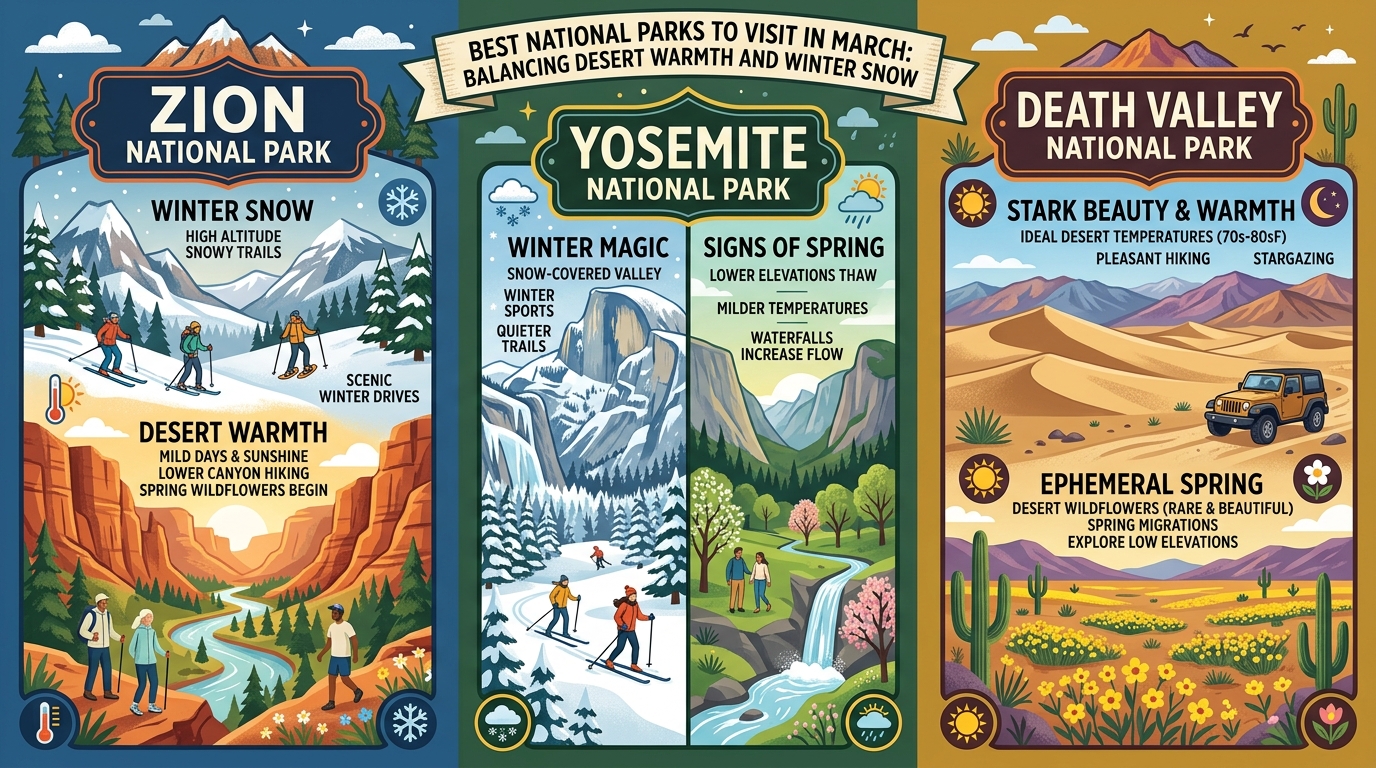
Why March is a Unique Month for National Parks
March creates a sharp divide across the national park system by pitting lingering mountain winter against early spring desert warmth.
March acts as a major weather transition period across the United States, splitting public lands into two distinct worlds. Northern peaks and high-elevation destinations remain locked beneath heavy blankets of snow while southern deserts begin to warm up. Travelers searching for the best national parks to visit in March must understand this geographic split to avoid closed mountain passes and muddy trails. While high-altitude regions still require snow chains and winter gear, lower-elevation parks experience mild daytime breezes that make outdoor exploration comfortable before summer temperatures arrive.
Best Warm National Parks to Visit in March
The best warm national parks to visit in March include southern desert refuges where daytime temperatures remain pleasant and sunny for long hikes.
Parks situated in the American Southwest offer an ideal climate during early spring before scorching heat sets in. Joshua Tree National Park and Death Valley National Park showcase blooming wildflowers and comfortable walking weather during this shoulder season. Visitors heading to California desert destinations can plan their itineraries effectively by reviewing guides on how many days to spend in Death Valley National Park to maximize their time under clear skies. Daytime highs in these desert environments generally hover in the comfortable seventies, though travelers should always pack extra layers because temperatures drop sharply right after sunset.
Utah National Parks in March
Utah national parks in March offer stunning red rock vistas and manageable crowds, provided visitors prepare for chilly morning temperatures.
Southern Utah features red rock landscapes that become exceptionally photogenic during early spring when mild days contrast with crisp air. Visitors exploring the red rock country can benefit greatly from structured itineraries that help prioritize scenic lookouts and hiking trails. For a broader look at regional planning and scenic routes, many travelers also combine these trips with ideas inspired by guides on Utah national parks ranked to decide which destinations deserve priority. Parks like Zion and Bryce Canyon present a fascinating visual contrast during this month, where red sandstone walls occasionally frame patches of lingering white snow from passing winter storms.
| Destination Region | Typical March Weather | Visitor Crowd Levels | Primary Gear Requirement |
|---|---|---|---|
| Southern Deserts (Death Valley, Joshua Tree) | Mild, sunny days and cold nights | Moderate to High | Sun protection and plenty of drinking water |
| Utah Canyons (Zion, Bryce Canyon) | Cool mornings, pleasant afternoon highs | Moderate | Sturdy hiking boots and insulating layers |
| High-Elevation Parks (Yellowstone, Rocky Mountain) | Heavy snowpack and road closures | Low | Tire chains, winter coats, and emergency gear |
National Parks to Avoid or Prepare for Winter in March
High-elevation national parks require careful winter preparation in March because heavy snowstorms continue to block major roads.
Mountainous parks and northern reserves maintain winter road closures throughout March, meaning key scenic drives may be entirely inaccessible. Visitor facilities in these high-altitude locations often operate on restricted schedules or remain closed until late spring arrives. Travelers should always check official park alerts before setting out to high-elevation destinations during this transitional month. Attempting to drive through mountain passes without proper snow tires or emergency gear can lead to long delays or dangerous situations as unpredictable spring blizzards sweep across the peaks.

Tips for Planning a March National Park Trip
Planning a successful March national park trip requires flexibility and awareness of shoulder-season weather shifts.
Weather conditions can change rapidly from sunny mornings to freezing afternoon winds, especially in desert and canyon environments. Packing layers of clothing is essential for staying comfortable during long hikes. Visitors should also verify park hours and road conditions directly from official sources before starting their journey. Securing lodging and campsites well in advance is equally important, as popular desert and canyon parks experience surges in visitors during regional school spring breaks.
Disclaimer: National park conditions, weather patterns, and facility operating hours can change unexpectedly. Always verify current details directly from official park websites before finalizing your travel plans.
Frequently Asked Questions
What are the best national parks to visit in March?
Desert and southern parks like Joshua Tree, Death Valley, and the Utah red rock parks are considered the best national parks to visit in March because of their mild daytime weather.
Are Utah national parks warm in March?
Utah national parks feature comfortable daytime temperatures that make hiking enjoyable, though nighttime temperatures remain quite cold.
Can I visit mountain national parks in March?
Mountain national parks are generally difficult to explore in March due to heavy snowfall, packed snowpacks, and seasonal road closures.
Is March a crowded time for national parks?
March brings moderate crowds to southern and desert parks, particularly during regional school spring break weeks.
What should I pack for a March national park trip?
Travelers should pack clothing layers for fluctuating temperatures, sturdy hiking shoes, ample drinking water, and sun protection.
Are visitor centers open in March?
Most visitor centers in warm desert regions are fully open in March, but high-elevation parks may maintain limited winter hours.
Where should I check for official park updates?
Always verify current weather forecasts, trail conditions, and facility closures directly on the official National Park Service website.

I’m Muhammad Ubaid, founder of YBR Magazine. I research and write detailed guides on America’s National Parks — covering entry fees, permits, best times to visit, and planning tips — using official NPS sources and up-to-date information.