

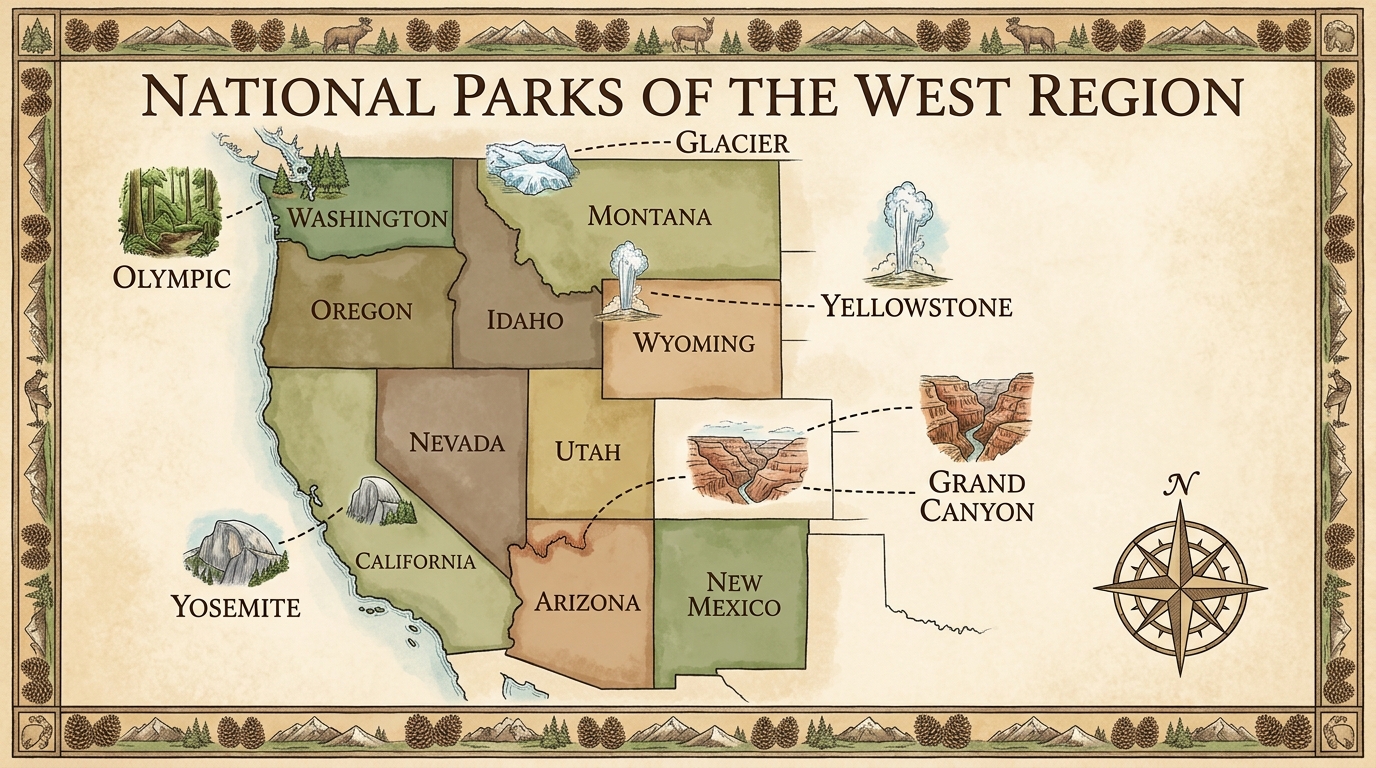
Planning a journey across national parks in the west region requires a deep understanding of vast geography, changing elevations, and unique climate zones. Travelers visiting these western areas encounter everything from scorching desert basins to snow-capped mountain peaks within a single state. Because national parks in the west region span multiple states like California, Utah, Arizona, Washington, and Wyoming, travelers must prepare for long driving distances between remote locations. Exploring these massive public lands safely involves checking local weather patterns, mapping out gas stations and service stops, and packing adequate supplies for unpredictable wilderness conditions.
Understanding National Parks in the Western United States
National parks in the western United States offer a diverse mix of deep canyons, towering mountains, and vast deserts that require careful trip planning due to their massive scale.
Unlike eastern parks that focus primarily on dense forests and historic sites, western parks feature iconic geologic formations and deep river valleys carved over millions of years. Visitors exploring national parks in the west region often find that distances between major viewpoints stretch across hundreds of miles of remote highway. Checking weather forecasts and road conditions before departure helps prevent unexpected delays caused by sudden mountain snowstorms or extreme summer heatwaves. Park rangers recommend downloading offline maps and carrying physical guidebooks because cellular service is frequently unavailable in remote backcountry canyons and high alpine passes. Furthermore, managing hydration and sun exposure becomes an everyday necessity when navigating arid environments that lack natural shade.
Iconic Destinations in the Southwest
The southwestern region features famous red rock formations, deep river canyons, and extreme desert climates that draw millions of visitors every year.
Parks located in Utah and Arizona showcase stunning sandstone arches, deep slot canyons, and massive river gorges carved by natural forces. For travelers interested in specific desert landscapes, exploring options like Utah national parks ranked provides helpful insights into regional highlights. Spring and autumn offer the most comfortable daytime temperatures for hiking through these desert environments, whereas summer afternoon temperatures often reach dangerous levels. Hikers visiting southern desert environments must carry extra water, electrolyte packets, and sun protection because shade is scarce on exposed slickrock trails. Visitors should also respect fragile biological soil crusts by staying strictly on marked paths to protect delicate desert ecosystems.
Mountain and Pacific Northwest Parks
National parks located in Washington, Oregon, and the northern Rocky Mountains showcase active volcanoes, deep temperate rainforests, and massive glaciers.
The northern portions of the western region present a completely different landscape characterized by dense evergreen forests, rushing alpine rivers, and permanent ice fields. Visitors heading toward coastal mountain ranges experience heavy annual rainfall that feeds lush temperate rainforests alongside rugged shorelines. Travelers seeking broader coastal mountain itineraries can also review various pacific coast and mountain park itineraries to map out multi-stop journeys. Summer and early autumn remain the most reliable seasons for accessing high-elevation mountain passes before winter snow closes seasonal roads. Wildlife viewing requires extra caution here, especially in bear country where proper food storage lockers are mandatory at most backcountry campsites.

Planning Your Visit to Western National Parks
Visiting western national parks requires understanding seasonal weather patterns, advance permit systems, and long driving distances between remote locations.
Popular destinations frequently implement timed-entry reservation systems during peak visitor months to manage vehicle traffic and protect delicate natural habitats. Securing lodging, camping permits, or park entry passes months in advance ensures a smooth travel experience without unexpected disruptions. Packing essential supplies such as extra drinking water, emergency vehicle equipment, and layered clothing keeps travelers safe when exploring remote wilderness areas far from urban services. Visitors should also research park shuttle options because major hubs like Zion and Yosemite rely heavily on public transit systems to reduce roadway congestion during the busy summer season. Planning adequate rest days between long driving stretches prevents driver fatigue and leaves plenty of time to enjoy scenic overlooks.
Frequently Asked Questions About Western National Parks
Travelers often have specific questions about timing, crowds, and locations when planning a trip to western national parks.
What are some must-visit national parks in the western United States?
Yellowstone, Yosemite, Zion, and Grand Canyon are among the most famous and visited national parks in the region.
How many national parks are in the western United States?
The western region contains dozens of national parks distributed across states like California, Utah, Arizona, Colorado, Washington, and Wyoming.
What are the least visited national parks in the west?
Parks like Great Basin in Nevada and North Cascades in Washington receive far fewer visitors than major hubs like Yosemite.
When is the best time of year to visit western national parks?
Summer is popular for high-elevation mountain parks, while spring and autumn are ideal for desert parks in the southwest.
Do I need reservations to enter western national parks?
Many popular western parks require advance timed-entry reservations or special permits during peak summer months.
Can I visit multiple western national parks in one road trip?
Yes, states like Utah and Arizona have several major parks located close enough together for a multi-stop road trip.
Disclaimer: Park rules, reservation requirements, and weather conditions can change frequently. Always verify current details and alerts from official government sources before planning your travel.

I’m Muhammad Ubaid, founder of YBR Magazine. I research and write detailed guides on America’s National Parks — covering entry fees, permits, best times to visit, and planning tips — using official NPS sources and up-to-date information.