
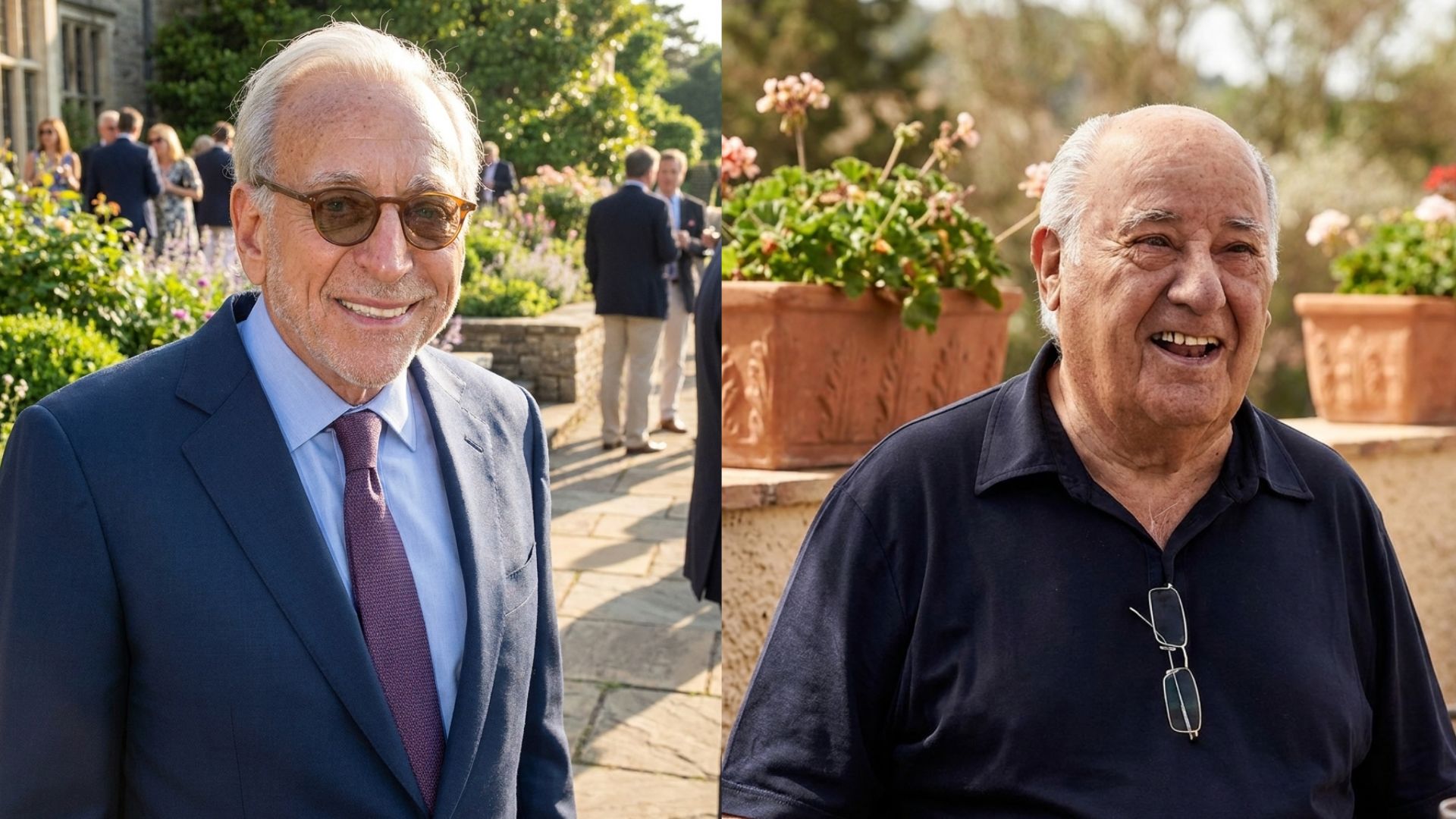
People who search for “Nelson Peltz and Amancio Ortega” are usually trying to answer one of three questions. Some want to know whether the two men are business partners, some want to compare how rich they are, and others simply want to understand how two of the best-known billionaires in business ended up with such different careers. The honest answer to the first question is that there is no publicly confirmed partnership, joint company, or shared investment between them. They belong to different generations, different continents, and very different styles of business. That contrast is exactly what makes a side-by-side look at them so interesting, and this guide walks through it in plain terms.
Who Is Nelson Peltz?

Nelson Peltz is an American investor born in 1942 in Brooklyn, New York. He began his career in the early 1960s in the family food-supply business, and over the following decades he moved from running companies directly to buying and reshaping them. In the 1980s his firm Triangle Industries acquired the packaging company American National Can, a deal that made his name on Wall Street and earned him a reputation as a tough, hands-on dealmaker.
His later career is better known today. In 2005 he co-founded Trian Fund Management together with Peter May and Ed Garden, and the firm became one of the most recognizable activist investors in the world. Instead of buying a whole company, Trian takes a significant minority stake in a business it believes is underperforming, then pushes management and the board to change course. Over the years, that approach has been applied to household names in food, consumer goods, restaurants, and industry, including Wendy’s, where Trian has been a very large shareholder for a long time, and Procter & Gamble, where Peltz fought a high-profile proxy battle in 2017 and later took a seat on the board.
Peltz also made headlines with campaigns at Disney in 2023 and 2024. In both attempts he asked shareholders to vote for new directors, and in both cases Disney’s board was supported by a majority of voters. Even so, the campaigns showed how an activist investor can force a very large company to explain its strategy in public.
Who Is Amancio Ortega?

Amancio Ortega Gaona was born in 1936 in Busdongo de Arbas, a small village in northern Spain, to a railway worker and a homemaker. He left school as a teenager and started working in a clothing shop in the city of A Coruña at around the age of 13. He learned the clothing trade from the shop floor up, and that practical knowledge became the foundation of everything that followed.
In 1975 he opened the first Zara store in A Coruña. The idea behind Zara was simple but powerful: make new fashion designs quickly, keep production close to the stores that sell the clothes, and respond to what customers actually buy instead of guessing months in advance. The company, later organized under the name Inditex, expanded into Portugal, France, and the United States at the end of the 1980s and early 1990s, and it added brands such as Pull&Bear, Massimo Dutti, Bershka, and Stradivarius. Inditex went public in 2001 and is now widely described as the world’s largest clothing retailer.
Ortega stepped down as chairman in 2011 and handed the role to Pablo Isla. In 2022 his daughter Marta Ortega took over as chairwoman, which made the next generation of the family visibly part of the company’s leadership. Ortega has always avoided the media, and for many years very few photographs of him were published, which only added to his reputation as one of the most private billionaires in the world.
How Their Wealth Compares
Both men are billionaires, but the scale is not close. Amancio Ortega owns roughly 59 percent of Inditex, and Bloomberg’s billionaire ranking currently places his fortune above 100 billion dollars, which puts him among the twenty richest people on the planet. Nelson Peltz’s personal fortune is far smaller. Media estimates, including figures attributed to Forbes, put it at a little under two billion dollars. The gap is a good reminder that being a famous investor and being the founder and majority owner of a global company are two very different financial positions.
The source of the money explains most of the difference. Ortega’s wealth comes from owning a huge share of a company that he built from a single shop and that still pays enormous dividends every year. Peltz’s wealth comes from fees, returns, and stakes earned through investing and through his earlier work running and selling businesses. One man holds a concentrated stake in a company he created; the other spreads his bets across many companies that he tries to improve.
Two Different Business Philosophies
The clearest difference between the two is how they approach a company. Ortega is a builder. He created a retail model from scratch, kept control of the business through the decades, and let the company grow store by store and country by country. His influence is felt through the business model itself, in the speed of design, the tight control of supply, and the steady expansion of the brands.
Peltz is a challenger. He usually arrives after a company already exists and has grown large, and he argues that the business could earn more with better margins, sharper focus, or a stronger board. His influence is felt through argument, negotiation, and sometimes a public vote. This style can create real change, but it can also create conflict, which is why his campaigns often become major business news stories.
Neither approach is automatically better. The builder model rewards patience and a strong original idea, while the activist model rewards analysis and persistence. They simply sit at opposite ends of what business success can look like.
What Each Man Owns and Invests In
Ortega’s personal investments are mostly managed through Pontegadea, the family investment company that receives his Inditex dividends and reinvests them. Its strategy is focused on high-quality property in major cities. Recent reports describe purchases that include the Royal Bank Plaza tower in Toronto for about 1.2 billion Canadian dollars, a luxury apartment tower in New York known as Dutch 19 for roughly 500 million dollars, and a hotel in Paris for around 97 million euros. Pontegadea has also moved into logistics buildings used by large global companies, and into infrastructure such as energy networks, renewable energy projects, and undersea telecommunications cables. His properties are even rented to companies that compete with Inditex, which shows how seriously the portfolio is run as an investment rather than as a fashion sideline.
Peltz’s holdings are different in nature. Through Trian, he holds stakes in publicly traded companies, and the list changes over time as positions are bought and sold. Reported holdings have included General Electric, Janus Henderson, Wendy’s, Solventum, and Ferguson, among others. Because Trian’s portfolio is concentrated in a small number of companies, the success of the firm depends heavily on how well each of those businesses performs, and on whether Trian’s arguments for change are accepted.
Family and Succession
Family is another point where their stories connect and diverge. Ortega’s succession plan keeps control inside the family. His Inditex stake is held through family holding companies, and his daughter Marta now leads the company’s board. This structure was designed to protect long-term control, so the company is not forced to change direction if the family inherits shares.
Peltz’s family is visible in business and in the public eye as well. His sons have worked in investing and business, and his daughter Nicola Peltz is an actress and filmmaker who married Brooklyn Beckham in 2022. The family therefore appears in both finance news and entertainment news, which is a very different kind of public profile from the quiet one the Ortega family has maintained.
Philanthropy and Public Image
Ortega is also known for large charitable gifts, mainly through his foundation, which is based in Arteixo in northern Spain and focuses on education and social welfare. One of its best-known projects involved donating advanced cancer-detection and treatment equipment to public hospitals in Spain. The gifts have been widely discussed, with supporters praising the scale of the help and critics raising debates about private donations replacing public health spending.
Peltz has been involved in charitable and cultural giving as well, but his public image has been shaped far more by corporate battles than by philanthropy. For many readers, Ortega is the quiet founder who rarely speaks, while Peltz is the outspoken investor who is always ready to argue his case.
Quick Comparison
| Topic | Nelson Peltz | Amancio Ortega |
|---|---|---|
| Born | 1942, Brooklyn, USA | 1936, Busdongo de Arbas, Spain |
| Best known for | Activist investing through Trian | Founding Zara and Inditex |
| Main source of wealth | Investing and earlier dealmaking | About 59% ownership of Inditex |
| Style | Challenger who pushes for change | Builder who created a retail model |
| Investment vehicle | Trian Fund Management | Pontegadea |
| Public profile | Outspoken and often in the news | Very private and rarely interviewed |
| Scale of fortune | Low single-digit billions | Above 100 billion dollars |
What Readers Can Learn From Both
There are practical lessons in both careers. Ortega’s story shows that a simple, well-executed idea can grow into a global business if the owner stays close to customers and keeps control of how the product reaches the store. Peltz’s story shows that there is also value in looking at an established company with fresh eyes, asking hard questions, and being willing to defend an opinion in public.
For students of business, investors, or anyone curious about wealth, the pair also shows that there is no single path to a fortune. One man started in a shop at 13 and built an empire around a clothing brand, while the other studied the weak points of existing companies and tried to fix them. Their paths never needed to cross to be worth comparing.
Frequently Asked Questions
Are Nelson Peltz and Amancio Ortega business partners?
No public record shows a partnership, a joint company, or a shared investment between them. They are best understood as two separate billionaires who are often mentioned in the same lists of famous business figures.
Who is richer, Nelson Peltz or Amancio Ortega?
Amancio Ortega is far richer. His fortune is estimated at well over 100 billion dollars, while Peltz’s is estimated at a small number of billions.
What does Nelson Peltz do?
He is the founding partner of Trian Fund Management, an investment firm known for taking large stakes in companies and pushing for improvements in strategy, costs, and leadership.
What does Amancio Ortega do?
He is the founder of Inditex, the company behind Zara, and remains its largest shareholder. He also oversees a large family investment portfolio through Pontegadea.
Who runs Inditex today?
Marta Ortega, Amancio Ortega’s daughter, serves as chairwoman of Inditex.
Is Nelson Peltz connected to Zara or Inditex?
There is no publicly known ownership link or business arrangement between Peltz or Trian and Zara or Inditex.
Final Thoughts
The search term “Nelson Peltz and Amancio Ortega” brings together two names that are rarely discussed together, and the lack of a direct connection is itself useful to know. One man is a fashion founder whose wealth grew with a single company, and the other is an activist investor who built his reputation by challenging the leaders of many companies. Looking at them together offers a clear view of how different business success can be, and why both approaches continue to attract attention.
Disclaimer: This article is provided for general information and educational purposes only. It is not financial, investment, legal, or tax advice. Net worth figures, ownership percentages, and investment holdings change frequently and come from public estimates, so they may differ between sources and over time. No direct business relationship between Nelson Peltz and Amancio Ortega is claimed or implied. Readers should confirm current details with official company filings and trusted financial sources before making any decision.
Explore More
Wayne Gretzky and Larry Culp: Two Careers, Two Fields, and the Truth About Any Connection

I’m Muhammad Ubaid, founder of YBR Magazine. I research and write detailed guides on America’s National Parks — covering entry fees, permits, best times to visit, and planning tips — using official NPS sources and up-to-date information.