

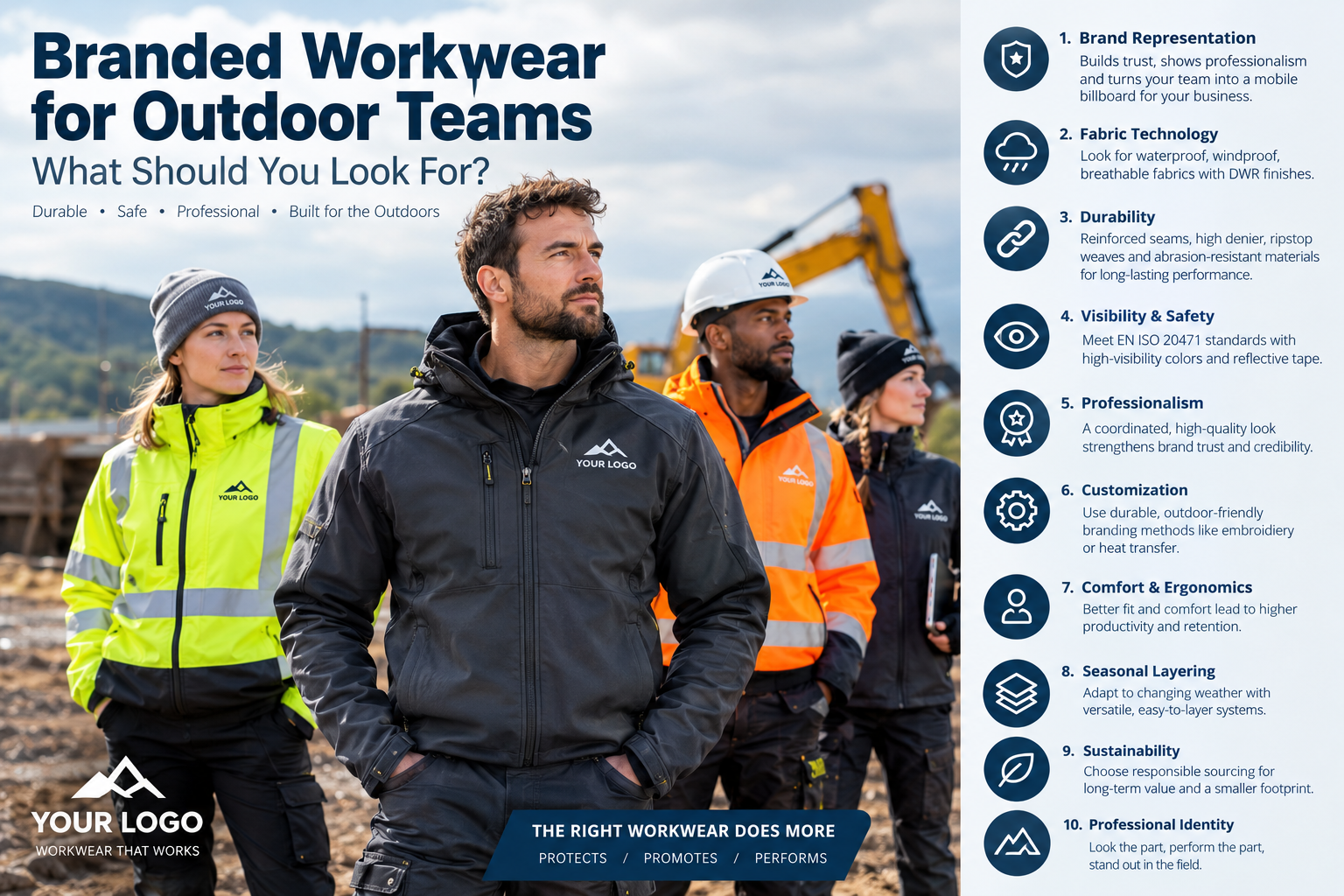
Table of Contents
1. The Strategic Importance of Outdoor Brand Representation
2. Prioritizing Fabric Technology and Weather Resistance
3. Durability Standards for High Intensity Environments
4. Visibility and Safety Compliance for Field Teams
5. The Impact of Professionalism on Brand Trust
6. Customization Methods for Outdoor Environments
7. Ergonomics and Employee Comfort as a Retention Tool
8. Seasonal Layering Strategies for Variable Climates
9. Sustainable Sourcing and Long Term Value
10. Strengthening Your Professional Identity in the Field
The Strategic Importance of Outdoor Brand Representation
When a team operates in the open air, they serve as mobile billboards for their organization. Whether they are landscaping a public park, managing a construction site, or leading an outdoor expedition, their appearance communicates the values and reliability of the company. Branded workwear is far more than just a uniform; it is a critical component of a company marketing strategy and operational safety. Choosing the right gear requires a deep understanding of the intersection between textile science and brand identity.
For companies seeking to elevate their professional presence, selecting high quality Branded Workwear for Outdoor Teams from a reliable partner like Totally Branded ensures that the first impression is always one of competence and authority. When a client sees a team arriving in coordinated, high performance gear, they immediately associate that visual cohesion with technical expertise. This psychological link is vital for service based industries where trust is the primary currency.
Prioritizing Fabric Technology and Weather Resistance
Outdoor environments are unpredictable, and the primary function of workwear is to protect the wearer from the elements. This begins with advanced fabric technology. When selecting garments, it is essential to look for materials that offer a high moisture vapor transfer rate. This ensures that while the fabric keeps rain out, it also allows sweat to escape, preventing the wearer from becoming damp and cold from the inside out.
1. Waterproof ratings are measured in millimeters, and for professional outdoor work, a rating of at least ten thousand millimeters is recommended.
2. Windproofing technology prevents the wind chill factor from stripping away body heat, which is essential for stationary tasks in cold environments.
3. Breathability ensures that during periods of high physical exertion, the body can regulate its temperature effectively.
Advanced coatings such as durable water repellent finishes are also crucial. These treatments cause water to bead up and roll off the surface rather than soaking into the fibers. When sourcing these technical garments, working with experts like Totally Branded allows businesses to access the latest innovations in textile engineering that are specifically designed for the rigors of the British climate.
Understanding Denier and Ripstop Weaves
The physical construction of the fabric is just as important as its chemical treatments. A high denier count indicates a thicker, more durable thread, which is necessary for trousers and jacket sleeves that may brush against abrasive surfaces. Ripstop weaves, characterized by a crosshatch pattern of extra thick threads, prevent small nicks from turning into large tears, significantly extending the life of the garment.
Durability Standards for High Intensity Environments
The cost of workwear should always be viewed through the lens of longevity rather than initial price. Cheap garments often fail at the seams or lose their shape after a few industrial washes. For outdoor teams, durability is a matter of both economy and safety. Reinforced knees, triple stitched seams, and heavy duty zippers are non negotiable features for teams working in construction, forestry, or utilities.
1. Stress point reinforcement using bar tack stitching ensures that pockets and zippers do not fail under pressure.
2. CORDURA fabric inserts in high wear areas like elbows and knees provide unparalleled abrasion resistance.
3. UV resistance prevents the fabric from becoming brittle and the colors from fading when exposed to constant sunlight.
By investing in premium gear, companies reduce the frequency of replacements, which leads to significant cost savings over a three year period. Quality providers like Totally Branded focus on garments that can withstand the daily grind of outdoor labor while maintaining their structural integrity and professional appearance.
Visibility and Safety Compliance for Field Teams
Safety is the cornerstone of any outdoor operation, particularly those involving heavy machinery or proximity to traffic. High visibility workwear must adhere to specific international standards, such as EN ISO 20471, to ensure that workers are seen in all lighting conditions. This involves a combination of fluorescent background materials and retroreflective tapes.
1. Class 3 visibility is the highest level, required for workers near high speed traffic or in extremely low visibility conditions.
2. Class 2 is suitable for most construction and delivery roles where the speed of surrounding traffic is moderate.
3. Class 1 is the minimum requirement for low risk environments where visibility is still a concern.
It is important to remember that dirt and grime can significantly reduce the effectiveness of reflective materials. Therefore, choosing garments with stain resistant finishes can help maintain safety standards for longer periods.
The Impact of Professionalism on Brand Trust
There is a documented correlation between employee appearance and customer perception of service quality. A team dressed in mismatched or worn out clothing can inadvertently signal a lack of attention to detail. Conversely, a team outfitted in clean, well fitting, and smartly branded gear projects an image of organizational discipline.
When companies choose to source their apparel through Totally Branded, they are making a commitment to their public image. This professional alignment helps in building a cohesive culture within the team. When employees feel they are wearing high quality gear, their sense of belonging and pride in their work increases, which often translates to higher productivity and better customer interactions.
Customization Methods for Outdoor Environments
Applying a logo to outdoor workwear requires different techniques than those used for standard office apparel. The method must be as durable as the garment itself.
1. Embroidery is the gold standard for durability and provides a premium, three dimensional look that handles repeated washing exceptionally well.
2. Heat transfers are ideal for waterproof fabrics where needle punctures from embroidery might compromise the water resistance of the membrane.
3. Screen printing is effective for large logos on t shirts or vests but may not be as long lasting on heavy duty outerwear.
The placement of the logo also matters. While the left chest is traditional, adding branding to the back of a jacket or the side of a sleeve increases visibility from multiple angles, ensuring the brand is recognized even when the worker is turned away or wearing a tool belt.
Ergonomics and Employee Comfort as a Retention Tool
In a competitive labor market, providing high quality workwear is a powerful tool for employee retention. Outdoor work is physically demanding, and gear that restricts movement or causes discomfort can lead to fatigue and even injury. Ergonomic design in workwear includes features like articulated knees, gusseted crotches, and dropped back hems that keep the lower back covered when bending.
The Science of Fit
A proper fit is not just about aesthetics; it is about functionality. Overly baggy clothing can become a snagging hazard around machinery, while clothing that is too tight limits the range of motion. Modern workwear brands have moved toward athletic cuts that mirror the movements of the human body, providing comfort that lasts through a ten hour shift.
Seasonal Layering Strategies for Variable Climates
A single heavy coat is rarely the best solution for outdoor teams. Instead, a layering system allows workers to adapt to changing conditions throughout the day. This modular approach ensures that the team remains comfortable whether it is a chilly morning or a humid afternoon.
1. The Base Layer should be moisture wicking to move sweat away from the skin.
2. The Mid Layer provides insulation, typically using fleece or softshell materials to trap body heat.
3. The Outer Shell acts as the primary barrier against wind and rain.
By providing a complete layering system, companies empower their employees to manage their own microclimate. Partnering with a comprehensive supplier like Totally Branded allows a business to curate a unified look across all three layers, ensuring the brand remains visible regardless of how the employee chooses to layer their clothing.
Sustainable Sourcing and Long Term Value
Modern businesses are increasingly held accountable for their environmental footprint. This extends to the procurement of workwear. Choosing garments made from recycled polyesters or organic cottons can help a company meet its Corporate Social Responsibility goals. Furthermore, the longevity of the garment is a form of sustainability in itself; a jacket that lasts three years is far better for the environment than three jackets that last one year each.
1. Look for certifications such as GRS (Global Recycled Standard) or OEKO TEX to ensure the textiles are free from harmful substances.
2. Consider the end of life cycle for the garments, such as textile recycling programs for retired uniforms.
3. Evaluate the ethical standards of the manufacturing facilities to ensure fair labor practices.
Strengthening Your Professional Identity in the Field
The decision to invest in branded outdoor workwear is an investment in the most visible asset of any company: its people. By focusing on technical specifications, safety compliance, and ergonomic design, an organization ensures that its team is protected and productive. The visual consistency provided by high quality branding fosters a sense of unity and purpose that is felt by both the employees and the clients they serve.
Ultimately, the gear your team wears is a silent communicator of your brand promise. It tells the world that you value quality, you prioritize safety, and you are a professional entity capable of handling the challenges of the outdoor environment. When every detail, from the waterproof rating to the precision of the embroidered logo, is executed correctly, the result is a powerful professional identity that stands the test of time and weather.