
Table of Contents
1. The Evolution of Window Technology
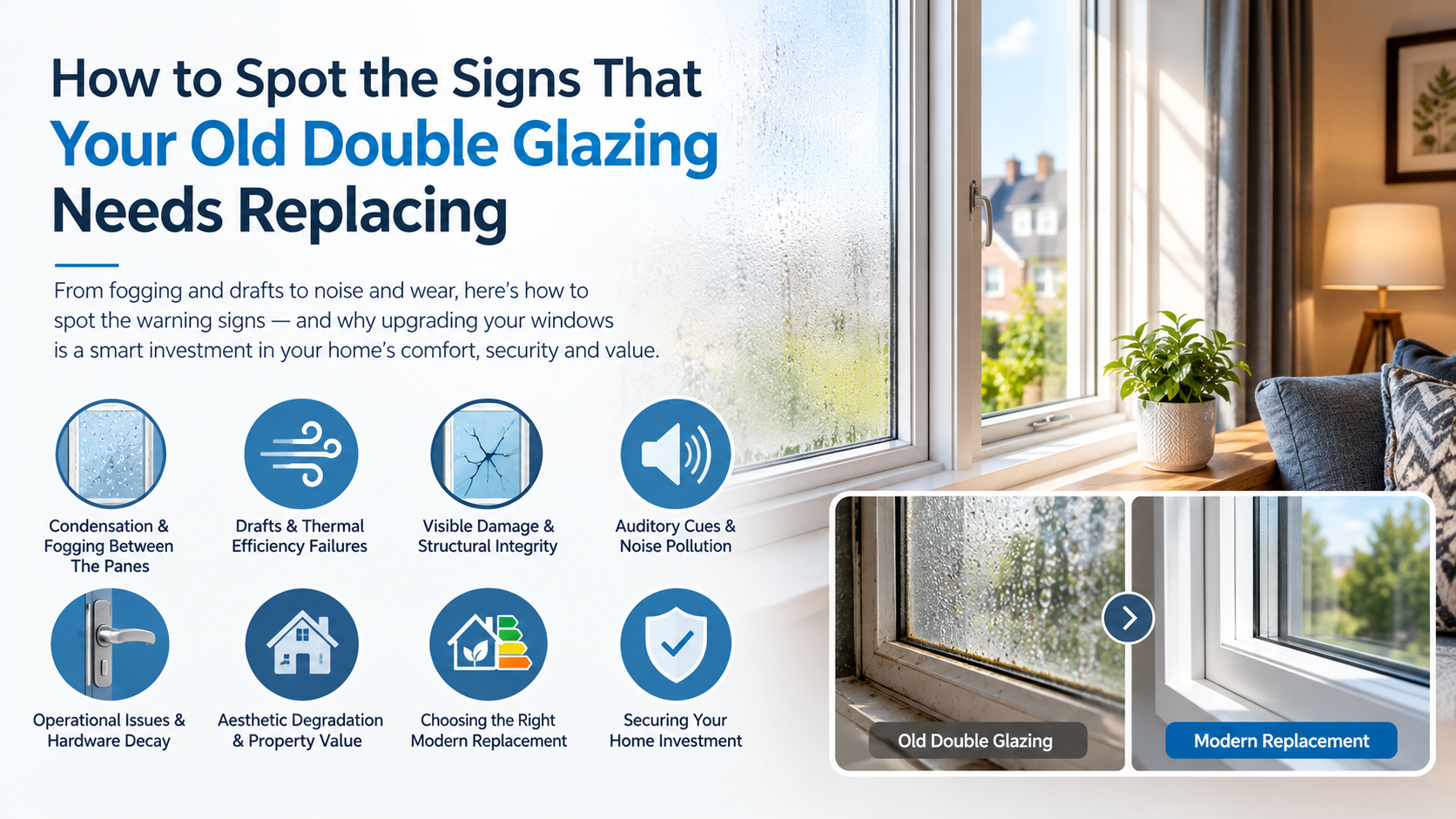
2. Condensation and Fogging Between the Panes
3. Drafts and Thermal Efficiency Failures
4. Visible Damage and Structural Integrity
5. Auditory Cues and Noise Pollution
6. Operational Issues and Hardware Decay
7. Aesthetic Degradation and Property Value
8. Choosing the Right Modern Replacement
9. Securing Your Home Investment
The Evolution of Window Technology
Double glazing has long been the standard for residential insulation in modern homes. However, the technology used in the late nineties and early two thousands is vastly different from the high performance solutions available today. While early double glazed units were a significant step up from single pane glass, they were not designed to last forever. Most industry experts suggest that double glazing has a functional lifespan of approximately twenty to twenty five years. Beyond this point, the inert gases trapped between the panes often dissipate, and the seals begin to degrade.
Understanding the mechanics of your windows is the first step in identifying when they are no longer performing their primary duties. Modern units utilize low emissivity glass and argon gas fills to create a thermal barrier. When these components fail, your home becomes susceptible to the external environment, leading to increased energy costs and decreased comfort. Identifying the signs that your old double glazing needs replacing is essential for maintaining a high quality living environment.
Condensation and Fogging Between the Panes
Perhaps the most obvious indicator of a failed window unit is the presence of moisture or fogging between the two sheets of glass. This is not to be confused with surface condensation, which often occurs on the interior or exterior of the glass due to humidity levels. When you see droplets or a misty appearance inside the sealed unit, it signifies that the perimeter seal has broken.
1. The silica desiccant material located inside the spacer bar becomes saturated.
2. The hermetic seal fails, allowing moist air to enter the cavity.
3. Temperature fluctuations cause this moisture to condense into visible liquid.
Once a seal is compromised, the insulating properties of the window are effectively gone. The argon gas that once provided a thermal break has leaked out, replaced by ordinary air that conducts heat and cold much more readily. If you notice this issue across multiple windows, it is often a sign that the entire installation is reaching the end of its natural life. Companies like EKCO specialize in diagnosing these failures and providing high performance replacements that utilize advanced sealing technologies to prevent premature desiccant saturation.
The Impact of Blown Seals on Energy Bills
A blown seal is more than just an aesthetic annoyance. It represents a significant thermal bridge in your home. Statistics from energy efficiency boards suggest that homes with failed double glazing can lose up to thirty percent of their heat through these gaps. Replacing these units can lead to a measurable reduction in monthly utility costs, often paying for the investment over several years of use.
Drafts and Thermal Efficiency Failures
If you find yourself turning up the thermostat or reaching for a sweater while sitting near a window, you are likely experiencing a draft. Drafts are a clear sign that the window frame or the seals between the frame and the wall have deteriorated. Over time, PVC and timber frames can warp or shrink, creating tiny gaps that allow cold air to whistle through.
1. Check for drafts by moving a lit candle or incense stick around the edges of the window frame.
2. Feel for cold spots on the glass itself, which may indicate a loss of insulating gas.
3. Observe if your curtains move slightly even when the window is tightly shut.
When considering how to spot the signs that your old double glazing needs replacing EKCO consultants often point out that modern frames are engineered with multi chambered profiles to prevent this exact issue. Older frames often lacked the structural reinforcement necessary to maintain their shape over decades of exposure to harsh weather and UV radiation.
Visible Damage and Structural Integrity
Physical damage to the window frames or the glass itself is a non negotiable sign that replacement is necessary. While small chips in a wooden frame can sometimes be repaired with filler and paint, deep rot or significant cracking in uPVC indicates a loss of structural integrity.
Identifying Frame Decay
Timber frames are particularly susceptible to wet rot if they have not been meticulously maintained. If the wood feels soft or spongy to the touch, the internal structure is likely compromised. For uPVC windows, look for yellowing or brittleness. Early generations of plastic windows were prone to UV degradation, which causes the material to become flaky and prone to cracking under pressure.
Glass Imperfections
Cracks in the glass, even small hairline ones, are dangerous. They compromise the safety of the unit and provide an easy entry point for intruders. Furthermore, a cracked pane immediately voids the vacuum or gas fill of the double glazing, rendering the window thermally useless. Modern safety glass is significantly tougher and designed to crumble into blunt pieces rather than sharp shards, providing an extra layer of security for families.
Auditory Cues and Noise Pollution
A primary benefit of double glazing that is often overlooked is its ability to provide acoustic insulation. If you have noticed that the sound of passing traffic, barking dogs, or neighborhood chatter has become louder inside your home, your windows are likely failing.
The sound dampening effect of double glazing relies on the thickness of the glass panes and the gap between them. As seals fail and the internal environment of the window changes, the acoustic barrier weakens. New installations from EKCO utilize varied glass thicknesses and specialized laminates that can reduce external noise by up to forty decibels. If your home no longer feels like a quiet sanctuary, it is time to evaluate the state of your glazing.
Operational Issues and Hardware Decay
Windows should be easy to operate. If you find yourself struggling to open a sash, or if the window sticks every time you try to close it, the hardware or the frame alignment has failed. This is not just a matter of convenience; it is a significant safety concern. In the event of an emergency, such as a fire, every window must function as a viable exit.
1. Friction stays and hinges can rust or become clogged with debris, preventing smooth movement.
2. Locking mechanisms can become misaligned as the house settles or the frames warp.
3. Handles may become loose or fail to engage the multi point locking system correctly.
Replacing hardware can sometimes provide a temporary fix, but if the frame itself has warped, new hinges will not solve the underlying problem. A full replacement ensures that all components work in harmony, providing effortless operation and enhanced security.
Aesthetic Degradation and Property Value
While performance is the priority, the appearance of your windows significantly impacts the curb appeal of your home. Dated, yellowing uPVC or peeling, rotten timber frames can make an otherwise beautiful property look neglected. This can be a major drawback if you are planning to sell your home in the near future.
Potential buyers are increasingly savvy about energy efficiency. Surveyors will often note the age and condition of double glazing in their reports. Investing in high quality replacements can actually increase the market value of your property. By choosing modern designs that complement the architectural style of your home, you are performing an upgrade that is both functional and financial. EKCO offers a wide range of contemporary and traditional styles that ensure your new windows enhance the overall aesthetic of your living space.
Choosing the Right Modern Replacement
Once you have identified that your windows need replacing, the next step is selecting a product that will last for the next quarter century. The market has moved far beyond basic white uPVC. Homeowners can now choose from aluminum, composite materials, and high grade timber, all featuring advanced thermal technology.
1. Look for A rated or A plus rated energy certificates.
2. Consider triple glazing if you live near a busy road or in an exceptionally cold climate.
3. Opt for warm edge spacer bars, which are made of insulating plastic rather than conductive aluminum.
The installation process is just as important as the product itself. Even the highest quality window will fail if it is not fitted correctly. Professional installers ensure that the aperture is properly prepared and that the perimeter seals are airtight and weather resistant.
Securing Your Home Investment
Deciding to replace your windows is a significant commitment, but it is one that pays dividends in comfort, security, and energy savings. By staying vigilant and watching for the signs of seal failure, drafts, and mechanical wear, you can intervene before a small problem becomes a major structural issue.
Modern glazing solutions offer far more than just a clear view of the outside world. They are sophisticated components of your homes thermal envelope. When you choose to upgrade, you are not just buying glass and frames; you are investing in the long term health of your property. Taking the time to consult with experts and selecting premium products ensures that your home remains a warm, quiet, and safe environment for many years to come. By addressing these signs early, you protect your interior finishes from moisture damage and ensure your heating system operates at peak efficiency.