

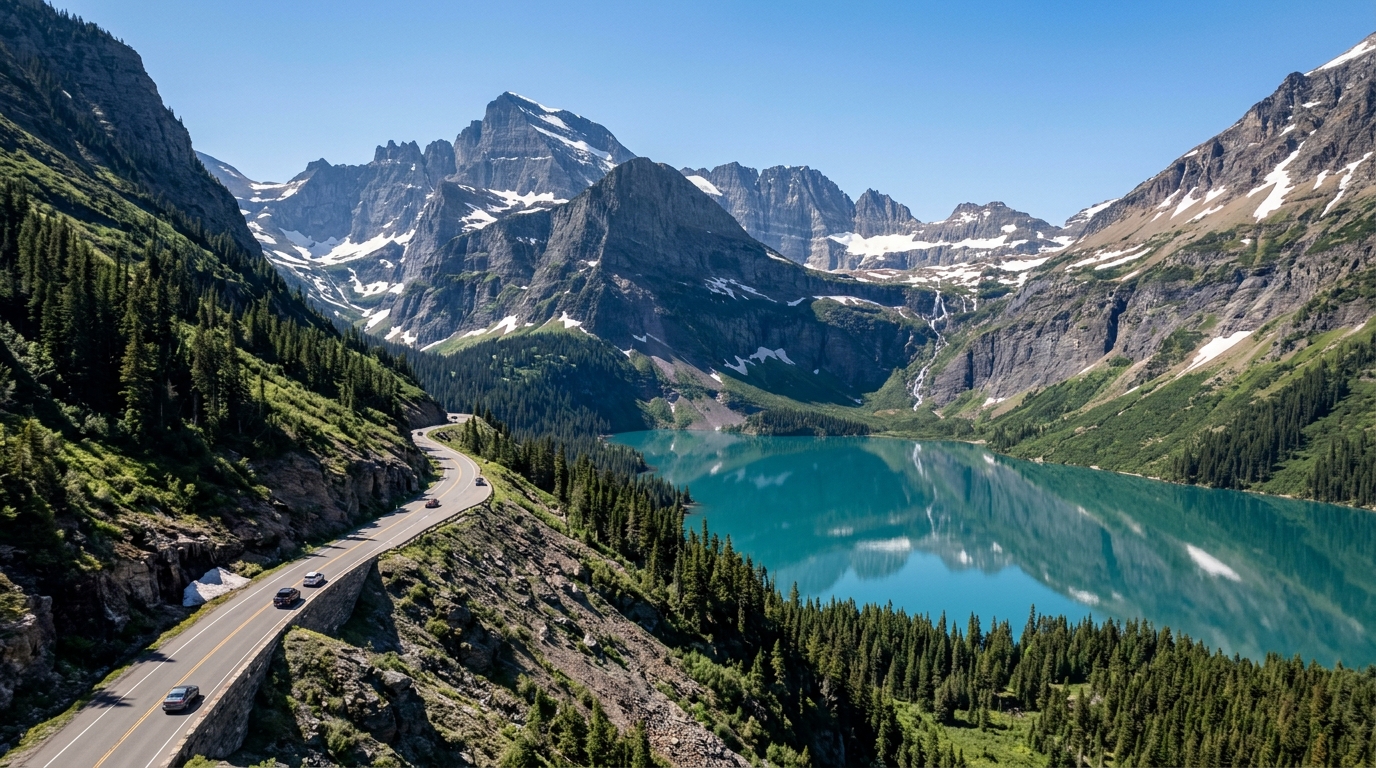
Planning a trip to Montana requires a clear understanding of the region’s geography because Glacier National Park spans over one million acres of rugged terrain. Glacier National Park attractions are spread across distinct valleys and mountain passes that dictate how visitors travel and explore. Understanding these geographic regions helps travelers avoid long backtracking and makes the most of their time in the park. Travelers looking to connect regional road trips often plan a scenic driving route from Flathead Lake to Glacier National Park before arriving at the western entrance.
Essential Landmarks Along Going-to-the-Sun Road
Going-to-the-Sun Road serves as the central scenic spine of Glacier National Park, connecting the east and west sides across the Continental Divide.
Going-to-the-Sun Road features towering peaks, cascading waterfalls, and historic stone walls built into sheer cliffs. Visitors driving this alpine highway pass iconic overlooks like Loop and Bird Woman Falls. Logan Pass sits at the highest elevation of the road and offers access to the alpine visitor center and popular hiking trails. Parking at Logan Pass fills up early in the morning during peak summer months, so arriving before sunrise is strongly recommended for visitors who want to secure a parking space.
The entire engineering marvel of Going-to-the-Sun Road represents a historic achievement in park construction. Navigating these narrow mountain lanes requires patience and steady attention from every driver. Weather conditions at high elevations can shift rapidly even during the warmest summer weeks, meaning snowstorms can temporarily close high passes without warning. Checking the status of the road with park rangers each morning ensures that travelers avoid unexpected delays and plan alternative valley routes.
Iconic Hiking and Wildlife Viewing in Many Glacier
The Many Glacier valley delivers some of the most dramatic mountain backdrops and frequent wildlife sightings in Glacier National Park.
Many Glacier is tucked into the northeastern corner of the park and serves as a premier destination for backcountry hiking. Towering peaks surround stunning alpine lakes like Swiftcurrent Lake and Lake Josephine, where boat tours operate during the summer season. Hikers frequently spot grizzly bears, moose, and mountain goats along popular trails such as the Iceberg Lake trail and Grinnell Glacier trail. Because wildlife activity is high in Many Glacier, park rangers strictly advise carrying bear spray and maintaining a safe distance from all animals.
Exploring the trail networks in Many Glacier allows hikers to witness active hanging glaciers and roaring glacial streams fed by melting snowpacks. The trails range from gentle lakeside walks to strenuous climbs that test endurance over steep rocky switchbacks. Early morning starts are essential for hikers heading into Many Glacier because afternoon thunderstorms frequently develop over the Continental Divide during the peak summer visitor season.
Peaceful Escapes in Two Medicine and East Glacier
Two Medicine and East Glacier provide a quieter, more relaxed atmosphere compared to the heavily trafficked central corridors of the park.
Two Medicine sits in the southeastern region of Glacier National Park and features calm lakes reflecting jagged mountain summits like Sinopah Mountain. Historic wooden boat tours take visitors across Two Medicine Lake to trailheads leading toward cascading waterfalls such as Running Eagle Falls. East Glacier Park village acts as a historic gateway featuring the grand Glacier Park Lodge, built by the Great Northern Railway in the early twentieth century. Visitors seeking solitude often prefer these eastern valleys because crowds are generally smaller and easier to navigate.
The cultural heritage of the Blackfeet Nation deeply shapes the lands surrounding East Glacier and Two Medicine. Local guides often share traditional stories about the sacred mountains and historical significance of these valleys to indigenous communities. Travelers looking to experience a slower pace of travel frequently spend multiple days exploring these eastern boundaries away from the busier western tourist hubs.
Best Family Activities and Short Walks
Families traveling with young children or visitors with limited mobility can enjoy several accessible boardwalks and easy nature walks across Glacier National Park.
Easy walking paths like the Trail of the Cedars near Lake McDonald offer a gentle stroll through an ancient old-growth forest. The adjacent Avalanche Lake trail provides a slightly longer but gradual path leading to a pristine glacial basin surrounded by towering rock walls. Boat cruises on Lake McDonald, Saint Mary Lake, and Two Medicine Lake provide relaxing ways to view the scenery without strenuous physical exertion. Park rangers also host family-friendly evening programs and guided junior ranger activities at various visitor centers throughout the summer months.

Managing family itineraries inside Glacier National Park requires balancing travel time with rest stops because driving distances between major hubs can be surprisingly long. Packing plenty of water, snacks, and extra layers of clothing ensures everyone stays comfortable during unpredictable mountain weather shifts. For those interested in exploring broader mountain landscapes, you can also look at our guide on traveling between Glacier National Park and Banff for international trip planning.
Things to Do Near the Park Borders
Gateway communities surrounding Glacier National Park offer essential lodging, dining, and outdoor recreation options for travelers staying outside park boundaries.
Towns like West Glacier, Columbia Falls, and East Glacier provide grocery stores, restaurants, and cabin rentals for visitors who cannot secure accommodations inside the park. Rafting companies operating along the Middle Fork of the Flathead River offer guided whitewater and scenic float trips just outside park borders. Exploring these surrounding areas allows visitors to experience local Montana culture while staying close to park entrance stations.
Local artisan shops, huckleberry stands, and historic saloons add character to the towns bordering the park. Visitors often spend their evenings dining on regional cuisine or attending outdoor community events hosted during the vibrant summer months. Engaging with local businesses also supports the gateway economy that keeps these mountain communities thriving year after year.
I’m Muhammad Ubaid, founder of YBR Magazine. I research and write detailed guides on America’s National Parks — covering entry fees, permits, best times to visit, and planning tips — using official NPS sources and up-to-date information.