

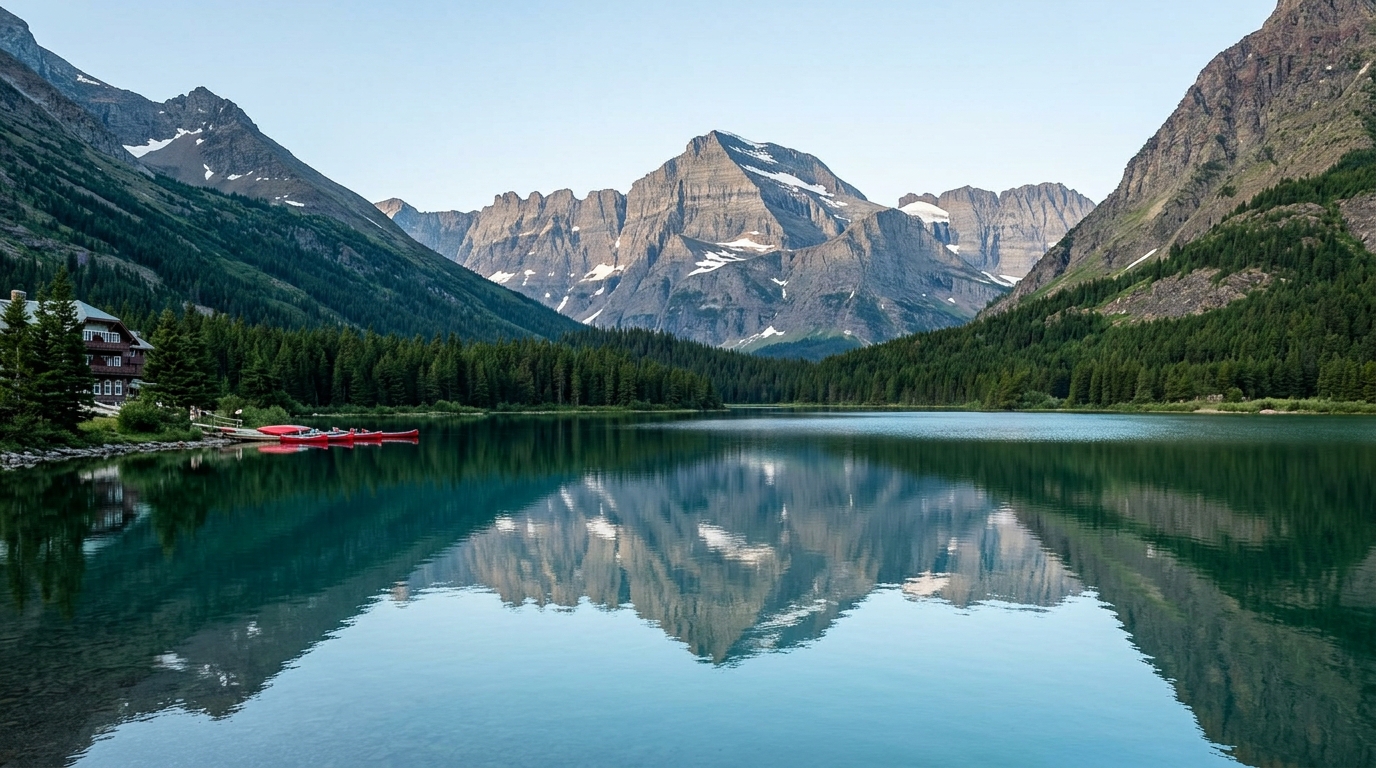
Planning a trip to northwest Montana requires understanding that Glacier National Park is not a single, easily walkable destination. The massive geography of Glacier National Park is sharply divided by the Continental Divide, meaning a vacation requires careful logistical planning rather than just picking random hiking trails. The famous Going-to-the-Sun Road has strict vehicle reservation requirements, weather constraints that limit its open window to a few summer months, and massive driving distances between the West Glacier, East Glacier, Many Glacier, and Two Medicine areas. A good Glacier National Park itinerary must account for these choke points and travel times rather than treating the park like a compact area.
Most online travel guides make the mistake of suggesting unrealistic driving loops across the park in a single day. These guides often ignore how long it takes to traverse the winding Going-to-the-Sun Road or navigate vehicle pass rules. Many planning resources also fail to help travelers decide how many days to actually spend based on whether they want a fast highlights tour or a deep hiking trip. Addressing these logistical challenges ensures that visitors spend less time idling in traffic and more time experiencing the landscape.
How Many Days Do You Need at Glacier National Park
Figuring out the right trip length depends on whether travelers want a quick overview or a deep dive into the backcountry trails separated by the mountains.
Visitors working with a two-day timeframe must focus entirely on driving the length of the Going-to-the-Sun Road and stopping at major viewpoints like Lake McDonald and Logan Pass. A three-day or four-day timeframe allows travelers to split their lodging between the west and east sides, adding dedicated time for the wildlife-rich Many Glacier valley. Travelers who have a full week can explore remote corners like Two Medicine, tackle challenging full-day hikes, and take side trips to explore nearby scenic routes such as a Flathead Lake to Glacier National Park driving itinerary without feeling rushed.
Day-by-Day Itineraries for 3 to 4 Days
A balanced multi-day plan breaks the park down logically to minimize backtracking across the high mountain passes.
On the first day, travelers should enter through West Glacier, explore the shores of Lake McDonald, and begin ascending the lower stretches of the Going-to-the-Sun Road as weather permits. The second day centers around reaching Logan Pass early in the morning before parking lots fill to capacity, followed by a descent toward St. Mary and the east side of the park. Day three is best spent entirely in the Many Glacier region for iconic alpine hikes and wildlife watching. A fourth day gives visitors the flexibility to explore the quiet trails of Two Medicine or revisit a favorite scenic overlook.

Exploring the Different Regions of Glacier National Park
Understanding the distinct character of each park region helps travelers book the right lodging bases before arrival.
The table below summarizes the four main areas of Glacier National Park, their primary access points, and what makes each region unique for a visitor’s schedule.
| Region | Primary Gateway | Key Highlights |
|---|---|---|
| West Glacier / Lake McDonald | West Glacier Village | Massive lake shores, dense cedar forests, western park entrance. |
| Logan Pass & Central Corridor | Going-to-the-Sun Road | High alpine tundra, visitor center, famous mountain hiking trails. |
| Many Glacier | Babb / East Entrance | Glacial lakes, abundant wildlife sightings, premier alpine trailheads. |
| Two Medicine & East Glacier | East Glacier Park Village | Quiet boat tours, dramatic waterfalls, fewer crowds. |
Essential Tips for Planning Your Trip
Successful park visits rely on securing required vehicle passes and understanding seasonal weather patterns.
Vehicle reservation requirements change periodically, so visitors must check official National Park Service updates well in advance of their travel dates. Because the high mountain passes hold snow well into July, portions of the main scenic road may open late or close early due to unexpected autumn storms. Starting travel days before sunrise remains the single best strategy for securing parking spaces at popular trailheads like Hidden Lake or Avalanche Lake.
Frequently Asked Questions
How many days should I spend in Glacier National Park?
Most visitors find that three to four days provides enough time to drive the main scenic road and explore a couple of key valleys without burning out.
Is it easy to drive across the entire park in one day?
Driving straight across takes about two hours without stops, but heavy summer traffic, lower speed limits, and wildlife jams mean the journey usually takes much longer.
When is the best time of year to visit?
Late July through mid-September offers the highest likelihood that the entire Going-to-the-Sun Road and high-elevation trails will be fully open and snow-free.
Do I need a reservation to drive the main road?
Vehicle reservations are frequently required for specific sections of the park during peak summer hours, so travelers should verify current access rules online.
Where is the best place to stay during my trip?
Splitting your stay between a town on the west side like Kalispell or West Glacier and an east-side base like St. Mary or Babb cuts down on daily driving times.
Can I see bears during my visit?
Both grizzly bears and black bears live throughout the park, making it essential to carry bear spray and know park safety guidelines.

I’m Muhammad Ubaid, founder of YBR Magazine. I research and write detailed guides on America’s National Parks — covering entry fees, permits, best times to visit, and planning tips — using official NPS sources and up-to-date information.