
If you have searched for “fintechzoom.io courses,” you have probably noticed that the results say very different things. Some pages describe a huge learning platform with live market feeds and expert mentors, while others read like they were written without ever opening the official website. This guide takes a calmer approach. It explains what FintechZoom.io actually lists on its course pages, who each program is meant for, and which details you should confirm yourself before spending any money.
What Are FintechZoom.io Courses?
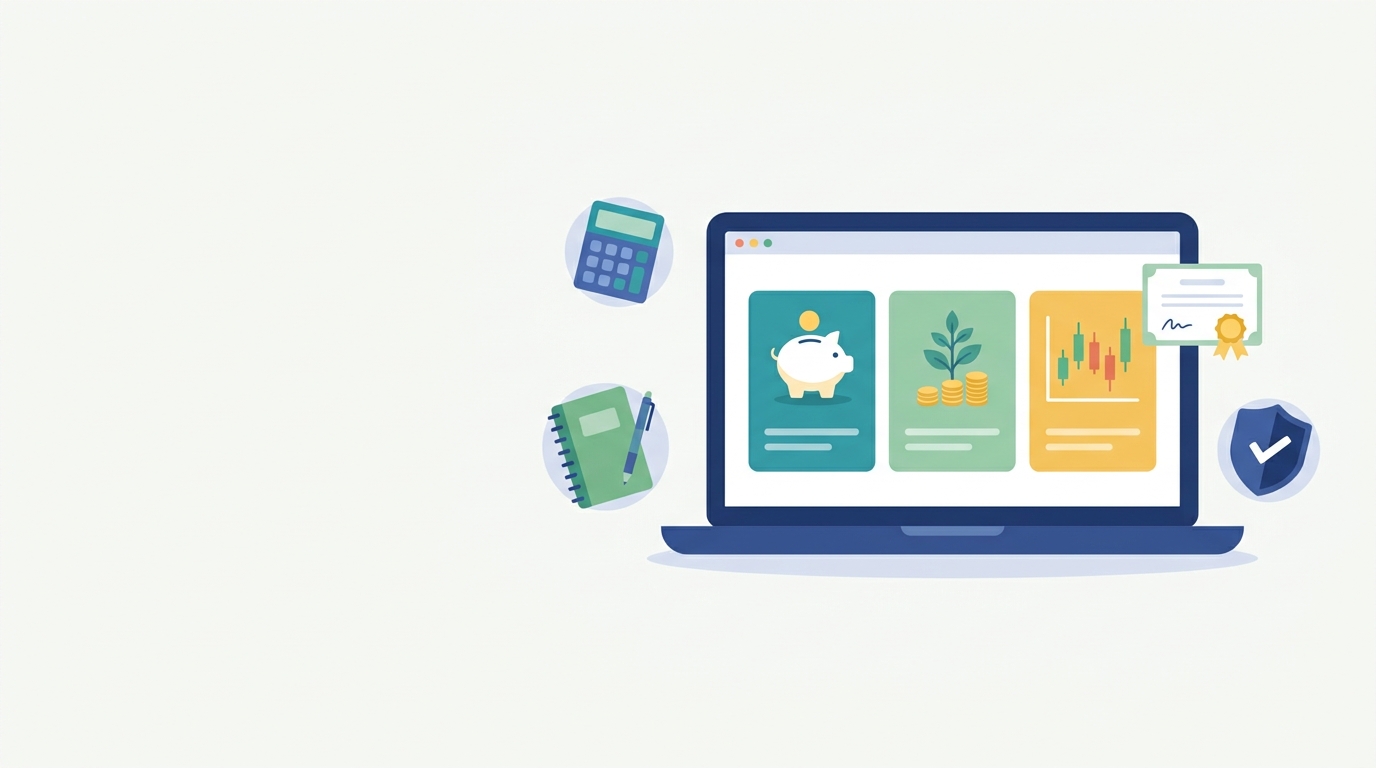
FintechZoom.io courses are self-paced online programs that teach money and market basics through recorded video lessons. The official course pages describe three separate programs: a Financial Literacy course, a Stock Market Investing course, and a Stock Market Trading course. Each one is built around on-demand videos, quizzes, downloadable materials, and a certificate that is given after you finish.
It helps to understand what these courses are not. They are not university degrees, and they are not professional licenses. They are short, beginner-friendly introductions that aim to give you a structured path instead of leaving you to piece together scattered articles and videos. If that is what you want, the format can make sense, but it is worth keeping your expectations realistic from the start.
The Three FintechZoom.io Courses at a Glance

The table below summarizes what the course pages say about each program. The video lengths are the ranges listed by the provider, so treat them as approximate.
| Course | Main focus | Listed video time | Listed extras |
|---|---|---|---|
| Financial Literacy | Budgeting, saving, credit, debt, and investing basics | 3 to 5 hours | Worksheets, quizzes, certificate |
| Stock Market Investing | Building and managing a long-term portfolio | 7 to 8 hours | Worksheets, quizzes, certificate |
| Stock Market Trading | Active trading, chart reading, and risk control | 4 to 6 hours | Charts and strategy guides, quizzes, certificate |
Although the programs overlap in a few places, each one serves a different goal. Choosing the right one matters more than most people expect, because trading and investing are not the same activity.
FintechZoom.io Financial Literacy Course
The Financial Literacy course is the most general of the three. It is written for people who want to understand personal finance before they think about buying stocks. According to the course page, it covers how to build a budget, manage credit, reduce debt, and grow wealth through practical everyday skills.
The page lists three audiences: students who want a solid base in personal finance, new investors who want to grow their money carefully, and working professionals who are aiming for financial independence. The course includes roughly three to five hours of video, printable worksheets that help you track spending and create budgets, and short quizzes at the end of each module.
This course is a sensible starting point if you do not yet have a budget or a savings habit. Many people jump straight into the stock market while their basic finances are still unstable, and a foundation course like this one is designed to prevent that mistake.
FintechZoom.io Stock Market Investing Course
The Investing course, which the website calls the FintechZoom Investment Mastery Course, is aimed at people who want to build wealth over a longer period. The page says it is suitable for beginner investors, intermediate investors, and busy professionals who need to manage a portfolio alongside a full-time job.
According to the official description, beginners learn the basics, starting with asset classes and moving toward a personal investment strategy that fits their goals. Intermediate learners can go further into market analysis, portfolio optimization, and diversification. The program includes about seven to eight hours of on-demand video, printable worksheets, interactive quizzes after each module, and an official certificate once you complete the course.
Because the video time is longer than the other two programs, this is the most detailed option in the lineup. Even so, seven to eight hours is an overview rather than deep training, so it is best seen as a way to understand the landscape before you study individual topics more closely.
FintechZoom.io Stock Market Trading Course
The Trading course is the most active and the most risky of the three subjects. It is described as covering how markets work, candlestick patterns, trend identification, and different trading styles such as day trading, swing trading, and position trading. It also gives space to stop-loss strategies, portfolio allocation, trading psychology, and the effect of economic news on prices.
The curriculum also mentions trading apps and software and a range of instruments, including stocks, options, and forex. The provider lists about four to six hours of expert-led video lessons, along with downloadable charts and strategy guides, quizzes, and a completion certificate.
What stands out is how much ground this course tries to cover in a short time. Options, forex, and margin trading are each large subjects that professionals study for years. A fair way to read this course is as a first introduction to the vocabulary and ideas, not as proof that you are ready to trade with real money.
Trading or Investing: Which One Should You Choose?

The simplest way to decide is to ask how long you plan to hold your money in the market and how much time you want to spend watching prices. If your goal is to build savings slowly through funds, shares, and bonds, the Investing course fits better. If you are curious about short-term price movements and chart analysis, the Trading course is the closer match, but you should understand that short-term trading carries a higher chance of loss.
If you are still unsure, the Financial Literacy course is the safest first step. It teaches the habits that make any later investing decision easier, such as keeping an emergency fund, controlling debt, and setting clear goals.
Who Are These Courses Best For?
Based on what the provider publishes, the courses are best suited to complete beginners and early intermediate learners who prefer a guided structure and short videos they can watch on their own schedule. They can also suit working adults who want a quick overview without joining a long class.
They are probably not the right fit for experienced traders who need advanced material such as strategy backtesting, statistical modeling, derivatives pricing, or algorithm development. A few hours of video cannot go that deep, and the published descriptions do not suggest that this is the intended level.
What the Official Pages Do Not Tell You
This is the part many online articles skip, and it is also the part that matters most before you buy. When we reviewed the course pages, several practical details were not clearly shown in public.
First, a clear price was not displayed on the course pages. Some websites quote specific yearly or one-time fees for FintechZoom.io courses, but those figures cannot be confirmed from the course pages themselves, so you should not rely on them. Second, the pages talk about experts and industry professionals but do not clearly introduce instructors by name with their qualifications. Third, we did not find a full sample lesson that would let you judge the teaching style in advance.
In addition, the certificate is described as an official certificate of completion, but the pages do not explain whether any university, regulator, or professional body stands behind it. A completion certificate is useful as a personal record of learning, yet it should not be confused with an accredited qualification or a license to give financial advice. Finally, the pages do not publish independent student results, so any promise about profits or career success should be treated as marketing rather than proven fact.
Some third-party articles also describe features such as live market data feeds, AI-powered risk alerts, or mobile apps in connection with the courses. We could not confirm those features on the official course pages, so it is wise to ask the provider directly if any of them matter to your decision.
Terms Mentioned on the General Courses Page
According to a review of the main courses page, FintechZoom.io advertises lifetime access to course materials, learner support, interactive exercises, and a 30-day satisfaction guarantee. These are the provider’s own statements, and they may change over time. Before you pay, check that the same terms apply to the exact course you are buying, and keep a copy of the conditions you were shown on the day of purchase.
Ten Questions to Ask Before You Enroll

A good educational purchase should be easy to understand before payment, not after it. Consider sending these questions to the provider and saving the replies:
- What is the total price, and in which currency?
- Is it a one-time payment or a recurring subscription?
- Are there taxes or extra fees?
- Who created and who teaches the lessons?
- Where can I verify the instructors’ experience?
- Can I watch a full sample lesson first?
- Does lifetime access apply to this specific course?
- What exactly are the refund conditions?
- Who recognizes the certificate, if anyone?
- Are there practical exercises beyond quizzes and worksheets?
How to Get the Most Out of the Courses
Even a modest course can be valuable if you use it well. Start by writing down one clear goal, such as building an emergency fund, learning how index funds work, or understanding how to read a price chart. Watch the lessons in short sessions instead of finishing everything in one weekend, and complete the worksheets rather than skipping them, because they turn ideas into habits.
It also helps to practice with a paper-trading account or a very small amount of money while you learn. This lets you test what you have studied without risking savings you cannot afford to lose. After you finish, return to the topics you found difficult and look for additional free educational material from public investor-education websites and your local financial regulator, which can confirm or correct what you learned.
Is It Worth It?
For a beginner who likes structured, self-paced learning, FintechZoom.io courses look like a reasonable introduction, especially the Financial Literacy and Investing programs. The curriculum topics are listed openly, the video lengths are stated, and the materials include more than video alone.
The main weakness is transparency rather than content. Until you have confirmed the price, the instructors, the sample teaching quality, the refund rules, and the value of the certificate, it is hard to say that the purchase is a clear bargain. The most practical approach is to use the public curriculum to decide whether the topics match your goals, then verify the commercial details directly with the provider before you pay.
Frequently Asked Questions
How many FintechZoom.io courses are there?
The official course pages list three programs: Financial Literacy, Stock Market Investing, and Stock Market Trading.
Are FintechZoom.io courses suitable for beginners?
Yes, the provider names beginners as an intended audience for all three programs. Beginners should still avoid high-risk activities such as margin trading or options until they fully understand them.
How long are the courses?
The listed video lengths are about three to five hours for Financial Literacy, seven to eight hours for Investing, and four to six hours for Trading.
Do the courses include a certificate?
Yes, each course advertises a certificate of completion. The public pages do not clearly state whether it is accredited by an outside body.
Are the courses free?
A free price is not shown on the course pages we reviewed, and a clear paid price is not shown either. Contact the provider for current pricing and payment terms.
Can a course guarantee profits?
No. Investing and trading always involve risk, and any course that suggests guaranteed returns should be approached with caution.
Disclaimer: This article is for general educational and informational purposes only and is not investment, trading, tax, or legal advice. Investing and trading involve risk, including the possible loss of your money. This article is not affiliated with or endorsed by FintechZoom.io, and the author has not purchased or completed the courses. Course details, prices, and terms can change at any time, so please confirm the latest information directly with the provider before enrolling.
Explore More
Yonopress: What It Is, What You Can Read There, and Whether It Is Safe to Use

I’m Muhammad Ubaid, founder of YBR Magazine. I research and write detailed guides on America’s National Parks — covering entry fees, permits, best times to visit, and planning tips — using official NPS sources and up-to-date information.