
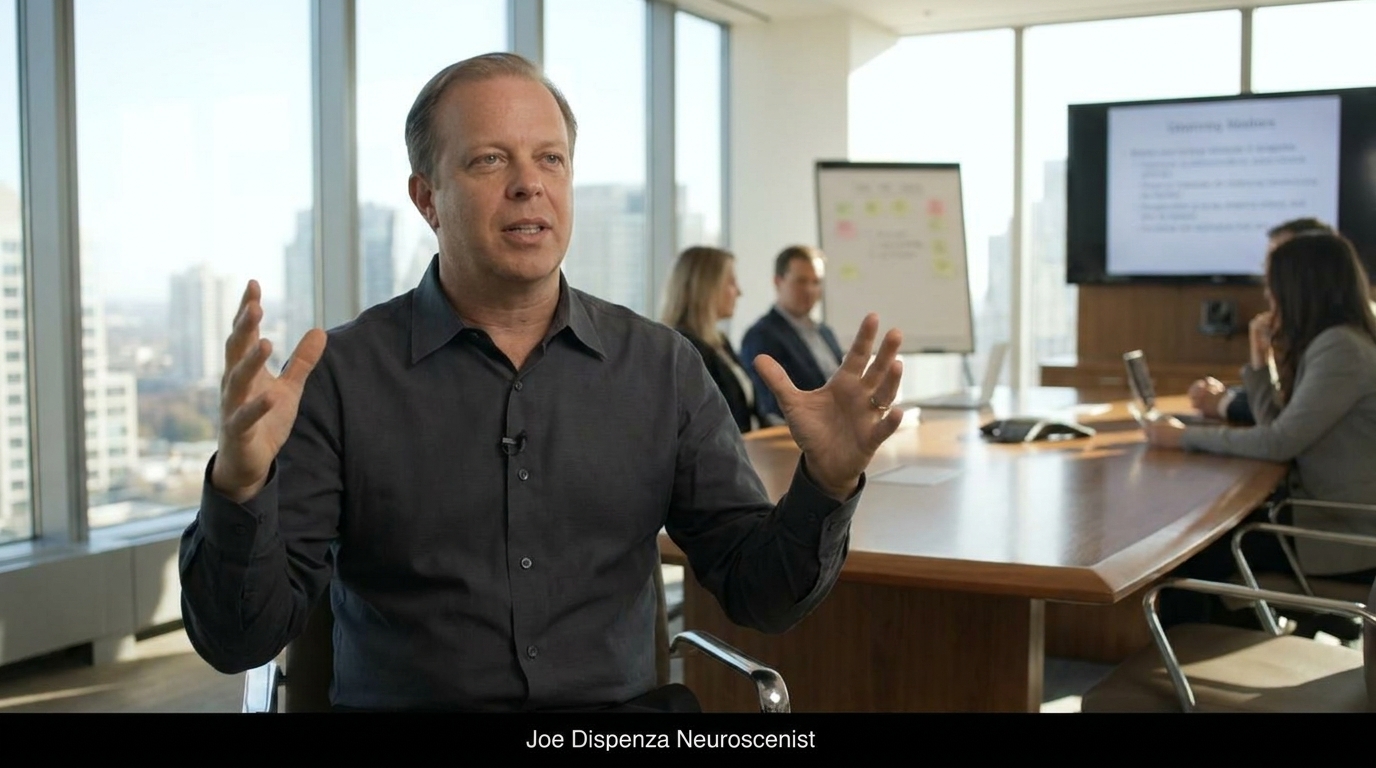
People who search for “Joe Dispenza Wikipedia” usually want a neutral, fact-based overview of a man who is praised by fans and challenged by scientists. Many pages that rank for this keyword are either promotional or full of copied text, so this guide takes a balanced approach. It covers who Dispenza is, how he trained, what he teaches, which books he wrote, and why researchers question parts of his work.
Who is Joe Dispenza?
Joe Dispenza is an American chiropractor, author, and lecturer. He is best known for teaching meditation methods that he says can change the brain and improve health. His official biography describes him as an international lecturer, researcher, corporate consultant, author, and educator who has been invited to speak in more than 33 countries on six continents. Publisher biographies list his birth date as March 22, 1962, although little is publicly shared about his early family life.
Descriptions of him vary a lot. Fans often call him a neuroscientist, while more careful sources describe him as a doctor of chiropractic with postgraduate study in brain-related subjects. This difference matters, and it explains much of the debate around him.
Education and early career
According to his publisher, Dispenza studied biochemistry at Rutgers University in New Jersey and received his Doctor of Chiropractic degree from Life University in Atlanta, Georgia. His own website also mentions a bachelor’s degree from Evergreen State College. His postgraduate training is described as being in neurology, neurophysiology, and brain function, which is not the same as holding a doctorate in neuroscience.
Some critics have asked whether he actually graduated from Rutgers. His biographies say only that he studied biochemistry there, so readers should not assume he earned a degree from that university.
The 1986 accident story
The most famous part of his story is a cycling accident in 1986. Dispenza says it left him with six compressed vertebrae, and that he left the hospital and chose to rebuild his spine with his mind instead of having surgery. He describes this as the moment that began his interest in the mind-body connection.
This account comes from Dispenza himself. Skeptical writers have noted that he has not released medical records, scans, or doctors’ reports that would let outsiders confirm the injury or the recovery. For that reason the story is best described as his personal claim rather than an independently verified medical case.
The Ramtha connection and “What the Bleep Do We Know!?”
Many readers are surprised to learn that Dispenza first became widely known through a film. He appeared in the 2004 documentary What the Bleep Do We Know!?, which mixed physics, brain science, and spirituality. Investigative reporting has also said that during the early 2000s he served as a teacher at Ramtha’s School of Enlightenment in Yelm, Washington, a group that the Southern Poverty Law Center describes as a cult. The school is built around J.Z. Knight, who says she channels an ancient warrior spirit named Ramtha.
Dispenza presents his teaching as based on science, so this background is often raised by critics. Supporters point out that a person’s past affiliations do not by themselves prove or disprove their later ideas.
Books by Joe Dispenza
Dispenza became a popular author through a series of self-help books that blend brain science with meditation practice. The main titles are:
- Evolve Your Brain: The Science of Changing Your Mind (2007), the first and most technical book, which explains how thoughts and habits relate to brain chemistry.
- Breaking the Habit of Being Yourself (published by Hay House in the early 2010s), a guide to changing thought patterns and emotional habits.
- You Are the Placebo (2014), which looks at belief and healing.
- Becoming Supernatural (2017), which describes his meditation techniques in detail.
He has also appeared in the documentary film Heal. Reader reviews of his books are very mixed. Some people say the meditation steps helped them build new habits, while others complain about repetition and loose use of scientific terms, especially the word “quantum.”

What does Joe Dispenza teach?
His core idea is that people stay stuck because they repeat the same thoughts, emotions, and behaviors every day, which he calls the “habit of being yourself.” He teaches that regular meditation, focused attention, and strong emotional states can help a person break these loops and “rewire” the brain.
His workshops and multi-day retreats use long guided meditations, breathing methods, and group sessions. His organization says he has trained more than 70 corporate trainers who teach his model of transformation to companies around the world. Dispenza also teaches at several centers, including the Omega Institute and Kripalu in the United States, and he has been listed as faculty at Quantum University in Hawaii.
Is his work backed by research?
This is the most important question for anyone reading about him, and the honest answer is that part of it is supported and part of it is not. Meditation in general has real evidence behind it for lowering stress and improving well-being. Neuroplasticity, the idea that the brain can change with experience, is also well established in mainstream neuroscience.
The disagreement starts with the bigger claims, such as meditation healing serious diseases or “collapsing” physical problems through the quantum field. One investigative report from 2023 stated that Dispenza had published only one peer-reviewed article at that time, a collaboration with two Australian universities that found changes in brain waves when retreat participants meditated. A summary of that kind of work describes a study of 223 novice meditators with thousands of EEG scans, but brain-wave changes during meditation are not the same as proof of healing.
Another published study took blood from about 100 people at one of his retreats and tested it on human lung cells. Some researchers raised concerns about Dispenza’s involvement as a co-author, and the study also had limits such as self-selection bias, since people who attend retreats are not a random group.
Main criticisms in plain terms
Critics usually make four points. First, they say he uses words from quantum physics in ways that physicists do not accept. Second, they say his health claims go beyond what the published evidence shows. Third, they note that the biggest claims, including his own spinal recovery, cannot be checked independently. Fourth, they point out that his workshops and products form a large business, which makes careful evidence even more important.
His organization has responded to some of this. A company representative has stated that Dispenza does not claim meditation can treat or cure cancer.
Is there a Joe Dispenza Wikipedia page?
Search results give mixed answers here. Some sites claim a full Wikipedia biography exists, while others say it does not, and several pages with “Wikipedia” in the title are copies or low-quality rewrites. The most reliable way to check is to search directly on Wikipedia, and to treat any site that only reuses its text with caution. A good encyclopedia entry on a person like this would cover his background, books, and the scientific criticism together, which is the approach taken in this guide.
Final thoughts
Joe Dispenza is a popular teacher with a large global audience and a clear message about changing habits through meditation. His supporters value the practical tools and the sense of hope. His critics value evidence and caution, and they argue that some of his claims have outrun the research. The most sensible way to read about him is to separate the reasonable, well-supported ideas, such as the benefits of meditation and the brain’s ability to change, from the large claims that still lack independent proof.
Frequently asked questions
Is Joe Dispenza a neuroscientist?
His published biographies say he is a doctor of chiropractic with postgraduate training in brain-related fields. Some websites call him a neuroscientist, but the degrees listed in his own biographies are in chiropractic.
What is Joe Dispenza best known for?
He is best known for his books, his meditation retreats, and his claim of recovering from a spinal injury using mental focus.
Is his work scientifically proven?
Meditation has proven benefits for stress and well-being, but his larger claims about healing disease are disputed, and independent peer-reviewed support is limited.
Disclaimer: This article is for general information only and is not medical, legal, or professional advice. It summarizes publicly available information and does not endorse or oppose Joe Dispenza or his programs. Some biographical details come from his own statements and cannot be independently confirmed. Please speak with a qualified health professional before changing any treatment, and do not replace medical care with meditation or any other practice.
EXPLORE MORE: Dan Herbatschek Wikipedia: Is There a Page, and What Do We Actually Know About Him?

I’m Muhammad Ubaid, founder of YBR Magazine. I research and write detailed guides on America’s National Parks — covering entry fees, permits, best times to visit, and planning tips — using official NPS sources and up-to-date information.