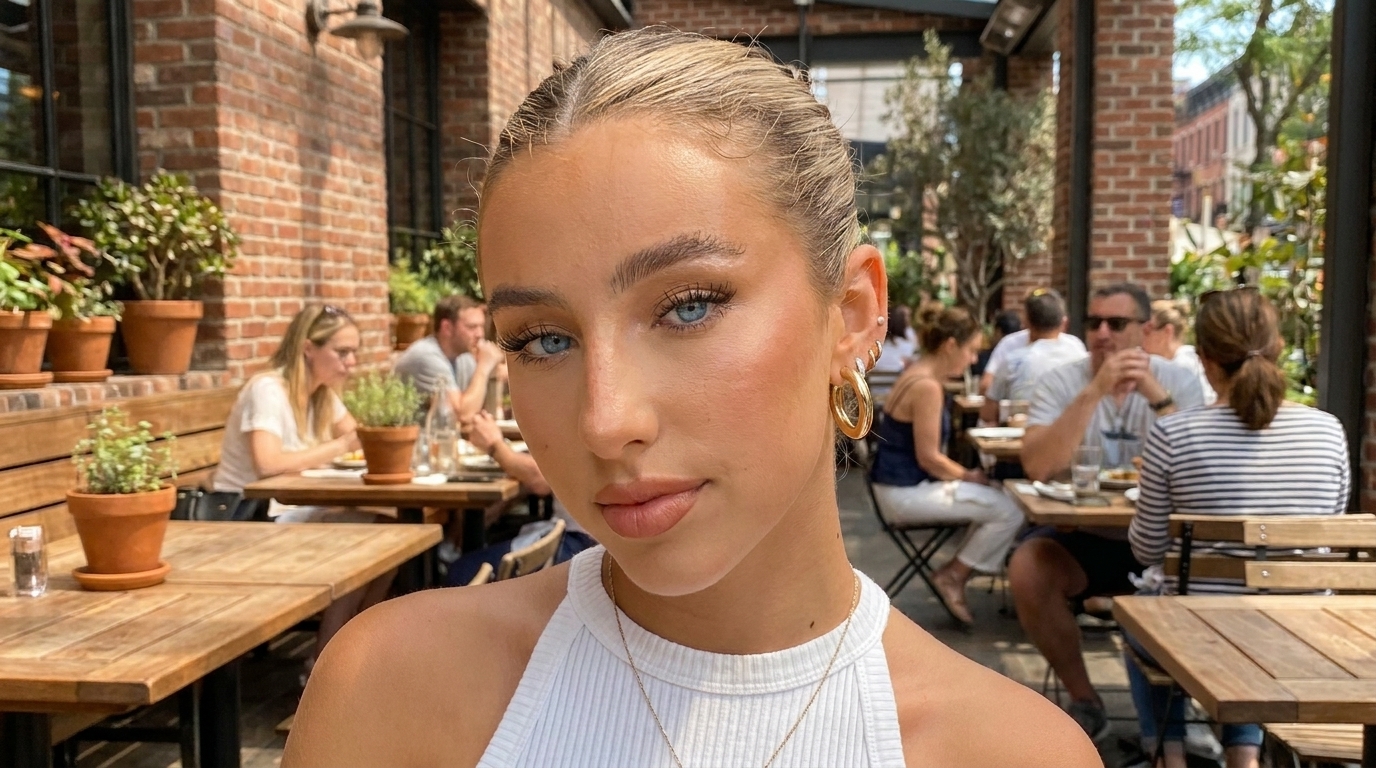
If you have typed “Gia Duddy leaks” into a search engine, you have probably seen a long list of pages that promise shocking answers but deliver very little. Many of them repeat the same vague claims, copy each other’s wording, and never show a single reliable source. This article takes a different approach. It explains who Gia Duddy is, why her name became so heavily searched, what the “leaks” rumors actually are, and why clicking on many of these results can put you at risk.
Who Is Gia Duddy?
Gia Duddy is a social media personality who became widely known during the 2023 NFL Draft. She was the girlfriend of former Kentucky quarterback Will Levis at the time, and as he slid down the draft board, the cameras kept returning to the two of them. That broadcast attention turned a private college relationship into a public story almost overnight, and her follower count and name recognition grew quickly afterward.
Since then, she has built an online presence as an influencer, often talking about life as the partner of a professional athlete. In a recent viral post, she described the less glamorous side of that lifestyle, explaining that when players are traded, partners can suddenly lose close friends and routines. The post drew plenty of criticism, which shows how closely her online activity is watched.
You may see many personal details about her online, such as her exact birthdate, her family, or her education. These details vary from site to site and often contradict each other, so it is best to treat them with caution unless they come from an interview or a verified account she runs herself.
Why Is “Gia Duddy Leaks” Such a Popular Search?
There are a few simple reasons this phrase gets so many searches. The first is the way the draft-night moment worked. Millions of people saw her on television without knowing anything about her, and curiosity naturally followed. The second is her relationship history with a well-known athlete. Breakups and reunions involving athletes tend to attract gossip, and rumors about her relationship status have appeared repeatedly over the past few years.
The third reason is a pattern that affects many young women who gain sudden fame. As soon as a name trends, people begin searching it alongside the word “leaks,” whether or not any such content exists. Search engines then suggest the phrase to other people, and the cycle feeds itself. In other words, a keyword can become popular simply because people are curious about it, not because the claim behind it is true.
What Do the “Leaks” Rumors Actually Claim?
The rumors usually fall into a few categories. Some claim that a private video or private photos were shared without her permission. Others claim that a “tape” involving her and her former partner exists. Still others use the word “leak” in an entirely different sense, such as a leaked fashion look or leaked personal information.
The important point is that the pages making these claims almost never cite a credible news outlet, a statement from Gia Duddy, or any confirmation from a legal or law enforcement source. Several of the top-ranking pages even contradict one another, with one describing a fashion leak, another describing a video, and another describing leaked personal information. When different pages tell completely different stories under the same headline, that is usually a sign that the content was written to capture search traffic rather than to report facts.
Based on what can be verified from reputable reporting, there is no confirmed evidence that proves the claims made by these sites. Anyone who tells you otherwise without showing proof from a trustworthy source is probably trying to get a click.
The Hidden Risks Behind Fake Leak Pages
Pages built around “leaks” keywords are a well-known tool for scammers. Their goal is not to inform you but to profit from your curiosity. Here are some of the most common dangers.
Malware and fake downloads.Some pages ask you to download a video player, update a browser, or install an app before you can “watch.” These files can contain viruses or software that steals passwords and banking details.
Phishing and fake logins.Other pages tell you to log in with a social media account or enter an email address to unlock content. Entering your details gives scammers direct access to your accounts.
Survey and subscription traps.Some sites send you through endless surveys or sign you up for paid subscriptions that are difficult to cancel.
Clickbait that never delivers.Many pages simply place ads around a few paragraphs of filler text, which wastes your time and exposes you to more risky advertising.
A good rule is that if a page promises exclusive private content and asks you to download, log in, or pay, you should close it immediately.
Why Sharing Private Content Is Harmful and Illegal
Even if real private content about anyone existed, sharing or spreading it would cause serious harm. When intimate images or videos are shared without the consent of the person in them, it is often called non-consensual intimate imagery. It can cause lasting emotional distress, damage a person’s career and relationships, and follow them for years because copies are so hard to remove.
The law takes this seriously. In the United States, a federal law passed in 2025 known as the TAKE IT DOWN Act makes it a crime to knowingly publish non-consensual intimate images, including AI-generated fakes, and requires online platforms to remove reported content within a set time. Many individual states and many other countries, including Pakistan, also have laws against sharing private images without consent or against online harassment. Even people who only forward or repost such material can face consequences, so passing it along is never harmless.
It is also worth remembering that artificial intelligence now makes it easy to create convincing fake images and videos. A clip described as a “leak” may not even be real, and the person shown in it may never have taken part in anything like it.
How to Respond If You Come Across Private Content
If you ever see content that appears to have been shared without someone’s consent, the most helpful actions are simple. Do not download it, share it, or comment on it. Report it using the reporting tools on the platform where you found it, since most major platforms ban this material. If you know the person, you can quietly let them know so they can take action. People affected by this kind of abuse can also contact organizations such as the Cyber Civil Rights Initiative in the United States or StopNCII.org, a free service that helps people prevent their intimate images from spreading across participating platforms.

How to Search for Celebrity News the Right Way
If you are genuinely interested in Gia Duddy’s life and career, the safest approach is to follow her official social media accounts and read established sports or entertainment news outlets. These sources are more likely to check their facts, and they do not require downloads or logins. Be careful with websites that look like news pages but have strange web addresses, no author names, and text that sounds repetitive or vague.
Frequently Asked Questions
Is there a confirmed “Gia Duddy leak”?
There is no confirmation of such a leak from credible news reporting. Most pages using this phrase are unreliable and make claims without evidence.
Why does her name appear with the word “leaks”?
Search suggestions often reflect what many people type, not what is true. Sudden fame can cause a name to be paired with this word regardless of the facts.
Are “Gia Duddy leaks” links safe to click?
Generally no. Links promising private content are commonly used for malware, phishing, and scams.
Is it illegal to share leaked private content?
In many places, yes. Sharing intimate content without consent can lead to criminal charges and civil lawsuits.
Final Thoughts
The phrase “Gia Duddy leaks” says more about internet curiosity than about any proven event. Gia Duddy became known through a single viral television moment and has since built her own online following, but the leak claims attached to her name are unsupported by credible sources. The most responsible choice is to avoid clicking suspicious links, refuse to share private content, and rely on trustworthy outlets for real news. Doing so protects both your own devices and the dignity of the person being talked about.
Disclaimer: This article is for general information only. It does not claim that any private or leaked content of any person exists, and it does not link to or describe any such material. Details about public figures can change, and some information online is inaccurate, so please verify facts through official accounts and reputable news sources. Nothing here is legal advice. If you or someone you know is a victim of non-consensual image sharing, contact the relevant platform, local law enforcement, or a qualified legal professional.
EXPLORE MORE: Brooke Smith: Actress, Photographer and Author

I’m Muhammad Ubaid, founder of YBR Magazine. I research and write detailed guides on America’s National Parks — covering entry fees, permits, best times to visit, and planning tips — using official NPS sources and up-to-date information.