

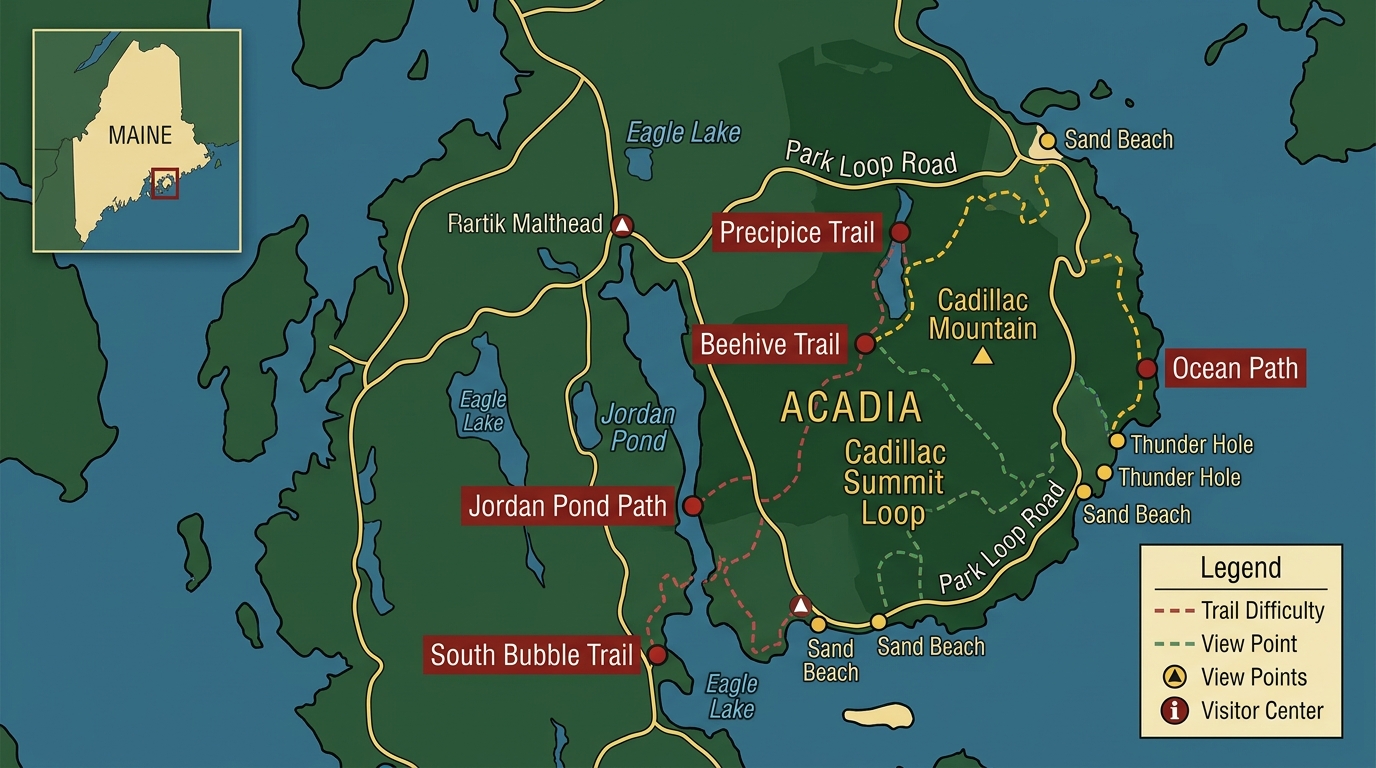
Planning a trek to Mount Desert Island brings visitors into a dramatic landscape where ancient granite mountains rise directly above the cold Atlantic Ocean. Choosing the right Acadia National Park hikes lets travelers experience everything from quiet carriage roads winding through birch forests to daring cliffside routes overlooking crashing waves. Unlike vast western national parks that require hours of driving between trailheads, Acadia National Park packs immense geographical variety into a compact area. That close proximity means hikers can easily transition from a flat pond loop to a rugged summit climb within a single morning.
Top Coastal and Mountain Trails in Acadia National Park
The finest trails in Acadia National Park combine sweeping ocean panoramas with the classic granite climbing experiences that define the Maine coast.
Precipice Trail and Beehive Trail stand out immediately as the most famous routes for travelers seeking an unforgettable adrenaline rush. These paths use bolted iron rungs, narrow rock ledges, and vertical ladders to lift hikers straight up sheer cliff faces above Sand Beach. For visitors who prefer expansive ocean views without the sheer drop-offs and vertical climbing elements, Cadillac Mountain North Ridge Trail provides a steady, scenic ascent across open stone ridges. Another rewarding choice is the Bowl Trail, which guides hikers up a sheltered forest valley directly to a serene mountain pond tucked beneath high granite cliffs.
Family-Friendly and Gentle Walking Paths
Gentle walking paths and flat shoreline loops make Acadia National Park accessible for beginners, families, and travelers seeking a relaxing walk outdoors.
Jordan Pond Path ranks as a premier choice for visitors looking for effortless scenery, looping completely around clear glacial waters while offering constant views of the twin mountains known as the Bubbles. The path features a flat gravel bed and wooden boardwalk sections that keep walking straightforward and comfortable. Another exceptional option is the Ocean Path, which traces the rocky shoreline right beside Park Loop Road and lets hikers listen to the roar of the sea near Thunder Hole without navigating steep elevation gains.
Trail Breakdown by Physical Effort and Terrain
Evaluating trail metrics and physical demands helps hikers match their personal fitness level with the right route before stepping onto the dirt.
Understanding how elevation change, technical terrain, and distance interact across different paths prevents visitors from biting off more than they can chew.
| Trail Name | Difficulty Level | Primary Terrain Feature |
|---|---|---|
| Jordan Pond Path | Easy | Flat shoreline gravel loop with pond views |
| The Bowl Trail | Moderate | Gradual forest climb leading to a mountain pond |
| Beehive Trail | Strenuous / Technical | Iron rungs, vertical ladders, and cliff exposure |
| Perpendicular Trail | Strenuous | Steep granite staircases and rugged stone steps |
Mastering Vertical Ladders and Cliffside Scrambles
Conquering the vertical ladders and iron rungs of Acadia National Park requires a strong head for heights and complete comfort with cliffside exposure.
Routes like the Precipice Trail function less like traditional walking paths and more like vertical rock scrambles where climbers pull themselves up metal fixtures anchored straight into raw stone. Visitors who experience vertigo, dizziness, or a strong fear of heights should steer clear of these specific routes and opt for alternative inland mountain paths instead. For travelers who enjoy comparing dramatic vertical landscapes across different regions, exploring rugged high-altitude mountain routes offers wonderful insights into national park trail design.

Ranger-Led Educational Outings and Group Walks
Joining local experts on educational walks provides a structured way to learn about the park’s fragile ecology, rich history, and wildlife.
Park rangers lead scheduled outings that dive into topics ranging from native bird species and tidal pool ecosystems to the construction of the historic carriage road network. These ranger-led programs suit solo travelers, curious kids, and adults who want deeper context while exploring the outdoors. Program schedules and sign-up requirements change throughout the operating season, so visitors should always check in with official park visitor centers right after arriving.
Disclaimer: Trail conditions, weather patterns, and park regulations shift across seasons. Always verify current weather forecasts, parking rules, and park entrance requirements from official park sources before heading out on any trail.
Common Questions About Exploring Mount Desert Island Trails
What are the top paths in Acadia National Park for beginners?
Beginners enjoy flat and scenic routes like the Jordan Pond Path and the Ocean Path because these trails offer great coastal views without steep mountain climbs.
Are there kid-friendly walking routes in Acadia National Park?
Families with children often choose the Jordan Pond Path or the Jesup Path, which features flat wooden boardwalks through peaceful birch forests.
What is the Bowl Trail like for everyday hikers?
The Bowl Trail is a moderate hike that takes visitors up a steady forest grade to a quiet mountain pond nestled between high granite ridges.
Which specific paths feature iron rungs and vertical ladders?
The Beehive Trail and the Precipice Trail are famous for their steep iron rungs, cliffside ledges, and vertical ladder climbs.
Do I need a reservation or pass to hike in Acadia National Park?
Visitors need a valid park entrance pass, and certain peak times or parking areas may require vehicle reservations depending on the season.
What is the best time of year for exploring Acadia on foot?
Late spring through autumn offers the most pleasant weather, with vibrant fall foliage drawing many visitors to the coastal trails in September and October.

I’m Muhammad Ubaid, founder of YBR Magazine. I research and write detailed guides on America’s National Parks — covering entry fees, permits, best times to visit, and planning tips — using official NPS sources and up-to-date information.