


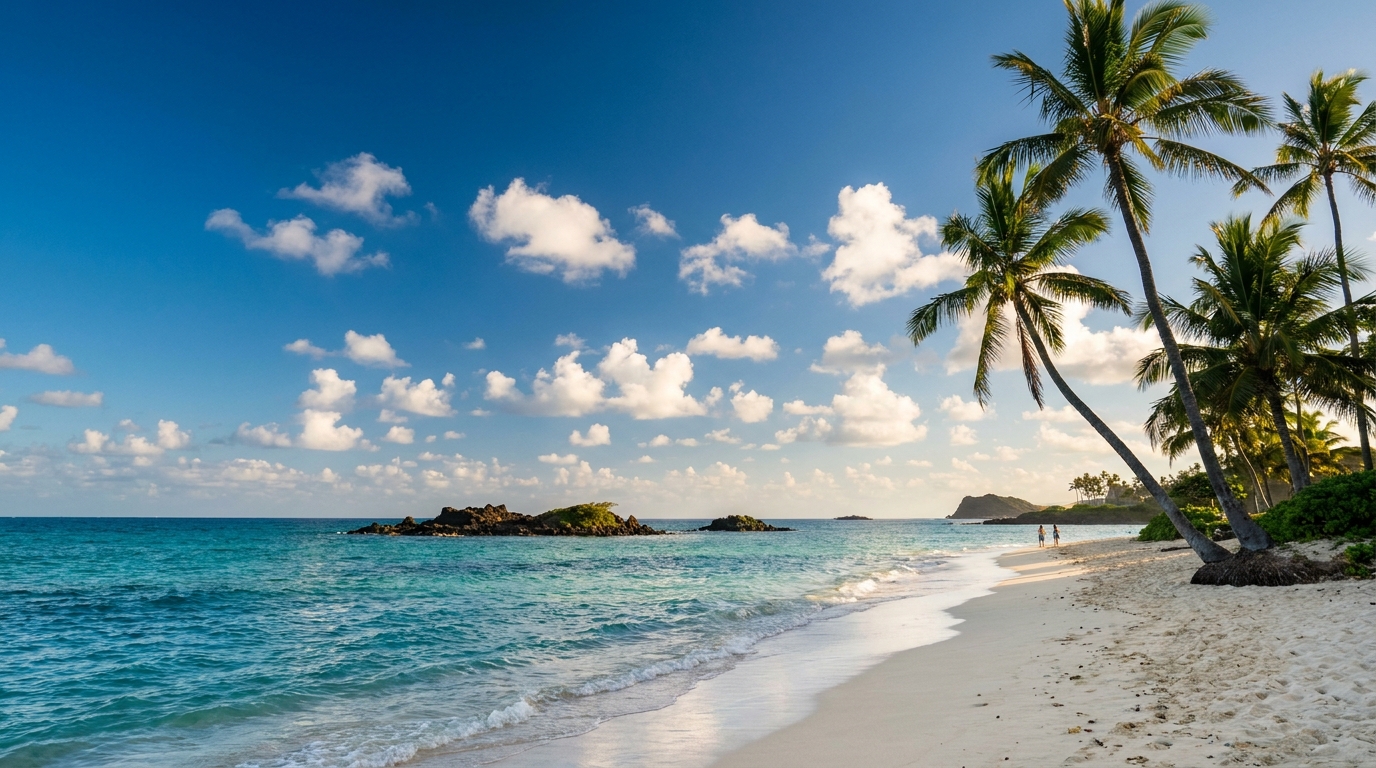
Choosing the best month to go to Hawaii is harder than it sounds, because the islands stay warm all year and every season offers something different. Winter brings humpback whales and towering surf, summer brings calm seas and school-holiday crowds, and the months in between often deliver the best mix of sunshine, space and lower prices. This guide compares weather, crowd levels, ocean conditions, hurricane risk and costs so you can match a month to your own priorities. It also flags places where popular online advice conflicts with official data, since many search results simply repeat one another.
Hawaii Travel Seasons at a Glance
| Topic | Quick fact |
|---|---|
| Visitors on a typical day | About 230,000 across all the islands, based on an analysis of state tourism data |
| Dry and wet seasons | Drier from April to October, wetter from November to March |
| Humpback whale season | November to May, with a peak from January to March |
| North Shore big-wave season (Oahu) | November to February |
| Hurricane season | June 1 to November 30 |
The Short Answer
For most travelers, the best month to go to Hawaii is May. It falls in the drier half of the year, it arrives before the summer school-holiday rush, and it usually brings warm beach weather without the highest prices. September and October are close runners-up for people who want the emptiest beaches and trails and are comfortable traveling inside hurricane season. Whale fans should aim for February, surf watchers should look at December through February, and families tied to school calendars will often end up in June or July, when the islands are at their fullest.
Online advice is not consistent on this topic. Some guides say the good window runs from late March to late October, others narrow it to just four months, and several thin, repetitive pages contradict each other on basics such as which month is warmest. The picks in this article lean on state tourism data and official government sources wherever possible.
Why Hawaii Has No Single Perfect Month
Because the islands sit in the tropics, temperature barely changes through the year. Tourism climate summaries put Honolulu’s daily averages at roughly 79°F to 82°F across the months they report, with nights about ten degrees cooler, and the sources disagree on whether August or September is technically the warmest. That gap is only a degree or two, so it should not drive your decision. Local tradition describes two seasons, kau (summer) and hoʻoilo (winter), and the exact boundaries are given slightly differently depending on the source.
What actually changes from month to month is rain, ocean swell, whale activity and crowd size. Rain depends heavily on which side of an island you are on: leeward coasts stay relatively dry, while windward coasts are greener and wetter, and Hilo on the Big Island sits on the wet side and sees showers on most days. Honolulu averages about 2.3 inches of rain in March but only about 0.8 inches in May, yet the wettest slopes of the Big Island and Maui can collect several meters of rain in a year. That is why the best month to go to Hawaii depends less on the thermometer than on what you plan to do and which island and coast you pick.
Crowds and Prices Through the Year
An analysis of state tourism data published by Love Big Island shows that September is the quietest month statewide, running about 16 percent below the yearly average, followed by October at about 12 percent below, with May and November close behind. April and August also dip a little under average, while June, July and the December holidays are the fullest stretches of the year.
Advice about January and February is where guides disagree most. Some describe those months as cheap and quiet because they follow the holiday rush, while the same data analysis shows that fewer people arrive after New Year but they stay longer, so the Big Island and Maui remain busy through winter. Since both views have some support, the sensible move is to compare real hotel and flight prices for your exact dates instead of trusting a general claim.
If cost is your main concern, the best month to go to Hawaii is usually a shoulder month rather than midsummer or December. One long-running Hawaii planning blog names May, September, October and November as the best months for savings, which matches the quieter crowd pattern above. No official monthly price index was found that shows exactly how much cheaper each month is, so treat savings as a general pattern rather than a guarantee.
Best Month to Go to Hawaii for Your Interests

Whale Watching
NOAA’s Hawaiian Islands Humpback Whale National Marine Sanctuary places peak whale abundance between January and March, and the tightest statistical window inside that period falls around mid-February to mid-March, which makes February the best month to go to Hawaii for whale watching. The animals travel here to mate, give birth and nurse their young, then head back to Alaska in summer because Hawaii’s warm water does not hold enough food to feed them year-round. Maui is often named the top island for viewing, although whales can be seen from every island, and boats must stay at least 100 yards away, a federal rule that applies in all Hawaiian waters throughout the year. The peak can overlap with some of the busiest and most expensive lodging periods on Maui and the Big Island, so reserve boat tours and rooms early.
Surfing and Big Waves

The North Shore of Oahu changes character with the seasons. From roughly November through February, North Pacific swells produce the huge waves at Pipeline, Sunset Beach and Waimea Bay, and the Vans Triple Crown of Surfing runs in November and December, according to the state tourism website. Watching from the sand is free and popular, but the narrow highway to the North Shore clogs quickly on big days, and the waves can be dangerous even for experienced surfers, so stay well back from wet sand and rocks. In summer the main surf shifts to the south shore while the North Shore becomes calm enough for family beach days.
Swimming and Snorkeling
Calm water is easiest to find in summer and early fall, when north-facing Oahu beaches that are rough in winter turn lake-like and warm ocean temperatures make long snorkel sessions comfortable. Conditions still change beach by beach and day by day, so no single month guarantees calm seas, and sheltered bays can remain swimmable in winter.
Hurricane Season: How Worried Should You Be?
Local news coverage of the 2026 outlook reported that forecasters expected an active, above-normal Central Pacific season, with the peak between July and September, which is a reminder that outlooks change from year to year. Direct hits are still rare. Hurricane Iniki, which struck Kauai in 1992, remains the best-known example and was described in a 2021 report as the last major hurricane to hit the state, while Hurricane Lane in 2018 made a last-minute turn that narrowly spared Oahu. Officials at NOAA’s Central Pacific Hurricane Center stress that it takes only one direct hit or close call to disrupt daily life on the islands.
Some websites tell visitors to avoid June through November entirely, which overstates the risk for most trips. A more practical approach is to book flexible fares or travel insurance for trips between July and September and to follow Central Pacific Hurricane Center forecasts in the days before you fly.
Best Month to Go to Hawaii by Island
A statewide average hides real differences between islands, so the island you choose can change the answer. All four main islands are quietest in September, but they differ on when they are fullest, according to the Love Big Island analysis of state data.
| Island | Fullest months (vs. yearly average) | Quietest months (vs. yearly average) |
|---|---|---|
| Maui | December (about 22% above), July (about 10% above) | September (about 19% below), October (about 16% below) |
| Big Island | December and January (each about 21% above) | September (about 22% below), May (about 15% below) |
| Oahu | June (about 15% above), July (about 12% above) | September (about 15% below), October (about 13% below) |
| Kauai | June and July (each about 17% above) | September (about 16% below) |
Oahu is the busiest island by far, with roughly 110,300 visitors on an average day compared with about 52,300 on Maui, 36,500 on the Big Island and 28,300 on Kauai. It also varies the least from month to month, so on Oahu your choice of beach and neighborhood matters more than your choice of month. The Big Island swings the most between its busiest and quietest months, which makes timing more important there.
Practical Booking Tips
Some of the most popular sights now require advance reservations for out-of-state visitors in any month. Haena State Park on Kauai, the gateway to the Napali Coast trail, requires a reservation with a $5 entry fee per person and a $10 parking fee, and Diamond Head on Oahu also asks out-of-state visitors to reserve ahead, according to Love Big Island’s planning guides. Fees and rules change, so confirm them with the official park authorities before you travel.
Crowd-avoiding habits help in every season. Visit popular places early or late in the day, favor weekdays because local families fill the beaches on weekends, and consider staying away from the busiest resort towns, for example on the North Shore of Oahu, Upcountry Maui or in Hilo on the Big Island.
Frequently Asked Questions
Can you see whales in Hawaii in summer?
Very rarely. Only a few stragglers remain in early summer, and the first returning whales are occasionally reported in October, such as a sighting off Kauai on October 9 in 2023, but the real season does not begin until around December.
Is it worth visiting during the rainy season?
For many travelers it is. Rain often arrives as passing showers, and Honolulu still gets about 6.5 hours of sunshine a day in November, rising to about 8.5 hours by March, according to a cruise line’s climate summary. Staying on a leeward coast improves your chances of dry days.
Is the ocean warm enough for swimming in winter?
Honolulu sea temperatures are around 75°F in March and 79°F in November, compared with about 81°F in October, according to a climate data website. Most people find winter swimming comfortable, and wave and current conditions usually matter more than water temperature.
Where can I check surf and beach conditions before I go?
The state-run site hawaiibeachsafety.com reports wave heights, wind and beach conditions, updated every ten minutes, and it offers live cameras at several North Shore surf spots.
Does the “green fee” add a separate charge to my bill?
No, reports describe it as part of the lodging tax rather than a separate line item. Hawaii’s statewide transient accommodations tax rose from 10.25% to 11% on January 1, 2026, counties can add up to 3%, and with the general excise tax the total can approach 19%.
Does it ever snow in Hawaii?
Yes, but only at the very top of the Big Island. The summits of Maunakea and Mauna Loa are sometimes covered in snow during winter, while the beaches stay warm.
Conclusion
In the end, the best month to go to Hawaii is the one that protects your top priority, whether that is whales, big waves, calm water, quiet trails or a lower hotel bill. Decide on that priority first, then choose an island whose busy season avoids your dates, and compare real prices before you commit. Hawaii rewards flexibility, and a trip in almost any month can be excellent when conditions are checked shortly before departure.
Disclaimer: This article is for general travel information only. Weather, crowd levels, fees, reservation rules, hurricane outlooks and prices change often and vary by island and by year. Check official sources such as the Hawaii Tourism Authority, the National Weather Service, NOAA and park authorities before you book, and consider flexible bookings and travel insurance. Nothing here is professional travel, safety or financial advice.
Explore More
Do You Need a Passport to Go to Guam? Rules for US and Foreign Travelers

I’m Muhammad Ubaid, founder of YBR Magazine. I research and write detailed guides on America’s National Parks — covering entry fees, permits, best times to visit, and planning tips — using official NPS sources and up-to-date information.

