

Navigating Remote Air Travel to West Texas
Planning a trip that involves air travel to Big Bend National Park requires understanding that no commercial planes land directly inside Big Bend National Park boundaries. Travelers who search for a big bend national park flight quickly learn that the park sits in one of the most isolated desert regions in the United States. Because commercial aviation is completely absent within the protected federal acreage, visitors must land at regional airports located several hours away and complete the final stretch by automobile.
Understanding this logistical reality helps prevent false expectations about local air transit options. Big Bend National Park covers a vast expanse of mountains and desert where preserving natural quiet and fragile wildlife habitats takes top priority. Commercial airlines do not operate runways inside the park, leaving long-distance road driving as the only reliable way to reach trailheads, river canyons, and visitor centers after touching down on a runway.
Choosing Regional Hubs and Ground Transit
Reaching Big Bend National Park by air usually means flying into regional airports like Midland International Air and Space Port or El Paso International Airport. Midland International Air and Space Port sits roughly three and a half hours away to the northeast, while El Paso International Airport lies about five hours away to the northwest. Travelers can also consider San Antonio International Airport, though the drive from San Antonio spans around six to seven hours across rural Texas highways.
Renting a car at any of these major hubs is essential for completing the journey because public transportation options do not exist near the park borders. Road conditions across West Texas feature long stretches of desert highway with sparse services and limited cellular reception. Travelers should check vehicle fuel levels, carry extra drinking water, and map out gas station stops before leaving major towns. Driving through the open desert offers striking views of rugged mountains and wide-open skies, setting the stage for the arrival at Big Bend National Park.
| Airport Name | Approximate Driving Time | General Direction to Big Bend |
|---|---|---|
| Midland International Air and Space Port | About 3.5 hours | Northeast |
| El Paso International Airport | About 5 hours | Northwest |
| San Antonio International Airport | About 6.5 hours | East |
Private Aviation and Local Desert Airstrips
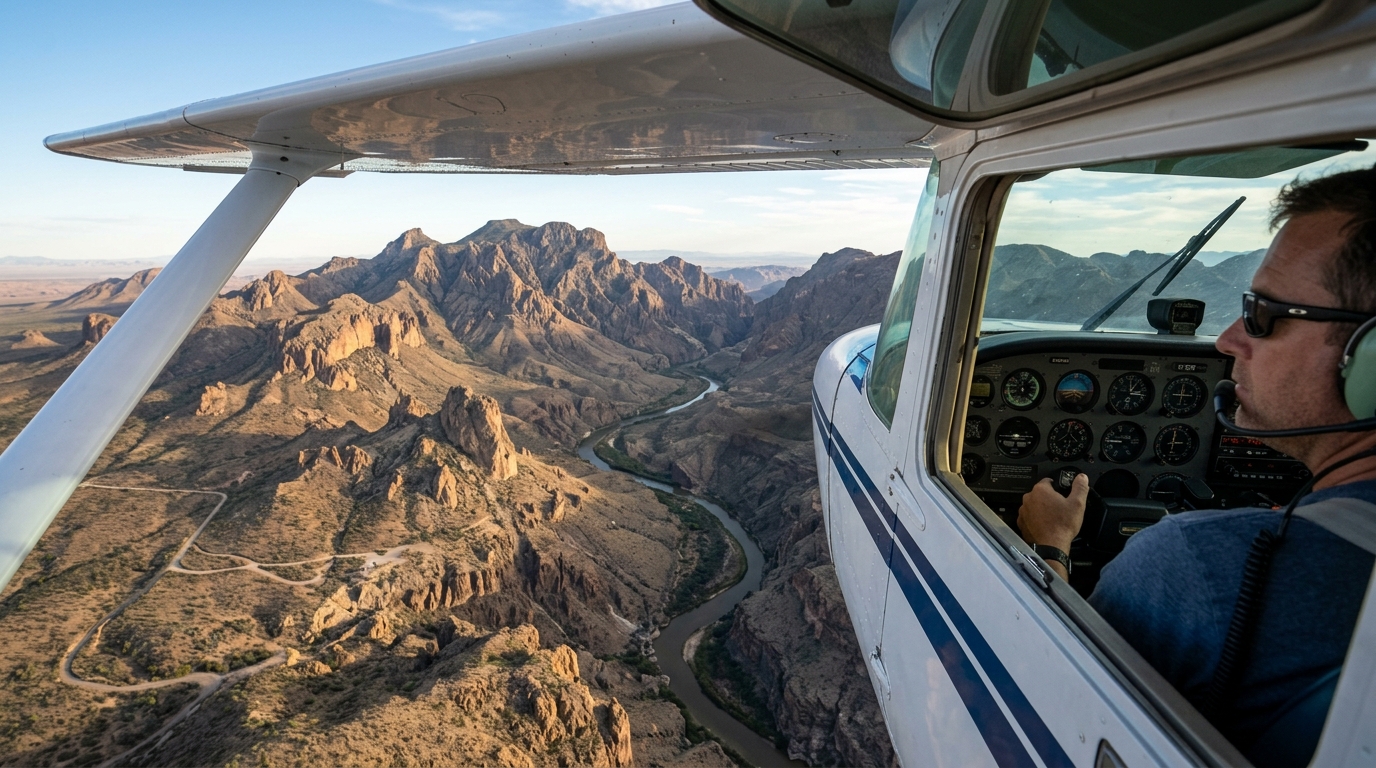
Private pilots flying their own planes into the Big Bend region can utilize smaller local airstrips like the Marathon Motel and RV Park airstrip or the Presidio airport. Private aviation offers a closer alternative for travelers who own or charter smaller aircraft, allowing them to bypass the major commercial hubs entirely. These local airstrips provide basic facilities and place pilots much closer to the small historic towns surrounding Big Bend National Park.
Marathon and Presidio act as convenient gateways for general aviation enthusiasts navigating the borderlands. After landing at a private airstrip, pilots still need to secure ground transportation since local airstrips do not sit directly inside Big Bend National Park. Pilots must also check weather conditions carefully, as West Texas winds and sudden desert thunderstorms can create challenging flying environments.
Federal Airspace and Drone Restrictions
Federal regulations strictly govern the skies above Big Bend National Park to protect sensitive wildlife and preserve natural quiet for visitors. National Park Service rules prohibit launching, landing, or operating unmanned aircraft systems, commonly known as drones, anywhere within Big Bend National Park. These restrictions protect nesting peregrine falcons, shield native mammals from loud mechanical disturbances, and ensure that all visitors can enjoy peaceful desert vistas without interruptions overhead.
Low-flying private aircraft or scenic tour planes must also adhere to Federal Aviation Administration guidelines and recommended altitude minimums over national parks. Violating airspace rules or flying drones illegally inside park boundaries can result in steep federal fines and the confiscation of equipment. Visitors hoping to capture sweeping vistas should rely on designated ground viewpoints rather than airborne devices.
For travelers exploring scenic park routes across remote American landscapes, reviewing drive times and mountain essentials can help prepare for challenging terrain, as outlined in our guide on fresno to sequoia national park.
Disclaimer: Travel logistics, airport flight schedules, and federal park regulations can change over time. Visitors should always verify current airline routes, car rental availability, and official National Park Service notices before finalizing any travel arrangements.
Frequently Asked Questions
Can you fly commercial directly into Big Bend National Park?
No commercial airlines land directly inside Big Bend National Park, as there are no commercial airports within park boundaries.
What is the closest major airport to Big Bend National Park?
Midland International Air and Space Port is the closest major commercial airport, located roughly three and a half hours away by car.
Can I fly a drone inside Big Bend National Park?
No, operating drones or unmanned aircraft is strictly prohibited anywhere within the boundaries of Big Bend National Park.
How long is the drive from El Paso to Big Bend National Park?
The drive from El Paso International Airport to Big Bend National Park takes approximately five hours depending on your exact destination within the park.
Are there smaller airstrips for private planes near Big Bend National Park?
Yes, private pilots can use regional airstrips in nearby towns like Marathon and Presidio before driving the remaining distance to the park.
What should I keep in mind when renting a car for a Big Bend trip?
Travelers should rent reliable vehicles, check gas station locations along remote West Texas highways, and carry extra water for the desert drive.

I’m Muhammad Ubaid, founder of YBR Magazine. I research and write detailed guides on America’s National Parks — covering entry fees, permits, best times to visit, and planning tips — using official NPS sources and up-to-date information.