

Understanding the West Coast National Parks
West Coast national parks include some of the most famous and varied natural areas in the United States. West Coast national parks stretch across a massive geographic range, covering everything from damp, cool maritime ecosystems to scorching interior deserts. Visitors exploring these protected federal lands will find that West Coast national parks offer an enormous range of environments, demanding careful planning for varied weather conditions and large driving distances between destinations.
Traveling along the edge of the American continent reveals how drastically the landscape shifts over just a few hundred miles. From towering snow-capped peaks in the northern states to wide, arid desert expanses in the south, these protected spaces preserve vital habitats for countless plants and animals. Understanding the sheer scale of this region helps visitors map out realistic itineraries that avoid exhaustion. Many travelers make the mistake of trying to cover too much territory in a single week. Breaking the journey down into distinct ecological zones makes trip planning much simpler and far more enjoyable.
The Lush Rainforests and Volcanic Peaks of the Pacific Northwest
The Pacific Northwest features massive evergreen trees, heavy rainfall, and active volcanoes. Washington and Oregon house remarkable protected areas like Olympic National Park and Mount Rainier National Park, where visitors encounter towering coniferous trees, sweeping alpine meadows, and massive glacial systems. These northern destinations provide a completely different experience than the dry southern regions, as frequent rainfall creates dense, vibrant plant growth that thrives year-round.
Olympic National Park stands out because it contains three distinct ecosystems within its boundaries, including rugged Pacific coastline, temperate rainforests, and glacier-capped mountains. Visitors can walk through moss-draped valleys in the morning and look out over crashing ocean waves by the afternoon. Meanwhile, Mount Rainier National Park centers around an active stratovolcano encased in over twenty-five named glaciers. During the brief summer season, wildflower meadows burst into brilliant shades of purple, yellow, and red right beneath the freezing ice fields. For travelers interested in expanding their understanding of protected public lands across the country, reviewing related regional guides such as a detailed Pacific coast and mountain park itinerary can help structure a scenic regional journey.
The Giant Trees and Deep Valleys of Northern and Central California
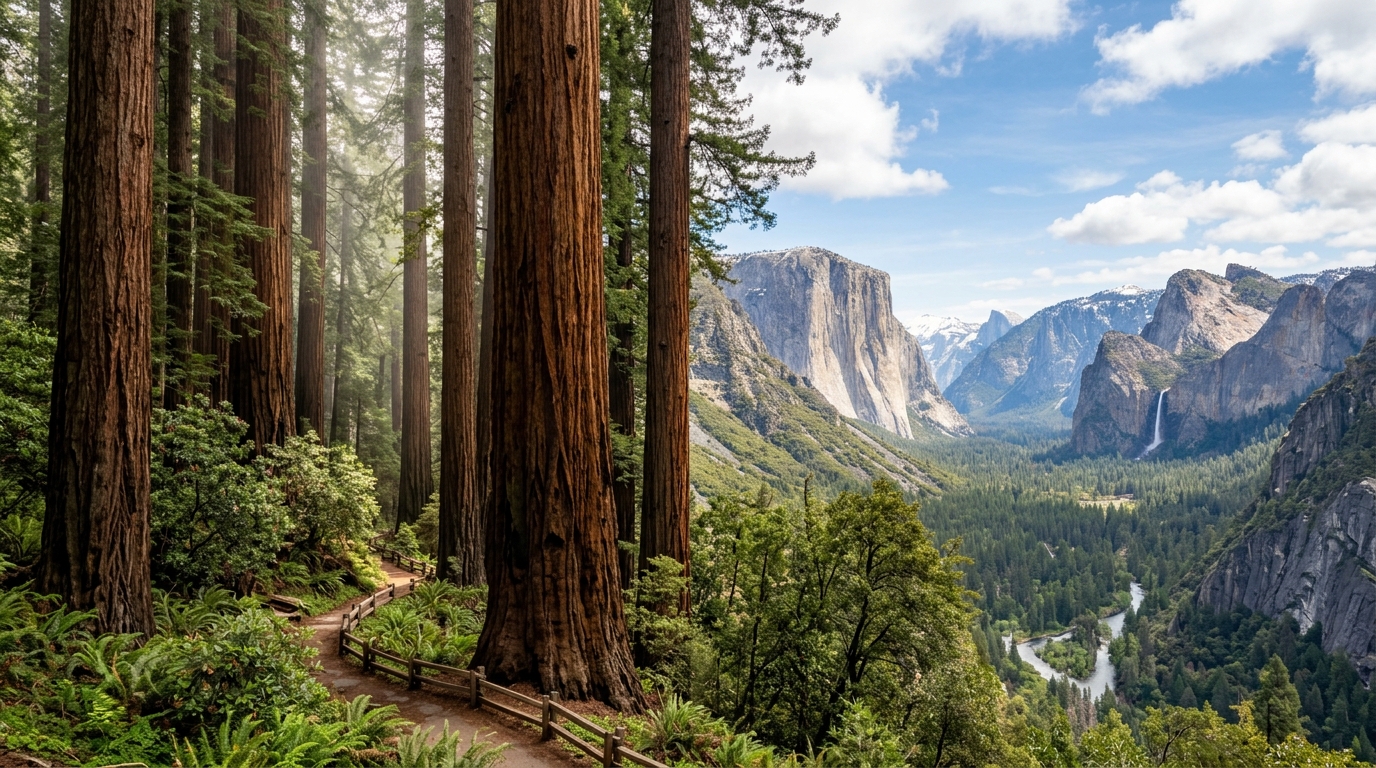
California contains world-famous parks known for towering redwoods, massive granite cliffs, and deep glacial valleys. Yosemite National Park and Redwood National and State Parks draw millions of visitors annually to witness ancient coastal redwoods and monumental granite monoliths carved by ancient ice sheets. These central and northern California preserves showcase dramatic elevation changes, shifting from sea-level coastal fog zones up to high Sierra Nevada mountain passes.
Redwood National and State Parks protect nearly half of all remaining old-growth coastal redwoods on Earth. Some of these living titans reach heights exceeding three hundred and fifty feet, creating a natural cathedral of silence beneath their high canopies. Further inland, Yosemite National Park offers breathtaking vistas of sheer granite cliffs like El Capitan and Half Dome, alongside thundering waterfalls that peak in the spring snowmelt. Navigating these popular California destinations requires advance planning, especially during peak summer months when visitor numbers reach their highest levels. Securing overnight lodging or camping permits well ahead of time ensures a smooth and stress-free vacation.
The Rugged Deserts and Coastal Islands of Southern California
Southern California parks showcase extreme desert heat, unusual plant life, and protected ocean environments. Joshua Tree National Park and Channel Islands National Park represent this arid and marine side of the federal park system, featuring unique Joshua tree woodlands, stark geological rock formations, and isolated island habitats that support rare endemic species found nowhere else on Earth.
Joshua Tree National Park sits at the intersection of two distinct deserts, the Mojave and the Colorado, creating a fascinating blend of ecological traits. Twisted, spiky Joshua trees dot the landscape alongside gigantic pile-ups of smooth monzogranite boulders that attract rock climbers from around the globe. Winter and spring bring mild daytime temperatures that make hiking comfortable, whereas summer brings intense heat that requires visitors to carry substantial amounts of water. Off the southern coast, Channel Islands National Park protects a chain of five islands often called the Galapagos of North America. Because these islands remain largely undeveloped, visitors must arrive by authorized boats or planes, stepping ashore to experience untouched coastal marine life, sea caves, and colonies of barking sea lions.
Frequently Asked Questions
How many national parks are on the US West Coast?
The exact count depends on whether you include all of California, Oregon, and Washington, but there are over a dozen major national parks spread across these three states.
What is the best time of year to visit West Coast national parks?
Summer is ideal for high mountain parks like Mount Rainier or Yosemite, while spring and autumn are much better for exploring desert parks like Joshua Tree.
Can I visit multiple West Coast national parks in one road trip?
Yes, but because the West Coast is very long, it is usually easier to focus your trip on just one region, such as the Pacific Northwest or Southern California.
Do I need a reservation to enter popular West Coast national parks?
Some popular parks use temporary vehicle reservation systems during peak summer months to manage crowds, so you should check official rules before you go.
Are pets allowed in West Coast national parks?
Pets have very strict rules in most national parks and are usually not allowed on dirt trails or beaches to protect local wildlife.
Which West Coast park is best for seeing wildlife?
Parks like Olympic and Yosemite offer great chances to see black bears, deer, and many types of birds, depending on the season.
Disclaimer: Park rules, reservation systems, and fees can change over time. Please verify all details from official National Park Service sources before planning your trip.

I’m Muhammad Ubaid, founder of YBR Magazine. I research and write detailed guides on America’s National Parks — covering entry fees, permits, best times to visit, and planning tips — using official NPS sources and up-to-date information.