

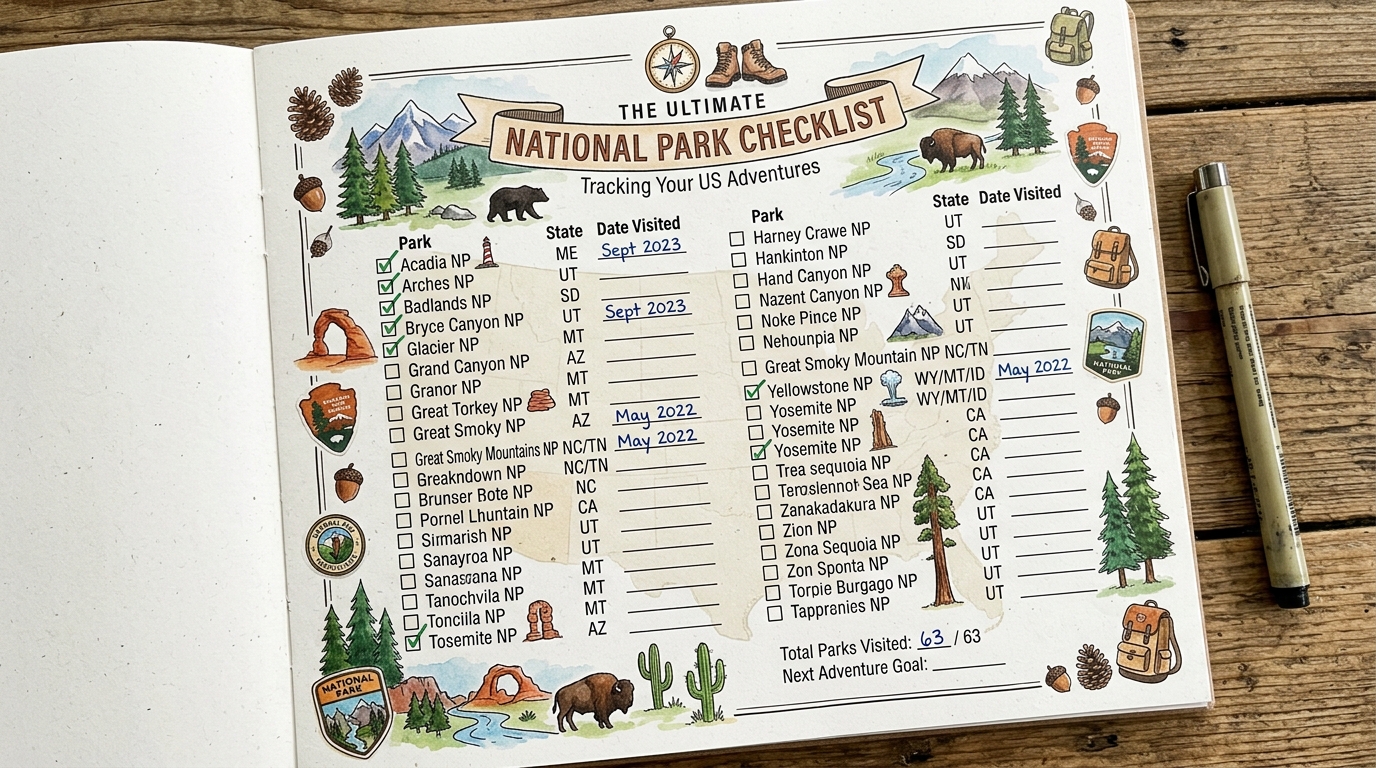
Why You Need a Dedicated National Park Checklist
Using a dedicated national park checklist helps you track your lifetime travel goals and stay organized across multiple trips over many years. A national park checklist is not just a packing list for a single weekend getaway. It functions as a master milestone tracker that outdoor enthusiasts use to mark off dozens of protected landscapes across the United States. When you have a clear master record in front of you, planning multi-state road trips becomes much easier because you can visualize geographic clusters and group neighboring states together for upcoming summer vacations.
Tracking your progress also helps you uncover regional patterns that you might otherwise overlook during casual travel planning. For instance, the desert Southwest features several major protected units that travelers often visit in a single extended loop, while remote Alaskan wilderness gems require specialized logistical preparation well in advance. By reviewing your master tracking sheet regularly, you can map out realistic travel timelines, save money on transportation, and ensure you make the most of your available annual vacation days.
Structuring Your Milestones by Geographic Region
Organizing your tracking sheet by geographic regions ensures you can tackle distant destinations efficiently without burning out your travel budget. Breaking down the official United States system into manageable regional blocks lets you focus on one ecosystem at a time, whether you are conquering the alpine peaks of the Pacific Northwest or exploring the humid wetlands of the Southeast. This regional breakdown prevents you from feeling overwhelmed by the sheer scale of visiting all sixty-three official locations.
Grouping parks by proximity also allows you to plan combination trips that maximize your travel time on the road. For travelers mapping out scenic mountain drives, understanding regional routes and drive times is essential for safety and efficiency, much like preparing for mountain passes discussed in our guide on route planning and mountain essentials. By mapping out nearby clusters, you can seamlessly transition from one protected landmark to the next without backtracking across state lines.
Choosing Between Paper and Digital Tracking Formats
Picking the right format for your national park checklist ensures you can easily update your progress even when venturing deep into remote wilderness areas. Paper checklists and scratch-off maps offer a satisfying tactile experience when you physically cross off a location with a pen or coin at home. Digital spreadsheets and mobile apps let you carry your running progress anywhere, allowing you to attach high-resolution photos, exact visit dates, and personal trail notes to each milestone.
Relying solely on web-based applications can sometimes present challenges when you travel deep into remote canyons or dense forests where cellular data vanishes completely. Downloading offline maps and keeping a laminated backup sheet in your glove compartment guarantees you can always log your milestones. Physical passport stamp books also provide a wonderful physical keepsake that you can bring directly to visitor centers to collect official cancellation stamps with the exact date of your arrival.

Budgeting and Seasonality for Your Lifetime Goals
Balancing seasonal weather patterns and entry costs prevents unexpected roadblocks from stalling your long-term travel momentum. Some high-elevation destinations remain snow-bound well into June, while southern desert parks become dangerously hot by late spring, meaning timing your visits correctly is just as important as checking them off a list. Buying an America the Beautiful interagency pass also saves you money on entrance fees if you plan to visit multiple federal recreation areas within a twelve-month period.
Successful long-term travel requires pacing yourself so that each journey remains an enjoyable exploration rather than a stressful race to collect stamps. Booking timed-entry reservations or lodging months in advance is often required for popular hotspots, so early preparation remains the cornerstone of a smooth travel experience. By matching your vacation timing with optimal weather windows, you protect your gear, stay safe on rugged trails, and fully appreciate every unique ecosystem on your master list.
Frequently Asked Questions
How many national parks are on the official US list?
There are 63 officially designated national parks in the United States system.
What is the best way to keep track of parks I have visited?
You can use a scratch-off map, a digital spreadsheet, or a printable national park checklist.
Do I need a pass for every national park?
Many parks charge an entry fee, but an America the Beautiful interagency pass covers entrance to all federal recreation areas for one flat annual price.
Are national park stamps available for checklists?
Yes, most visitor centers offer cancellation stamps with the date to mark in official passport books or custom checklists.
Can I use my phone to check off parks with no cell service?
Yes, if you download your digital national park checklist or map for offline use before you leave home.
How should I start if I want to visit all the parks?
Pick a nearby park for your first trip, build your gear slowly, and focus on one region at a time.
Disclaimer: National park rules, entry fees, and reservation requirements can change over time, so always verify current details on the official National Park Service website before you travel.

I’m Muhammad Ubaid, founder of YBR Magazine. I research and write detailed guides on America’s National Parks — covering entry fees, permits, best times to visit, and planning tips — using official NPS sources and up-to-date information.