

Just washing the paintwork of a car from time to time is not enough to keep it in good condition. Over time the outside can wear down from dust, road grime, bird droppings, sunlight, and just everyday driving. Many car owners are looking into more sophisticated paint protection options such as graphene-based coatings and products sold as borophene coatings to make maintenance easier and preserve the finish.
Both have gained traction in the automotive detailing world, but their names don’t tell the whole story. The actual performance depends on the formulation, how it is applied, and the evidence supporting the manufacturer’s claims. Before you decide on a coating, it’s good to know what each is designed to do and how they compare to paint protection film and other alternatives.
What is Graphene Coating?
Graphene is a thin two-dimensional form of carbon. Graphene coating in automotive detailing is a liquid coating with graphene-related materials or additives. It is used on prepared paintwork for protection.
Depending on the product, graphene coatings can enhance water repellency, cleaning, and paint appearance. Some formulas also help protect against contaminants and the environment.
But graphene doesn’t guarantee better performance. “Curing, quality of ingredients, chemistry, concentration it all plays a part. Buyers should verify the product specs instead of trusting marketing descriptions.
What is Borophene Coating?
Borophene is a two-dimensional boron-based material. Researchers in electronics and materials science have studied its unusual properties. Borophene coating is a commercial paint protection product used in car detailing, but their formulation varies.
Scientific material should be distinguished from automotive products. A coating sold under that name may not have a specific concentration of pure borophene or provide the lab-proven benefits.
Borophene-branded coatings can improve the slickness of a surface, water behavior, and routine cleaning, depending on their ingredients. The real-world effectiveness should be determined by the manufacturer’s technical data, independent testing, and clear maintenance instructions.
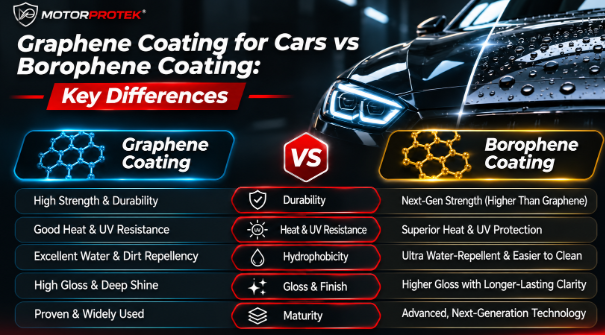
Graphene Coating vs Borophene Coating: What’s the Difference?
1. Composition and Formulations
Graphene and borophene are different materials with different atomic structures and properties. Graphene is made up of carbon atoms, and borophene is made up of boron atoms.
That scientific difference, in and of itself, does not decide which automotive coating is better. Commercial coatings have other ingredients that influence durability, adhesion, water repellency, and resistance to contaminants. It is more useful to compare the complete formulations, not the names on the package.
2. Cleaning and water resistance
Coatings that are marketed as graphene- or borophene-based can be designed to encourage water to bead or to run off the surface of the vehicle. Depending on the formulation, this can make it easier to wash off dirt and some contaminants.
The level of water repellency and its duration can differ a lot. The result depends on the correct preparation of the paint, the technique of application, the conditions of curing, and regular maintenance.
Rather than assuming that one coating will always repel water better than another, ask for performance data or test results before you buy.
3. Luster and Surface Appearance
A coating may improve the look of well applied paint, giving it a smooth, refined finish. The final look will depend on the product and the condition of the paint on the vehicle before application.
Graphene and borophene coatings won’t be able to cover up deep scratches or fix paint chips or existing defects. Surface preparation is still critical to a satisfactory result.
4. Durability and Daily Protection
The durability of either coating will depend on its chemistry, environmental exposure, washing habits, and quality of application. Performance can be affected by heat, frequent rain, road contaminants, and inappropriate cleaning products.
Some manufacturers make big claims about how durable their products are, but these should be weighed against warranty terms and credible testing evidence. Paint is not 100% scratch, chemical damage, or fade proof with or without a coating.
Which Option Works Best for You?
Start with your main issue. If you want a coating that will help repel water and allow for routine cleaning, compare graphene and borophene-branded products based on their published specifications, warranty coverage, and installer recommendations.
If your main concerns are stone chips and road debris, you should opt for PPF instead of expecting a liquid coating to offer impact protection. Consider your driving conditions, your budget, and your willingness to maintain the finish.
Conclusion
As for modern car paint protection options, there are graphene and borophene coatings, but the names don’t guarantee the performance. The actual formulation, the application process, and supporting evidence are far more important.
Choose a product with defined specifications and reasonable expectations. Regardless if you go with a coating or PPF film, professional prep and consistent maintenance are still key to making sure the exterior of your car stays in great shape.