


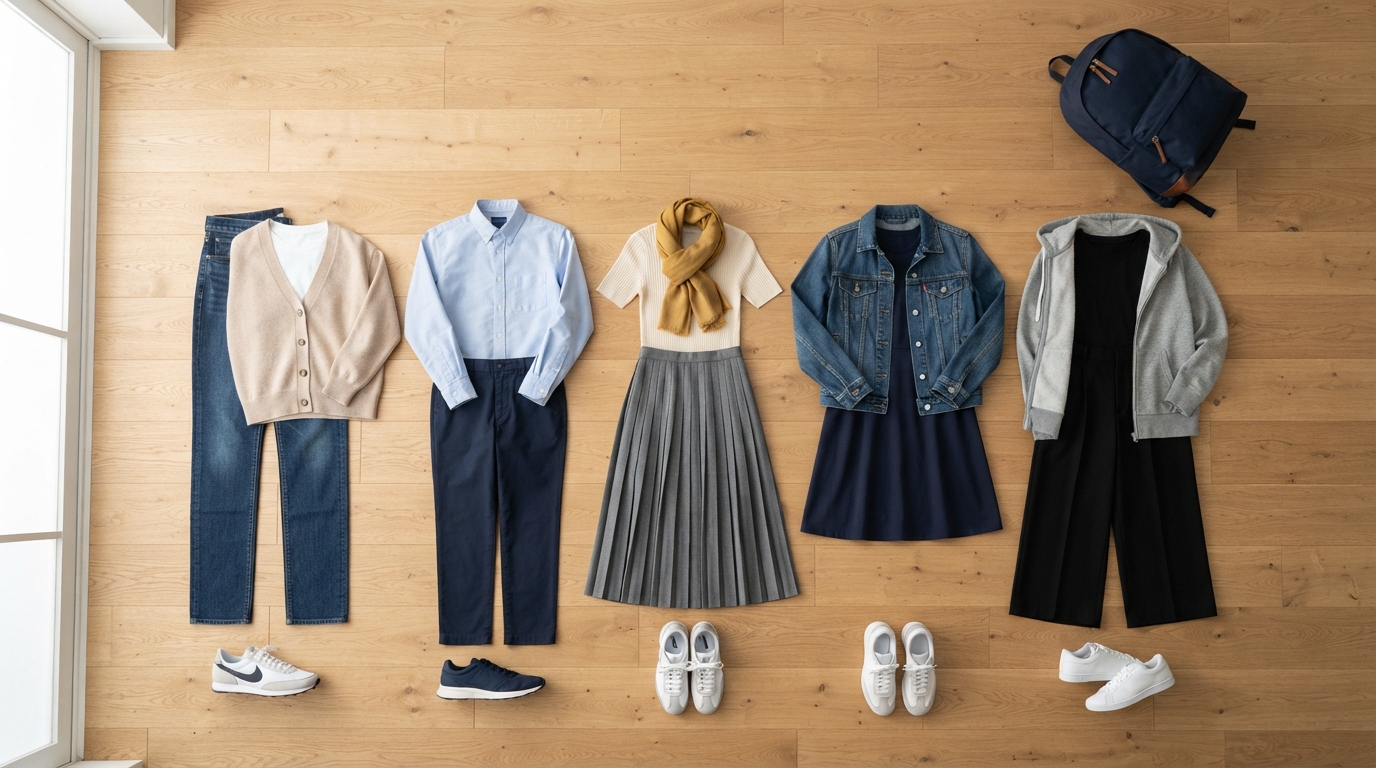
Choosing outfits for school teenage girl students to wear five days a week is harder than it looks, because every outfit has to stay comfortable through long hours, follow the school’s rules, and still feel like a personal choice. This guide explains how to read a dress code, which basics are worth buying, how to build looks for regular classes, presentations, and school events, and how to adjust for hot, cold, or rainy weather.
Many pages that rank for this topic are short photo lists with very little explanation, and several appear to reuse the same text with only the title changed. One popular list also credits unnamed “consumer research” for a claim about how quickly teens choose clothes, which could not be verified, so that claim is left out here. The advice below sticks to what is practical, widely reported by public sources, or clearly marked as a suggestion.
Quick Facts at a Glance
| Topic | What to know |
|---|---|
| Best first step | Read the school’s dress code or uniform policy before shopping |
| Smartest wardrobe approach | A small set of mix-and-match basics in a few colors, plus one or two trend pieces |
| Most useful layers | Cardigan, zip hoodie, and a denim or light jacket |
| Footwear | Clean, cushioned sneakers or flats; closed shoes may be required for PE or labs |
| Uniform policies (US public schools) | Nearly 1 in 5 required uniforms in 2017–18, per the National Center for Education Statistics |
| Dress codes (US school districts) | Around 93% had some type of policy, per a 2021 Government Accountability Office survey |
| Trends | Change quickly and differ by region, so they are not treated as fixed rules here |
Start With the Dress Code Before You Shop

Dress codes shape most outfits for school teenage girl students in practice, so it saves money to check the rules before buying anything new. According to a 2021 survey by the US Government Accountability Office, roughly 93 percent of school districts had some type of dress code (a few news reports describe the figure as 93 percent of schools). Uniforms are much less common, since the National Center for Education Statistics reported that nearly 20 percent of US public schools required them in the 2017–18 school year.
Figures for strict dress codes are less consistent. Government data showed about 53 percent of public schools enforcing a strict code in 2015–16, while a reference summary of later NCES data reports 37 percent for 2021–22, and the difference may partly come from changing survey methods. The safer takeaway is that strict codes have become somewhat less common over time, not that any single percentage applies to your school. In 2015–16, strict codes were also more common in middle schools (about 70 percent) than in high schools (about 55 percent), which suggests that younger teens may face tighter rules.
A dress code usually sets limits instead of naming exact clothes. Common examples include a minimum length for skirts and shorts, limits on certain slogans, and rules about strap width or headwear, although the details change from school to school. The student handbook is the most reliable source, and if a rule is unclear, a quick question to the school office is far easier than being asked to change in the middle of the day.
Building a Simple Wardrobe That Works All Term
A school wardrobe works best when most pieces can be mixed with each other, so one cardigan or one pair of jeans can appear in several different looks. Neutral shades such as black, navy, white, grey, and denim make a good base, and two or three accent colors you genuinely like can be added through tops, scarves, or accessories. The table below lists staples that come up again and again in teen style guides and that suit most dress codes.
| Piece | Why it helps | Styling note |
|---|---|---|
| Straight or wide-leg jeans | Go with almost every top and shoe | Dark washes look neater for presentation days |
| Plain and graphic tees | Easy, breathable base layers | Check slogans and images against the code |
| Button-up shirt or polo | Adds a smarter look in seconds | Wear it open over a tee or tucked in |
| Cardigan or light sweater | Handles cold, air-conditioned rooms | Keep one in the bag all year |
| Zip hoodie or light jacket | Comfortable outer layer | Check whether hoods may be worn indoors |
| Midi skirt or tailored shorts | Good for warm days | Test the length by sitting and bending |
| Simple dress | A complete outfit in one piece | Add leggings or a cardigan if needed |
| Denim jacket | Works across seasons | Pairs with dresses, skirts, and trousers |
Trend pieces are better treated as extras. One ranking page, for example, recommends flare jeans with a varsity jacket as a more current look than skinny jeans, and another highlights matching sets as a quick way to look put together. Such advice can be fun to try, but fashion cycles change within a season or two, so spending more on durable basics and less on trendy items usually gives better value.
Easy Outfits for School Teenage Girl Students to Mix and Match
The formulas below show how the same basics can be rearranged for different kinds of school days. Each one can be adjusted to your own style and to whatever your school allows.
Everyday Classroom Looks
For regular days, a plain or graphic tee with straight jeans, a cardigan, and clean sneakers is a dependable option that suits nearly every dress code. A matching top-and-trouser set, or a knit top with a midi skirt and flats, takes just as little effort and looks more planned. Where leggings are allowed, a longer tunic or oversized shirt on top keeps the outfit comfortable and usually sits well within the length rules.
Traditional and Modest Clothing
In many countries, daily school wear includes traditional or modest clothing such as a kurta with trousers, a shalwar kameez, a long tunic, or a loose dress with a scarf. Breathable cotton and lawn-type fabrics are practical for warm classrooms, and a light shawl or cardigan can cover for air conditioning. Where a uniform is compulsory, the same ideas apply to personal choices such as shoes, socks, bags, and outerwear that the policy leaves open.
PE and Active Days
Many schools provide or require a separate PE kit, so it helps to check the handbook before packing. When it is up to the student, breathable fabrics, supportive trainers, and clothes that allow full movement matter more than looks, and a spare top in the bag makes the rest of the day more comfortable.
Presentation and Exam Days
On days with a presentation or an important test, a smart-casual outfit often helps a student feel more confident. A button-up shirt with dark jeans or trousers, or a simple dress with a cardigan, looks tidy without being uncomfortable. Choosing the outfit and trying it on the night before removes one decision from a busy morning.
School Events and Dances
Events held on school grounds often follow the usual dress code or come with their own guidelines, so it is wise to read the notice before buying anything special. A dressier option can still stay within common limits, for example a knee-length or midi skirt with a fitted knit top, a simple dress with a light jacket, and flats or low block heels that are easy to walk in.
Dressing for Heat, Cold, and Changing Weather
When planning outfits for school teenage girl students in hot climates, breathable cotton, linen blends, and loose cuts make a noticeable difference, particularly on the way to and from school and during outdoor breaks. Lighter colors reflect heat better than dark ones, and a thin layer is still useful because many classrooms and buses are heavily air-conditioned.
Cold weather is easiest to handle with three thin layers instead of one thick one, such as a fitted base tee, a sweater or hoodie, and a coat that can be removed and hung on a chair. The same idea works in between seasons, when mornings are cool and afternoons are warm, since each layer can be added or taken off as the day changes.
Comfort, Shoes, and the Bag You Carry
Shoes decide whether an outfit feels good by the end of the day, so cushioned soles, a secure fit, and enough room for the toes are worth more than appearance alone. Many schools also require closed shoes for science labs or PE, and it is easier to keep a suitable pair in the locker than to be turned away from an activity.
Bags matter too, because a heavy backpack can undo a comfortable outfit. A common guideline, repeated by orthopedic groups and children’s hospitals, is that a backpack should weigh no more than 10 to 15 percent of the student’s body weight, while the American Occupational Therapy Association is described as recommending 10 percent or less. At least one clinician has also said there is not enough evidence for a single rule that fits everyone, so the practical test is simple: if the student leans forward to carry the bag or feels pain in the neck or shoulders, the load is too heavy. Using both straps, keeping heavy books close to the back, and using the locker where possible all help, and the US Consumer Product Safety Commission has been cited as reporting over 14,000 backpack-related injuries among children each year.
Shopping Smart: Budget, Sizing, and Care
Budget-friendly outfits for school teenage girl students start with a quick check of what is already in the closet, because most people discover that a few missing basics are all they need. Buying in a small color range makes each new item work with several others, and secondhand shops, sales, and hand-me-downs are good sources for jackets, jeans, and cardigans that do not need to be brand new.
Teens often grow quickly, so fit matters more than buying far ahead. Adjustable waistbands, stretch fabrics, and hems that can be let down give a little extra wear without looking oversized, and trying clothes on while sitting and raising the arms shows whether they will still feel comfortable by afternoon. Following the care label also keeps school clothes looking neat for longer, particularly for dark denim and knitwear that can fade or stretch in a hot wash.
Frequently Asked Questions
Are leggings allowed at school?
It depends entirely on the school, and some dress codes address leggings directly while others do not mention them. Pairing them with a longer top or tunic is the choice most likely to comply, but the handbook is the only reliable answer.
Do hoodies and caps break dress code rules?
Rules on hoods and hats vary widely. Many schools allow hoodies but ask that hoods stay down indoors, and caps are often limited to outdoor use, so it is worth checking the exact wording.
What are good outfits for school teenage girl students on rainy days?
A light waterproof jacket with a hood, quick-drying trousers, and shoes with good grip work well. Hems that drag in puddles are best avoided, and a spare pair of socks in the bag is a small trick that helps a lot.
How many outfits does a teen need for a school week?
There is no official number, but a practical approach is to choose around ten to twelve mix-and-match pieces, including layers and shoes, which can produce a full week of different looks with a few repeats.
What can a student do if the dress code feels unfair?
Critics have argued that some strict codes unfairly target girls, while supporters say clear rules reduce distraction and help create a focused setting. Students can raise concerns politely through a student council, counselor, or parent group, and one San Francisco Bay Area district relaxed its strict code in 2018 after students proposed a new policy.
Who should decide what a teen wears to school?
Many families find it works best to agree on a few basic rules together, such as budget and dress code limits, and then let the teen choose within them. This approach tends to reduce morning arguments, though what works will depend on each family.
Conclusion
Good outfits for school teenage girl students do not need to be expensive or trendy, since a clear understanding of the dress code, a handful of reliable basics, and sensible layers will cover most school days. The best choices are the ones that feel comfortable from the first bell to the last, follow the rules, and still leave room for personal style.
Disclaimer: This article is for general informational purposes only. Dress codes and uniform policies differ by country, district, and school, and they can change from year to year, so always follow your own school’s official handbook. Statistics cited come from public reports and may be updated or defined differently over time. Backpack and health comments are general guidance, not medical advice; consult a doctor or physiotherapist for pain or posture concerns.
Explore More
Hamptons Hobo Bag in Crystal Signature Jacquard: Full Guide

I’m Muhammad Ubaid, founder of YBR Magazine. I research and write detailed guides on America’s National Parks — covering entry fees, permits, best times to visit, and planning tips — using official NPS sources and up-to-date information.

