


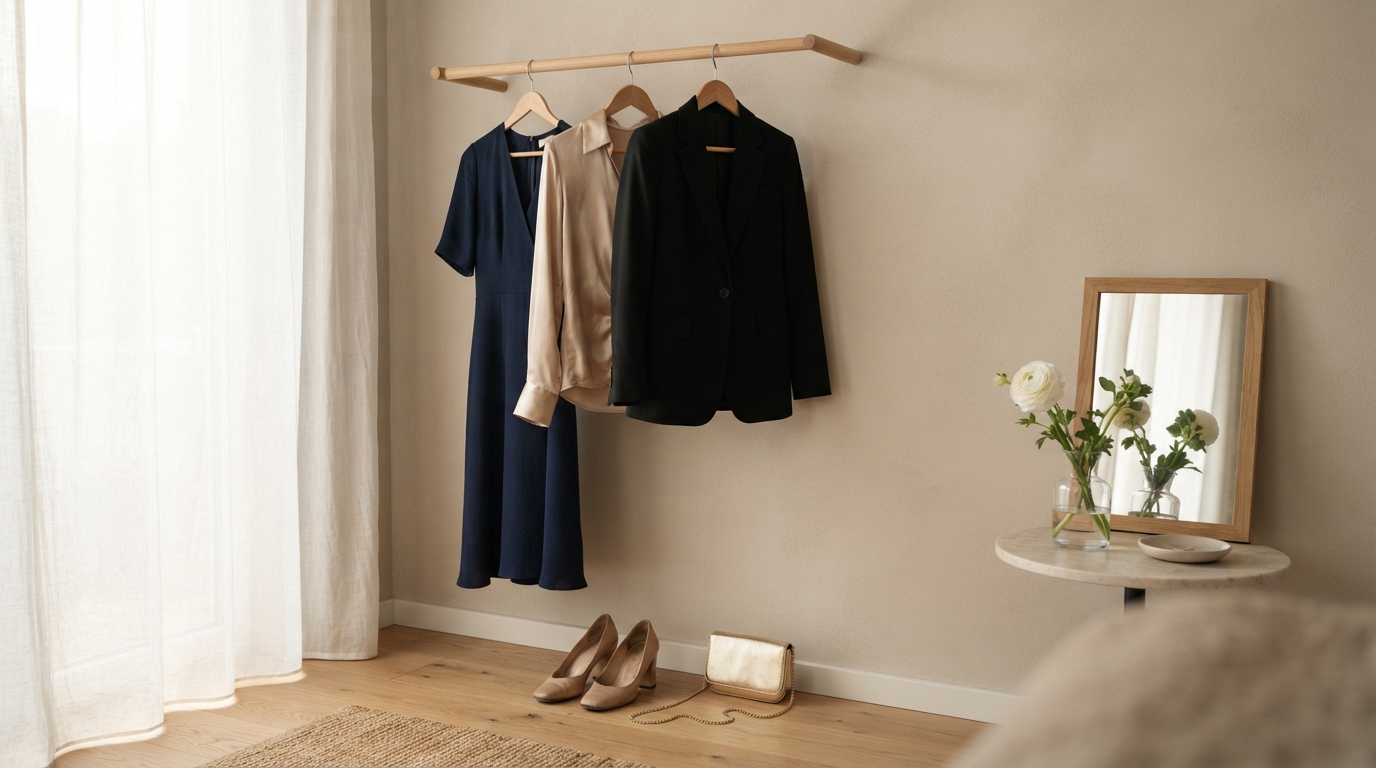
If you have ever opened an invitation that says “semi-formal” and then spent an hour staring at your wardrobe, you are in good company. Many readers search for what is semi formal attire for women because the term sits in a gray area between everyday work clothes and a full evening gown, and hosts, stores, and style websites all describe it a little differently. This guide explains the meaning in plain language, shows where the dress code fits among the others, and walks through outfits, fabrics, shoes, and accessories that work for weddings, work events, and dinners.
Quick Facts at a Glance
| Point | Quick Answer |
|---|---|
| Formality level | A step above business casual and a step below black tie |
| Typical outfits | A dress, a dressy jumpsuit, a tailored suit, or polished separates |
| Common fabrics | Crepe, satin, silk, chiffon, lace, velvet, and fine knits |
| Typical shoes | Dress heels, block heels, dressy flats, or polished sandals |
| Usually avoided | Jeans, T-shirts, sneakers, beachwear, and full ball gowns |
| Common events | Weddings, holiday parties, banquets, dinner parties, graduations, and work receptions |
| Best tip when unsure | Ask the host or check the venue and event time |
What Is Semi Formal Attire for Women in Plain Terms
According to the etiquette experts at the Emily Post Institute, a semi-formal dress code is more formal than what you would wear to an office but slightly less formal than what you would wear to a formal event. In simple terms, the goal is to look polished and intentional without dressing as if you were attending a gala or a black-tie ball. The word “semi” literally means half, which is a helpful reminder that this dress code lives in the middle of the formality scale.
It is worth knowing that no single authority owns this dress code, so the answer to what is semi formal attire for women depends partly on the host, the venue, the region, and the time of day. Most style guides agree on the broad idea, which is that fit, fabric, and finish matter more than any strict rule. A well-fitted outfit in an elevated fabric will usually look right, while a rumpled or overly casual piece will stand out even if it is technically a dress.
Where Semi-Formal Sits Among Other Dress Codes

Dress codes work like a ladder, and each rung asks for a little more effort than the one below it. The table below shows the usual women’s look at each level, although the exact order of the middle rungs varies between sources.
| Dress Code | Typical Women’s Look |
|---|---|
| Casual | Jeans, simple tops, comfortable shoes |
| Business casual | Blouse with trousers or a skirt, a knit dress, or a blazer |
| Semi-formal | Dressy dress, tailored suit, or elegant separates with polished shoes |
| Cocktail | A dressier, more festive dress or jumpsuit, often with statement accessories |
| Black tie optional | Floor-length gown or a very elegant cocktail dress |
| Black tie | Floor-length evening gown |
| White tie | Full-length ball gown, usually with gloves and fine jewelry |
Semi-Formal Versus Cocktail Attire
This is the comparison that causes the most confusion, and the online guides genuinely contradict each other. Some fashion retailers describe cocktail attire as more formal than semi-formal, while at least one etiquette-focused guide places semi-formal above cocktail on the formality scale. Many pages repeat near-identical wording, which suggests they borrow from one another rather than from any official rulebook, so it is wise to treat their confident claims with caution.
The practical solution is to aim for the overlap, since both codes welcome dresses, jumpsuits, heels or dressy flats, and elegant accessories. A common way to describe the difference is that cocktail attire feels more festive and glamorous, while semi-formal attire feels more refined and adaptable. If your invitation says cocktail, you can add a little more sparkle or a bolder color, and if it says semi-formal, a calmer and more classic version of the same outfit is safe.
Outfit Options That Work
Dresses
A dress is the most popular choice, and silhouettes such as A-line, wrap, sheath, and fit-and-flare dresses are all reliable because they flatter many body types and look neat without much effort. Emily Post’s guide mentions a little black dress as a classic option, and the same guide also suggests a long, dressy skirt paired with a nice top. Wrap dresses are especially useful because they adjust to your shape and can move easily from a daytime work event to an evening dinner.
Suits, Trousers, and Jumpsuits
A tailored pantsuit can look every bit as elegant as a dress when the fabric has some sheen or texture, such as satin, crepe, or velvet. One older dress-code explainer notes that a plain wool business suit can look too ordinary for a semi-formal event, which fits the wider advice to choose something dressier than your usual office outfit. Wide-leg trousers with a silky blouse and a dressy jumpsuit with a defined waist also work well, as long as the fabric drapes smoothly and the fit is clean.
Elegant Separates
Separates give you room to show personality while staying within the dress code. A satin midi skirt with a fine-knit top, a pleated skirt with a tailored blazer, or a lace top with crepe trousers can all look refined when the pieces are well pressed and the colors work together. Keeping one item as the star and the rest simple prevents the outfit from looking busy.
Fabrics, Colors, and Prints
Fabric does a lot of the work in this dress code, because materials with weight, drape, or a soft sheen instantly look dressier than cotton jersey or casual denim. Crepe, satin, silk, chiffon, lace, velvet, and high-quality blends are the usual favorites, and a few style guides suggest linen blends for summer daytime events and velvet for winter parties. Whatever you choose, steaming or pressing the outfit beforehand makes a visible difference.
Colors are flexible, and both soft shades and deep jewel tones suit the occasion. Prints can work too, particularly larger or more graceful patterns like florals, while some stylists warn that very tiny, busy prints can look messy in photographs. Because this is a matter of taste rather than a fixed rule, simply choose what feels flattering and appropriate for the setting.
Shoes, Bags, and Accessories
Dress heels are the traditional choice, and block heels offer the same polished look with more comfort for long evenings. Dressy flats, embellished sandals, and sleek pointed flats are generally accepted too, as long as they look intentional and not like everyday footwear. Sneakers, flip-flops, and worn-out shoes are the quickest way to undo an otherwise elegant outfit.
For bags, a small clutch or a compact structured bag keeps the look tidy, and a single statement piece of jewelry, such as earrings or a necklace, is usually enough. A tailored coat, a wrap, or a pashmina adds warmth in cooler weather while keeping the outfit cohesive. Neat hair and soft, polished makeup finish the look without needing to be dramatic.
How Time of Day and Season Change the Outfit
Etiquette writers have long linked formality to the time of day, and the same logic applies here. Daytime events usually suit lighter fabrics and softer colors, while evening events welcome richer shades, deeper tones, and a bit more shine. A midday garden reception and an eight o’clock banquet can both be semi-formal, yet they will look quite different on the same dress code.
Weather matters as much as the clock. Light chiffon or linen blends keep you comfortable in summer, whereas velvet, thicker crepe, and tailored layers suit winter, and an indoor venue with strong air conditioning may call for a wrap even in hot months. Choosing for comfort as well as style helps you look relaxed, which is part of looking well dressed.
What Is Semi Formal Attire for Women at a Wedding?
At weddings, the invitation and the couple’s wedding website are your best guides, since they often give extra hints about the venue, the time, and the overall mood. A ceremony in a place of worship may call for covered shoulders or a longer hemline, and an evening reception at a hotel may support something richer and more sparkling than a daytime ceremony at a park. It is also kind to avoid outfits that compete with the couple, so very flashy or attention-grabbing pieces are best left at home.
Many couples invite guests to wear traditional or cultural clothing, and these outfits fit comfortably within a semi-formal wedding as long as the fabric and embellishment are suitably elegant. A sari, an embroidered long tunic with tailored trousers, or a modest dress with a matching shawl can all meet the dress code beautifully. The key is that the outfit looks celebratory and well finished, not that it follows a particular Western pattern.
What Is Semi Formal Attire for Women in the Workplace?
When a company dinner, awards night, or conference reception is labeled semi-formal, the usual approach is to take your best business outfit and make it dressier. A tailored dress with a blazer, a silk blouse with a sleek skirt, or a refined pantsuit in a richer fabric all work, and shoes should look polished and professional. Work events tend to be more conservative than weddings, so moderate necklines and hemlines and subtle jewelry are safer choices.
Some workplaces use “semi-formal” as a loose synonym for business professional, so if you are unsure, a quick question to a colleague or the event organizer can save you from guessing. Dressing slightly more formally than your coworkers is generally easier to recover from than dressing too casually.
Common Mistakes to Avoid
The most frequent error is dressing too casually, which usually means denim, T-shirts, wrinkled fabrics, or beach-style sandals. The opposite mistake is overdressing in a heavily beaded ball gown or very formal jewelry, which can make you feel out of place at a relaxed dinner. Poor fit is another quiet problem, because even an expensive outfit looks less polished if it is too tight, too loose, or the wrong length.
Another common slip is wearing a regular work outfit without any upgrade, since a standard office suit may not signal that you made an effort for the occasion. Finally, forgetting the setting, such as heels on grass or a sleeveless outfit at a religious venue, can cause avoidable discomfort.
Dressing Semi-Formal on a Budget
You do not need a new outfit for every invitation, because one well-chosen dress or suit can be restyled with different shoes, jewelry, and layers. Clothing rental services, resale shops, and a small tailoring adjustment can make a modest purchase look custom and expensive. Building a small capsule of versatile pieces, such as a dark dress, a tailored blazer, and a pair of comfortable dress shoes, covers most semi-formal invitations for several seasons.
Frequently Asked Questions
Is a floor-length dress too formal for semi-formal events?
It depends on the style, since a simple floor-length dress in a soft fabric can work at an evening event while a dramatic ball gown usually will not. Midi and knee-length dresses are the safest across most guides, and a very short mini dress is generally better saved for casual or cocktail-style parties.
Are black and white safe colors to wear?
Black is widely accepted today and is often described as a classic semi-formal choice, although some traditional hosts still prefer brighter shades at daytime weddings. White, ivory, and cream are best avoided at weddings unless the couple says otherwise, because those shades are traditionally associated with the bride.
What is semi formal attire for women if the invitation gives no extra details?
Start by checking the event’s venue, start time, and any photos from past events, then ask the host if the answer is still unclear. If you cannot get a reply, a tailored dress or a dressy jumpsuit in an elegant fabric is a balanced choice that rarely looks wrong.
What shoes work best for outdoor semi-formal events?
Block heels, wedges, and dressy flats handle grass, gravel, and uneven paths better than thin stiletto heels. Carrying a lightweight pair of backup flats is a practical option for long receptions with dancing.
Do I need to match my accessories to my dress?
No, matching is optional and sometimes looks too rigid. Coordinating one or two elements, such as a bag that complements the shoes or earrings that echo a color in the dress, usually looks more natural.
Conclusion
The answer to what is semi formal attire for women comes down to dressing in a polished, well-fitted way that is a little dressier than everyday work wear, without the drama of black tie. Pick an elevated fabric, choose shoes that look intentional, keep accessories simple, and adjust for the time of day, the venue, and your own comfort. When the invitation is vague, a quick message to the host remains the most reliable way to feel confident.
Disclaimer: This article offers general style information only. Dress code expectations vary by host, venue, culture, region, and workplace, so always follow the specific instructions on your invitation or from the organizer.
Explore More
Outfits for School Teenage Girl: Practical, Stylish Ideas That Follow the Dress Code

I’m Muhammad Ubaid, founder of YBR Magazine. I research and write detailed guides on America’s National Parks — covering entry fees, permits, best times to visit, and planning tips — using official NPS sources and up-to-date information.

