
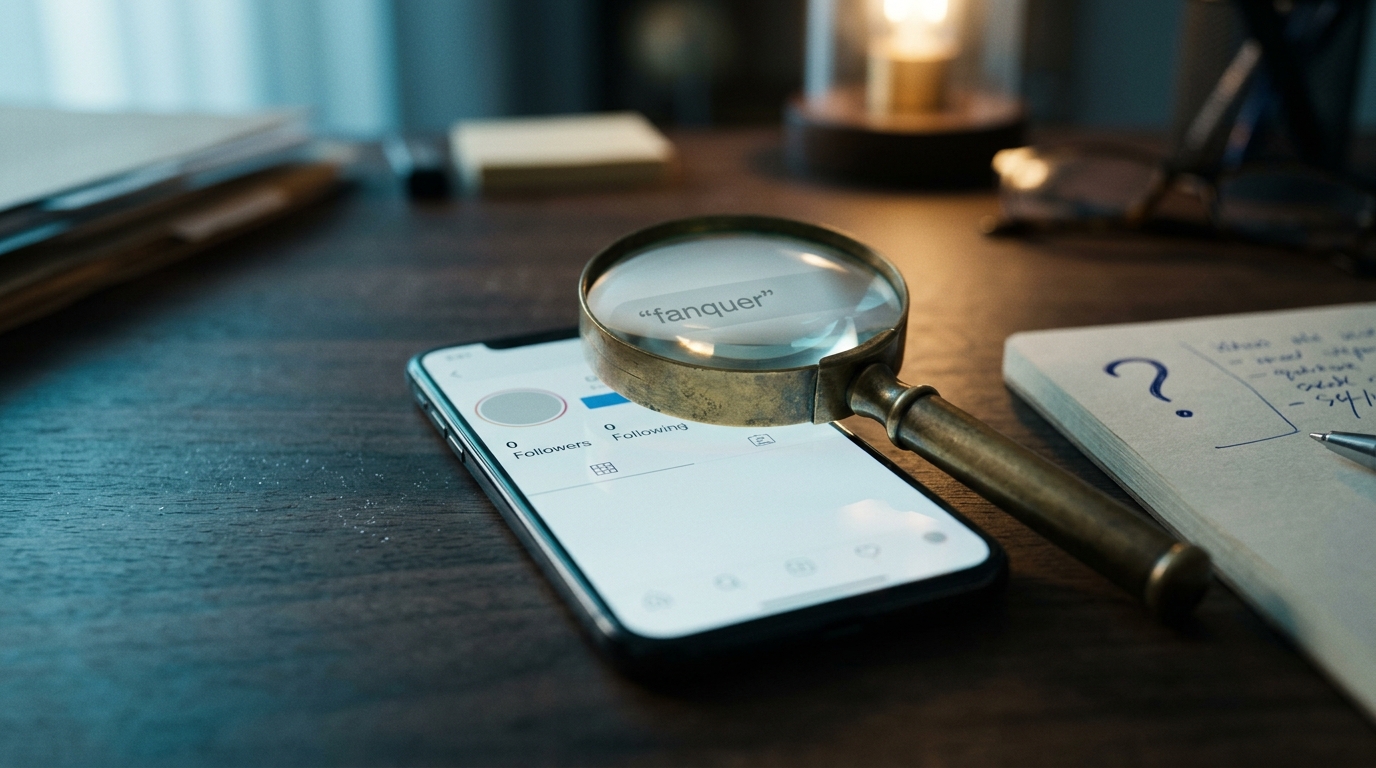
Fanquer is a word that shows up in dozens of recent blog posts, yet none of them can point to a company, an app, a founder or an official page behind it. After comparing what the top-ranking results say, the honest summary is that fanquer is not a confirmed product and not a dictionary term. It is a label that different websites have filled with different meanings, and the person searching for it usually wants two things: to know whether it is real, and whether it is safe to click.
What can and cannot be confirmed as of November 2026
As of 7 November 2026, searches turned up no app-store listing, no registered company, no named founder, no coverage from an established news outlet and no official social accounts tied to the name. Several fact-check style pages published over recent months reached the same conclusion, describing it as an unverified term with no consistent definition across reliable sources. What does exist is a large cluster of near-identical articles, mostly on small magazine-style and agency-style sites, that describe the word in confident language while never saying who runs it. That gap between confident description and missing evidence is the most important fact about this keyword.
Five different meanings, and what each one rests on

Depending on which page you open, the word is presented as one of five things. The table sets them side by side with the kind of support each claim has.
| What the pages say it is | What the claim is built on |
|---|---|
| A social platform where fans and creators meet through profiles, live chats and exclusive posts | Feature lists and a promised roadmap, with no named operator or download link in the parts we could read |
| A Web3 service with token-based fan connections and portable audiences | General arguments about blockchain and creator income, with no team, contract or product page identified |
| A networking tool where entrepreneurs find collaborators and investors | A narrative about an individual founder, with no way to check that the person or the result exists |
| Slang or a mindset for fans who help create, vote on and promote what they follow | Opinion pieces, while a fact-check page notes that no established slang or language reference lists it |
| A flexible brand name or username with no fixed definition | The pages themselves, which admit the origin is not officially recorded |
The first two are the most common and also the most contradictory, because one describes an ordinary social app and the other a blockchain system. Both describe live rooms, dashboards and revenue splits, yet none of the pages we read linked to a verifiable download, a pricing page or a company registration. The last two are more candid, and they are also the ones closest to what the evidence supports.
Why one word ended up with so many stories
One fact-check page argues that several independent sites wrote about the term at around the same time without referring to one another, a pattern it connects to low-effort content produced to rank for a word before anyone else does. The pages themselves offer some support for that reading. One openly states that it explains the word as a concept supplied in a brief rather than as a verified product launch. Another builds its case on a hypothetical creator and attaches a conversion figure to that imaginary example, and a third opens with a story about a startup founder in Austin who found investors through the platform. A reader has no way to confirm that she exists.
The domain that matches the word is not much help either. When we checked it, the search listing showed general articles on unrelated subjects such as insurance and futures trading, not a fan community. That does not prove anything about who owns it, but it does not point to a working fan platform at that address.
Where the spelling might come from
The word looks like a blend of fan and conquer, which may explain why so many definitions revolve around fans taking an active, almost ownership-like role in what they follow. That is our reading of the spelling, and no source confirms it. The word fan itself is well documented: according to Wikipedia, it comes from the Modern Latin fanaticus, a term that originally pertained to temples and sacred places.
A simpler explanation is a misspelling. In French, flanquer is a real verb that means to flank, and in casual speech to fling or chuck something, and its pronunciation is close enough to catch anyone typing from sound alone. A reader who meant that word will find nothing about fans in it.
If you were looking for a real fan platform
Some searchers may have meant a service with a similar name. According to Wikipedia, Fanvue is a London-based subscription platform co-founded by Joel Morris in 2020 that lets creators earn from subscriptions, tips and paywalled content. The same encyclopedia says Fanfix was founded in 2020 by Harry Gestetner and Simon Pompan as a subscription platform aimed at Gen Z creators, and that it was sold in June 2023 to the e-commerce company SuperOrdinary for a reported 65 million dollars. FanCode is a different kind of service, a sports streaming and e-commerce platform launched in 2019 by Dream Sports in Mumbai.
Each of these has named founders and a traceable corporate history, which is exactly what is missing here. Their current terms, fees and operating status can change, so check each official site before relying on this summary.
How to check any unfamiliar platform before you sign up

The same habits that expose fanquer as unverified work on any new site, and they take only a few minutes:
- Search the exact name in the Apple App Store and Google Play, then look at the publisher name and the privacy section on the listing.
- Look for a real legal entity, a support email on the site’s own domain and a postal address, because genuine services rarely hide all three.
- Look for coverage from established news outlets, not from pages that all appeared around the same time and repeat each other.
- Read the terms and privacy policy to see how money and personal data are handled, and treat vague or copied text as a warning.
- Run a domain lookup to see when the domain was registered and whether the owner details are hidden, since a very recent registration behind big claims is worth noting.
What to do if a link or message sent you to this word
If the word reached you through a direct message, an ad or a shortened link, treat the page as unverified until you have checked it yourself. Do not sign in with a Google, Apple or social media account, because that hands an unknown site part of your profile. Do not enter card details or send money for a membership, early access or tokens.
If you already typed a password, change it on the real service and turn on two-step verification. If you entered card details, call your bank and ask about blocking or monitoring the card. Messages that push urgency, promise exclusive access or ask you to install a file from outside an official app store deserve extra suspicion.
Common questions
Is fanquer a scam? We found no published evidence of fraud, but also nothing that proves it legitimate. Unverified is the accurate word, and it is a reason for caution rather than a verdict.
Can I use it as a username or business name? Several pages treat it as an open word with no fixed meaning, which suggests nobody has clearly claimed it, but none of them cite a trademark search. Check the trademark database of your country and the domain registry before building anything on it.
The bottom line
Fanquer, as of today, is best understood as a keyword with a lot of text around it and very little behind it. Until a named company, an app listing or a primary source appears, treat every feature list and roadmap you read as unconfirmed, and judge any site using the name by its evidence rather than its wording.
Explore More
Lookmovie2.: What It Is, Why It Keeps Changing Addresses, and What to Watch Instead

I’m Muhammad Ubaid, founder of YBR Magazine. I research and write detailed guides on America’s National Parks — covering entry fees, permits, best times to visit, and planning tips — using official NPS sources and up-to-date information.