


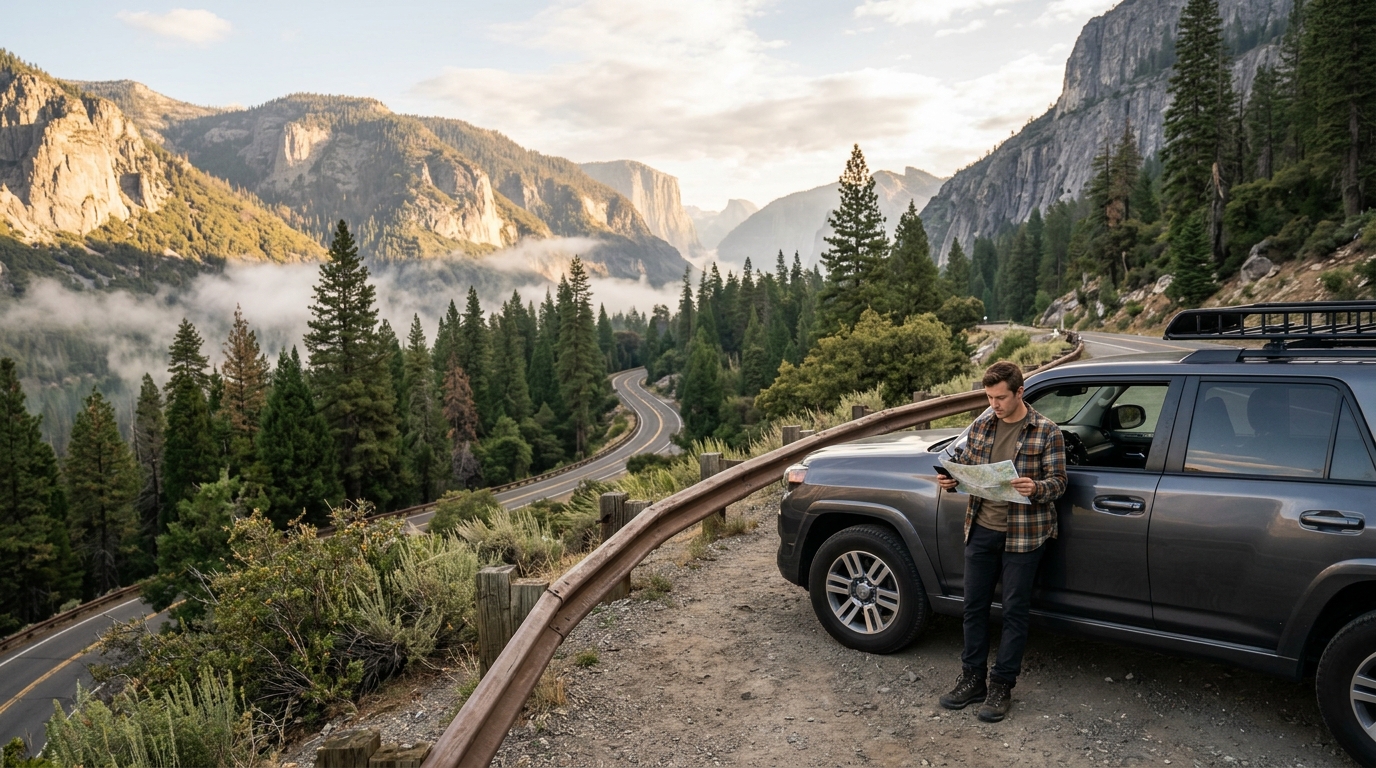
A road trip through America’s national parks usually takes more preparation than people expect. The park itself might be the main reason for traveling, but much of the experience depends on what happens outside its boundaries. Where will you get breakfast before an early hike? Is there a reliable repair shop within driving distance? Can you find a decent place to stay after spending eight hours on the road?
These questions rarely get the same attention as trail maps and park entrance fees. Yet a little research before departure can save travelers considerable time, money, and frustration.
The problem is that many national parks are nowhere near large cities. Services become less frequent as you get closer to remote areas, and the nearest available business isn’t necessarily the best choice.
Start planning beyond the park entrance
Most travelers begin with the obvious things: accommodation, park reservations, entrance passes, and popular attractions. That’s a sensible approach, but it leaves a few gaps.
Consider a trip to Yellowstone National Park. You might spend the night in West Yellowstone, drive into the park early the next morning, and spend most of the day exploring its roads and walking trails. What happens if your car develops a problem on the way back? Where can you find a pharmacy or a grocery store if you need something after regular business hours?
The same situation applies to Yosemite, Grand Canyon, Zion, and other popular destinations. Before setting out, travelers can consult the official National Park Service trip planning resources for park information, entrance fees, reservation requirements, maps, and safety guidance.
Towns surrounding these parks often depend heavily on seasonal tourism. Business hours can change during quieter months, and some services have limited availability.
It’s worth identifying a few useful businesses before leaving home. You don’t need a detailed directory of every shop in the area. A short list of places you might realistically need is enough.
Check customer reviews before choosing a service
A business can have an attractive website and still provide disappointing service. This is especially relevant when you’re traveling somewhere unfamiliar and have little time to compare alternatives.
Customer reviews can offer useful clues. A hotel might look excellent in promotional photographs, but recent guests could mention poor maintenance or unexpected charges. A local mechanic might advertise affordable repairs, while customers repeatedly complain about delays.
Reading reviews takes some judgment, though. A single angry customer shouldn’t necessarily put you off a business. Look for repeated complaints and pay attention to how recently they were posted.
It’s also worth checking whether the reviews describe actual experiences. Detailed accounts tend to be more useful than short comments that say little beyond “great service” or “highly recommended.”
Travelers who want to research unfamiliar companies can use platforms such as TrustAnalytica, which provides business profiles and customer reviews across different service categories in the United States and Canada. It offers another place to check when comparing local providers before arriving in an unfamiliar town.
Don’t make a decision based on a rating alone. Read the comments, check the business information, and confirm important details directly with the company.
Pay attention to seasonal business hours
National parks attract visitors throughout the year, but the surrounding communities don’t always operate on the same schedule.
A restaurant that serves dinner until 10 p.m. during July might close much earlier in November. Some accommodation providers shut down completely during winter. Smaller businesses may also reduce their opening hours when visitor numbers drop.
This can catch people off guard, especially those who plan their days around long driving distances.
Before booking anything, check the business’s current operating schedule. If you’re arriving late, contact the accommodation provider and confirm that someone will be available to check you in.
The same advice applies to restaurants and grocery stores. Don’t assume that a place listed as open on an old travel blog still operates at the same hours.
Don’t overlook car maintenance
Driving is a major part of visiting American national parks. In some destinations, reaching the next town can take considerably longer than expected. That makes basic vehicle preparation worth the effort.
Have your tires inspected before departure. Check the oil level and coolant, and make sure your spare tire is usable. If your vehicle is due for routine maintenance, arrange it before the trip rather than postponing it until you’re already on the road.
It’s also sensible to identify a few repair shops along your planned route.
You probably won’t need them. Still, knowing where to find assistance is better than searching for a mechanic with a damaged tire and a poor mobile connection.
When comparing repair shops, look at recent customer feedback. Pay attention to comments about communication, estimates, and whether customers received clear explanations of the work being performed.
A low advertised price doesn’t tell you much about the quality of a repair.
Check the distance between services
One mistake people make when planning a national park road trip is underestimating distances. A location that looks close on a map might require a surprisingly long drive, especially when roads wind through mountainous terrain.
This affects more than sightseeing plans.
Fuel stations can be widely spaced in some rural areas. Grocery stores may be concentrated in larger towns, and medical services might require a separate journey.
Before setting off, look at your route and identify the last convenient places to refuel. This is especially useful when visiting remote areas of Death Valley National Park or driving through parts of the American Southwest.
Keep your fuel tank reasonably full rather than waiting until the warning light comes on. Download offline maps before entering areas with unreliable mobile coverage.
A paper map isn’t a bad idea either. Phones run out of battery, and navigation applications occasionally fail when you need them most.
Compare accommodation outside popular tourist areas
Staying close to a national park sounds convenient, but it isn’t always the cheapest option.
Hotels and cabins near popular entrances can become expensive during peak season. Availability may also be limited, particularly around holiday weekends.
Look at nearby communities before making a reservation. A town 30 or 40 minutes away might offer better prices without adding too much driving time.
There is one thing worth checking carefully: the actual route. A hotel that appears relatively close to the park entrance might require a longer drive because of mountain roads or limited access points.
Read recent accommodation reviews and check what guests say about cleanliness, parking, noise, and cancellation policies.
If you’re planning a longer trip, consider booking accommodation with laundry facilities. After several days of hiking, being able to wash your clothes can make a real difference.
Have a backup plan for unexpected problems
Even well-organized trips rarely go exactly as planned.
Weather can close roads. A reservation might fall through. A vehicle problem could force you to spend an extra night in a town you hadn’t intended to visit.
That’s why it helps to keep some flexibility in your schedule.
Save the contact details of your accommodation providers and any businesses you might need along the way. Keep digital copies of reservation confirmations and important travel documents. If you’re visiting a remote park, download the information before leaving an area with reliable internet access.
Travel insurance and roadside assistance coverage are also worth reviewing before departure. Check what your policy actually covers rather than assuming every type of breakdown or travel disruption is included.
A backup plan doesn’t have to be complicated. Sometimes it’s simply knowing where the nearest town is and having enough time in your schedule to reach it.
A little research makes the journey easier
National park trips are often remembered for the scenery, wildlife, and unexpected discoveries along the road. Nobody travels to Yellowstone hoping to spend an afternoon comparing repair shops or looking for an open grocery store.
Still, those practical details affect the experience more than many travelers realize.
Spend some time researching the towns surrounding your destination. Check recent reviews before choosing unfamiliar businesses, confirm opening hours, and make sure you understand the distances involved.
You don’t need to plan every minute of your holiday. Leave room for spontaneous stops and changes of direction. That’s part of the appeal of a road trip.
Just take care of the practical arrangements before you leave. It gives you more freedom to enjoy the places you actually came to see.
Explore More
White Sands National Park Road Trip: Navigating the Gypsum Dunes

I’m Muhammad Ubaid, founder of YBR Magazine. I research and write detailed guides on America’s National Parks — covering entry fees, permits, best times to visit, and planning tips — using official NPS sources and up-to-date information.

