


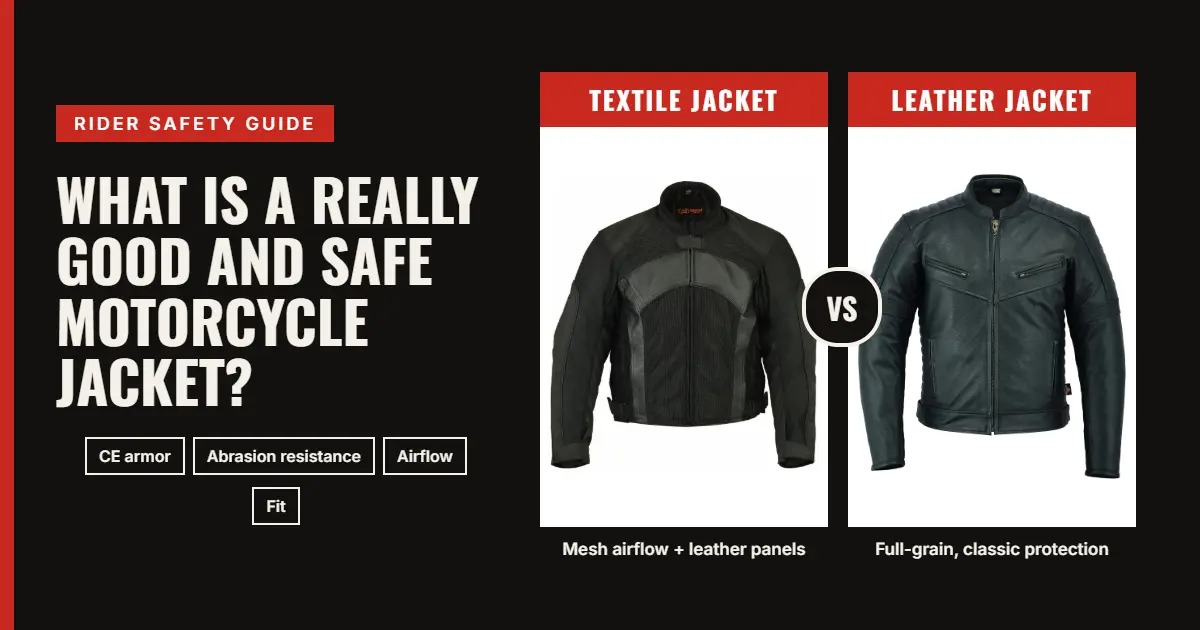
Every rider has stood in front of a rack of jackets wondering the same thing: what actually separates a great motorcycle jacket from one that just looks the part? The honest answer is that the best jackets do three jobs at once. They protect you when things go wrong, keep you comfortable mile after mile, and look good enough that you want to wear them off the bike too. This guide breaks down what to look for, whether you are browsing leather motorcycle jackets or comparing a textile motorcycle jacket for all-weather touring.
What Makes a Motorcycle Jacket Protective
A fashion jacket and a riding jacket can look identical on a hanger. The difference is in the materials, construction, and testing.
- Abrasion Resistance: In a slide, the outer shell is your skin’s last line of defense. Quality leather jackets typically use cowhide around 1.0 to 1.4 mm thick, which resists tearing and burning against asphalt far better than thin fashion leather. Good textile jackets rely on dense, high-denier fabrics such as Cordura or ballistic nylon, often reinforced with abrasion-resistant panels at the shoulders and elbows.
- Certified Armor: Look for removable CE-approved armor at the shoulders and elbows, and ideally a back protector pocket. Level 2 armor generally absorbs more impact force than Level 1, though a well-fitted Level 1 pad beats a loose Level 2 pad that shifts out of position.
- Garment Certification: In Europe, jackets can be tested to the EN 17092 standard and rated from class C up to AAA, with AAA offering the highest level of abrasion protection. A certification label is a useful signal that a manufacturer has had its work independently tested.
- Construction Details: Double or triple stitching at stress points, reinforced seams, and strong zippers matter as much as the material itself. Seams that split on impact leave the best leather useless.
Leather vs. Textile: Which Is Right for You?
This is the question most riders wrestle with, and neither answer is wrong.
- Leather jackets are the classic choice. They offer excellent abrasion resistance, mold to your body over time, and develop character with age. Men’s leather motorcycle jackets suit cruisers, cafe racers, and urban riders who value a timeless look. The trade-offs are weight, heat in summer, and the need for occasional conditioning.
- Textile jackets shine for versatility. They commonly include waterproof membranes, removable thermal liners, and ventilation zippers, making them ideal for commuters, adventure riders, and anyone facing unpredictable weather. They are usually lighter and need less maintenance, though high-end abrasion protection depends on the specific fabric and construction.
Many riders end up owning both: leather for sunny weekend rides and a textile jacket for rain, cold mornings, and long-distance trips.
Features That Separate a Good Jacket From a Great One
Beyond the basics, a few practical details make daily riding noticeably better:
- Adjustable Fit Points: Waist, cuff, and bicep adjusters keep the jacket and armor stable at speed.
- Ventilation: Zippered vents or perforated panels help manage heat without sacrificing coverage.
- Weather Management: Removable liners and waterproof or water-resistant layers extend the riding season.
- Visibility: Reflective piping or panels help drivers see you at dusk and night.
- Collar and Cuff Design: A snug, comfortable collar limits wind noise and drafts, while longer rear hems keep your back covered in a riding position.
- Pockets that Make Sense: Secure internal and zippered pockets keep your phone, wallet, and keys safe.
Fit Is a Safety Feature
A jacket that is too loose lets armor slide away from the joints it is meant to protect. One that is too tight restricts movement and causes fatigue. When trying a jacket on, sit in a riding posture with your arms extended toward the handlebars. The sleeves should not ride up, the shoulders should feel secure, and the armor should rest over your elbows and shoulder points. Leather will relax slightly with wear, so a snug fit in the store often becomes a perfect one after a few rides.
Style Trends Riders Are Embracing
Safety gear no longer has to look like gear. Several trends are shaping today’s riding wardrobe:
- Heritage & Vintage Looks: Distressed brown leather, café racer silhouettes, and classic biker cuts continue to dominate street style.
- Hybrid Urban Designs: Textile jackets with a clean, casual appearance that transition easily from the bike to the office or a cafe.
- Muted, Versatile Colors: Black, charcoal, olive, and tan remain popular because they pair with almost everything.
- Sustainable Thinking: More riders want durable pieces that last for a decade instead of fast-fashion replacements, which is a sound approach for both budget and environment.
Caring for Your Jacket
A protective jacket is only protective if it stays in good condition. Wipe leather clean with a damp cloth, condition it a couple of times a year, and let it dry naturally away from direct heat if it gets wet. For textile jackets, follow the care label, remove armor before washing, and reproof waterproof layers when water stops beading on the surface. Inspect seams, zippers, and armor regularly, and replace any gear that has been through a serious crash, since impact can compromise materials you cannot see.
How to Choose: A Quick Checklist
- Decide where and how you ride most: city, highway, touring, or off-road.
- Pick a material that matches your climate and maintenance preferences.
- Confirm the jacket includes quality armor or accepts upgrades.
- Check for certification and solid construction details.
- Prioritize fit, and try it in a riding position.
- Choose a style you love, because the jacket you enjoy wearing is the one you will actually put on every ride.
Bottom Line
A really good and safe motorcycle jacket balances protection, comfort, and personality. Whether you are drawn to the timeless character of leather or the practicality of textile, the right choice is the one that fits properly, meets credible safety standards, and suits the way you ride. Invest in quality once, care for it well, and it will keep you protected and looking sharp for many seasons on the road.
At First Manufacturing Co, we believe riding gear should earn its place in your life through craftsmanship and real-world performance. Explore our range of men’s leather motorcycle jackets and textile jackets to find the one that matches your ride.
Frequently Asked Questions
Is a leather or textile motorcycle jacket safer?
Neither material is automatically safer. Thick, well-stitched leather offers excellent abrasion resistance, while high-quality textile jackets made from dense fabrics like Cordura can also perform very well. What matters most is the material’s thickness or density, the construction quality, certified armor, and a proper fit.
What does CE-approved armor mean?
CE-approved armor has been tested to meet European impact-protection standards. Level 2 armor generally absorbs more impact force than Level 1, but both are far better than foam padding or no armor at all.
How should a motorcycle jacket fit?
It should feel snug but not restrictive. In a riding position with your arms forward, the sleeves should not ride up, and the armor should stay over your shoulders and elbows without shifting.
Can I wear a motorcycle jacket in hot weather?
Yes. Look for perforated leather or textile jackets with ventilation zippers and removable liners. Staying covered is still safer than riding in a T-shirt, even on warm days.
How long does a motorcycle jacket last?
With proper care, a quality leather jacket can last a decade or more, and a good textile jacket often lasts many seasons. Regular cleaning, conditioning, and inspection of seams and zippers will extend its life.


