


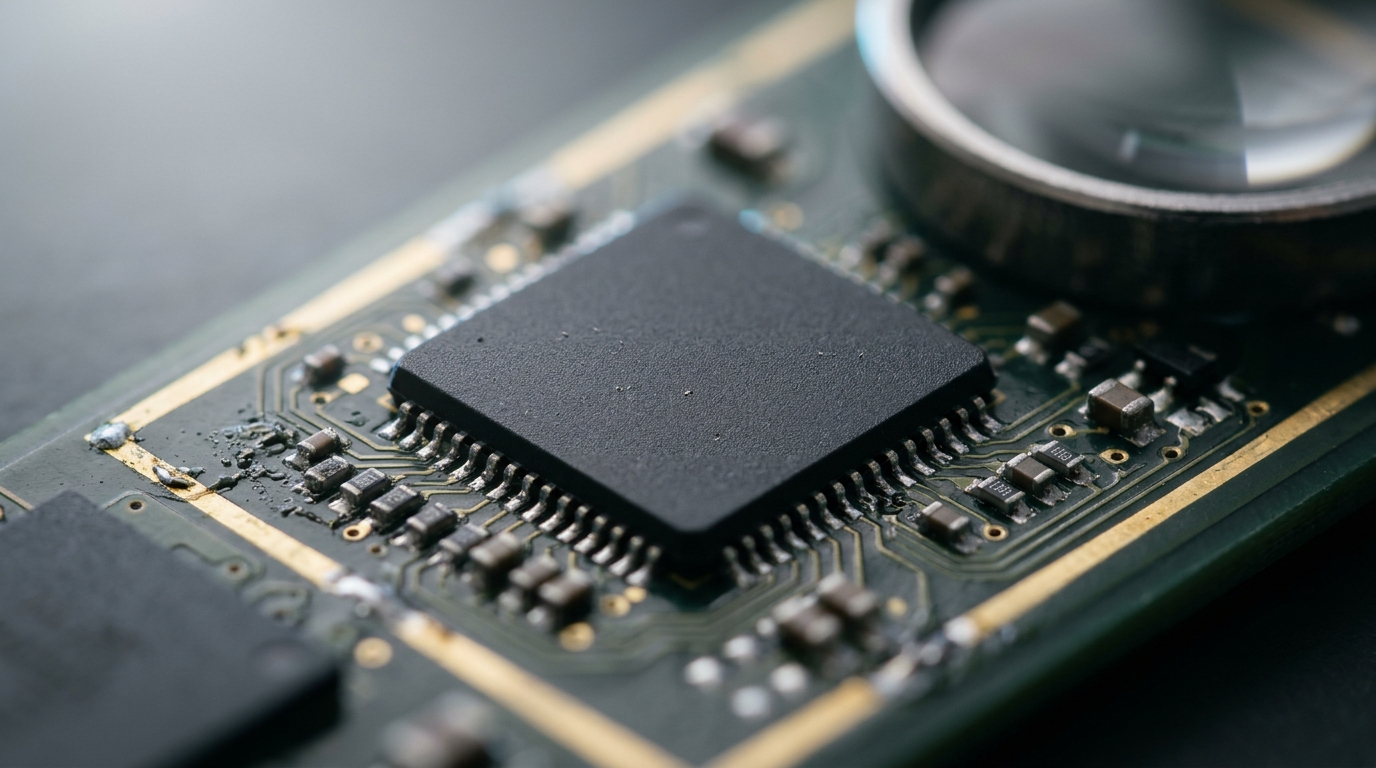
If you searched for the 35-ds3chipdus3 code, the most useful thing to know first is that, as of November 13, 2026, no manufacturer page, datasheet, repository, or official documentation for it can be found. The name appears almost entirely on a small group of blog-style sites, and those sites do not agree on what it is. One calls it a software module, another a PCIe hardware chip, and a third a drop-in upgrade for laptops, consoles, and controllers. This article explains what each version of the story says, why they cannot all be right, and how to protect yourself before you download, install, or buy anything connected to this name.
What the pages currently ranking for it say
Most of the results are “how to install” or “setup guide” posts. A page on a golf-related blog describes the term as a “version” of a lightweight software module for embedded and hardware-integration work, and tells developers to download a package from an unnamed “official repository,” unzip it, run an installation script, and set environment variables. A different page, on a technology-news style site, calls it a specialized integrated circuit that acts like a co-processor, says it needs at least a PCIe 3.0 x4 slot, and mentions three product versions, with the standard one aimed at general performance. A third guide on the same golf blog treats it as a chip you physically swap into an older laptop, desktop, or console, complete with a before-and-after table claiming faster boot times, lower heat, and lower power draw.
Another guide, published on a blog-aggregator site, widens the claim further and says the part can improve microcontrollers, gaming controllers, custom PC boards, and embedded systems. Each of these pages tells readers to get drivers or files from “the manufacturer” or “the official source,” yet none of them names that manufacturer. That missing name is the single biggest warning sign in the whole set of results.
Why these claims cannot all be true
A software package that is unzipped and configured with environment variables is a completely different kind of object from a physical chip that fits a PCIe slot. A chip that fits a PCIe slot is, in turn, a different kind of product from a part that gets soldered or clipped in place of an older chip on a controller board. When pages describing the same name disagree on whether it is code, an add-in card, or a replacement processor, the most likely explanation is that the authors never had a real product in front of them.
| Question | Answers found online | Anything verifiable? |
|---|---|---|
| Is it software or hardware? | Software module; PCIe chip; replacement chip | No |
| Who makes it? | Never named | No |
| What are the specs? | Speed, heat, and power gains described in general terms | No datasheet or test data |
| Where do you get it? | “Official repository” or “manufacturer’s site” | No link, store listing, or part number lookup |
| Which versions exist? | One page lists three; others list none | No |
Notice also that the performance claims are almost always relative, such as “high” versus “moderate” or “excellent” versus “poor.” Real component documentation gives numbers with units, test conditions, and operating limits. Vague comparison tables with no measurements are a feature of marketing-style filler, not of engineering documents.
Does anything real look like this name?

The “DS3” part of the string is where genuine electronics enters the picture, and it is also where confusion can start. In telecommunications, DS3 stands for Digital Signal level 3, a standard line rate that carries around 45 megabits per second, and companies such as Analog Devices list DS3/E3 transceivers and ATM/packet PHY chips in their catalogs. Those parts are network line-interface components used in carrier equipment, and some, such as the DS3170, are marked obsolete on the maker’s own page. They have nothing to do with speeding up a home PC.
“DS3” is also a common nickname among gamers for the PlayStation 3’s DualShock controller, which may explain why one guide mentions gaming controllers. That is a naming overlap only. Nothing found ties either of these real meanings to the string “ds3chipdus3,” and the real catalog parts follow different naming patterns, such as DS3161 through DS3164 or DS3170, with a clear maker’s prefix and a datasheet.
How to identify a part or code like this yourself

If the term came from a physical board, start with what is printed on the chip: a logo, a short part number, a date code, and sometimes a revision letter. Search that full marking together with the word “datasheet,” and prefer the manufacturer’s own website or a large authorized distributor over a random PDF host, because third-party copies are sometimes outdated or wrong. A genuine component will almost always have a maker’s prefix, a product page, and a lifecycle status such as active or obsolete.
If the term came from a software project, search the project’s own repository, the package registry for your language, and the dependency files in your code. A real library has a name, a version history, an author, a license, and a place where bug reports are filed. Check that the package name is spelled exactly as it appears in your project, since a one-character difference is a common way for fake or malicious packages to imitate real ones.
If the term came only from a web article, treat it as unconfirmed until at least one independent, identifiable source, such as a manufacturer, a distributor listing, or a well-known developer community, confirms it exists. An article repeating another article does not count as confirmation, and several of these guides share the same wording and structure.
What to do before following an install guide for it
Because the guides are vague about what the thing is, following them literally means running scripts or opening hardware based on instructions nobody can check. Running an unverified installation script can change system settings or pull in unknown files, and a download labeled “official” with no named publisher has no accountability behind it. If you do want to test something, use an isolated virtual machine or a spare device with nothing important on it, and avoid giving any download administrator rights you would not give a stranger.
On the hardware side, the guides suggest lifting an existing chip from your device and replacing it. Doing that without a datasheet, a matching socket or footprint, and the right static-safe tools can permanently damage a board, and opening a device can also affect your warranty. A genuine upgrade path would be documented by the device maker, not discovered through a blog post.
Why a name like this can end up all over the web
It is not publicly confirmed why this string became a search topic, and no source found explains its origin. What can be observed is the pattern: a technical-sounding, hyphenated name with no known product behind it, followed by many near-identical guides that publish installation steps, feature lists, and “future development” sections without any technical detail. That pattern is typical of low-effort content written to catch search traffic rather than to document a real product. This is an observation about the pages, not a claim about the intent of any particular author.
Frequently asked questions
Is this a real chip or a real piece of software?
Nothing found confirms either. There is no maker, part-number listing, datasheet, or code repository that can be pointed to, only articles that describe it in conflicting ways.
Can I buy or download it from a trusted source?
No trusted source listing it was found. Be cautious with any shop page or download that appears with this name, because a missing maker means there is nobody to hold responsible for what you receive.
Is it related to the Analog Devices DS3 chips?
No connection is documented. Those catalog parts are telecom transceivers with their own naming, and none of them uses this string.
What if I already ran an installer from one of these guides?
Disconnect from the network if you are worried, run a full scan with a reputable security tool, review recently installed programs and startup items, and change important passwords from a different, clean device. If it was a hardware change that went wrong, a repair technician can tell you whether the board was damaged.
Should I trust the benchmark or “before and after” tables?
Not without test conditions, units, and a way to reproduce the numbers. The tables found online use general words instead of measurements.
The bottom line on the 35-ds3chipdus3 code
The honest answer on the 35-ds3chipdus3 code is that it is unverified: there is no confirmed owner, no public specification, and no authoritative page that explains what it does. Until a manufacturer, a distributor, or a recognized developer community publishes something checkable, the safest approach is to treat the many installation guides as unreliable, identify your actual part or package using its printed markings or project files, and rely on official documentation from whoever really made your device or software. This information reflects what could be found publicly as of November 13, 2026, and it is worth rechecking if an official source ever appears.
Explore More
Homecz: What This Keyword Really Means and Why the Search Results Are So Confusing

I’m Muhammad Ubaid, founder of YBR Magazine. I research and write detailed guides on America’s National Parks — covering entry fees, permits, best times to visit, and planning tips — using official NPS sources and up-to-date information.

