

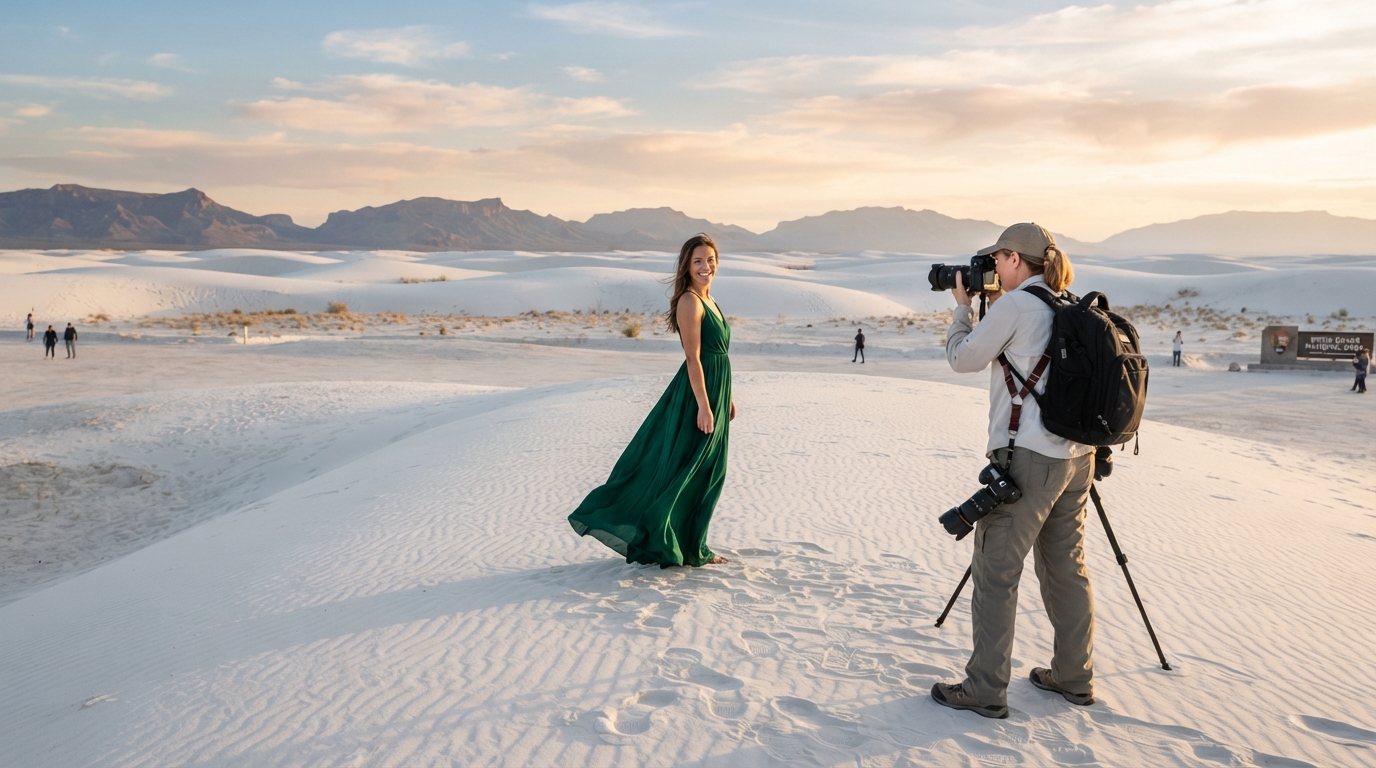
Planning a White Sands National Park photoshoot offers an experience unlike any standard outdoor portrait session. Instead of green grass, dirt, or trees, the landscape consists entirely of bright, blinding gypsum sand dunes. This extreme environment creates unique visual beauty, but it also brings unexpected technical and physical challenges for photographers and clients alike. Preparing properly ensures your session goes smoothly while keeping you safe in the New Mexico desert.
Gypsum Dune Glare and Bright Light Challenges
Managing the intense reflectivity of pure white gypsum dunes requires specific camera settings and careful lighting adjustments during a White Sands National Park photoshoot.
The endless white dunes act like a giant reflector, bouncing sunlight upward from the ground in addition to the light coming from the sky. This double exposure makes it very easy to blow out skin tones or overexpose the background if your camera settings are not adjusted carefully. Furthermore, the fine gypsum sand can easily find its way into camera crevices and scratch delicate lenses if equipment is left unprotected. Visitors also face high daytime temperatures during warmer months, and the lack of shade means physical exhaustion can set in much faster than expected.
National Park Service Commercial Permit Rules
Navigating the legal regulations and commercial permit policies enforced by the National Park Service prevents unexpected fines during a White Sands National Park photoshoot.
According to the National Park Service, professional photography sessions that involve commercial crews, models, or financial compensation often require a special use permit in advance. Even for casual portrait sessions, visitors must follow strict park rules regarding fragile natural resources, litter control, and staying out of closed restoration zones. Ignoring these official guidelines can result in unexpected fines or interruptions to your session. Always check the official park website before your visit to confirm current fee structures and permit applications.
Golden Hour Timing and Missile Range Closures
Scheduling a White Sands National Park photoshoot requires careful timing to avoid harsh midday shadows and sudden park closures caused by nearby military testing.
The hours shortly after sunrise and right before sunset provide the softest, most flattering light for portraits against the white dunes. Midday sun creates harsh overhead lighting and squinting subjects, making daytime shooting quite difficult. Additionally, White Sands National Park is adjacent to the White Sands Missile Range, which means the park and highway close temporarily during missile tests. Checking the park’s official schedule ahead of time prevents unexpected travel delays.
Protecting Camera Gear from Abrasive Gypsum Sand
Protecting your equipment during a White Sands National Park photoshoot is essential because fine gypsum sand is notoriously destructive to camera gear.
Wind gusts can pick up the fine sand and blow it directly onto your camera body, lenses, and tripod joints. Changing lenses in the open dunes is a major risk, so photographers should try to mount their primary lens before walking out onto the sand. Bringing plenty of drinking water, sunscreen, and protective lens filters helps manage the physical and environmental demands of the desert. Without adequate preparation, blowing sand can easily jam mechanical zoom rings and ruin expensive gear.
Wardrobe Choices for High-Contrast Desert Landscapes
Choosing the right clothing for a White Sands National Park photoshoot helps subjects stand out against the endless monochrome background without getting lost in the glare.
Wearing neutral-toned or soft pastel clothing can blend in too much with the white gypsum dunes, so rich jewel tones or deep colors create a striking visual contrast. Flowing fabrics like long dresses or linen shirts catch the desert breeze beautifully and add natural movement to portraits. Comfortable footwear is also important, as walking through deep sand is tiring, and the surface can become very hot during peak afternoon hours. For visitors extending their New Mexico desert travels further south, a road trip from White Sands National Park to Carlsbad Caverns provides an easy way to combine two iconic regional landscapes.
Frequently Asked Questions About Photography at White Sands
Do I need a permit for family portraits at White Sands National Park?
Casual family portraits taken by visitors usually do not require a commercial permit, but you should check with the National Park Service if you are hiring a professional photographer for a commercial session.
What are the best clothing colors to wear on the white dunes?
Bright or rich colors like red, blue, emerald green, and deep yellow stand out best against the bright white sand without blending into the background.
Is the park open every day of the year?
The park is open daily, but temporary closures occur during missile testing events managed by the White Sands Missile Range.
Can blowing sand damage my camera equipment?
Fine gypsum sand is abrasive and can easily get inside zoom rings and scratch lenses, so you should use protective filters and avoid changing lenses in windy conditions.
How early or late should I schedule my photo session?
The golden hour just after sunrise and right before sunset provides the softest lighting and most flattering shadows for portraits.
Are pets allowed during a photo session in the park?
Pets are permitted on leashes in the park, but managing them while handling camera gear in deep sand can be challenging.
Disclaimer: Park regulations, weather conditions, and permit fees can change over time. Always verify current guidelines directly from official sources like the National Park Service before planning your session.
I’m Muhammad Ubaid, founder of YBR Magazine. I research and write detailed guides on America’s National Parks — covering entry fees, permits, best times to visit, and planning tips — using official NPS sources and up-to-date information.