

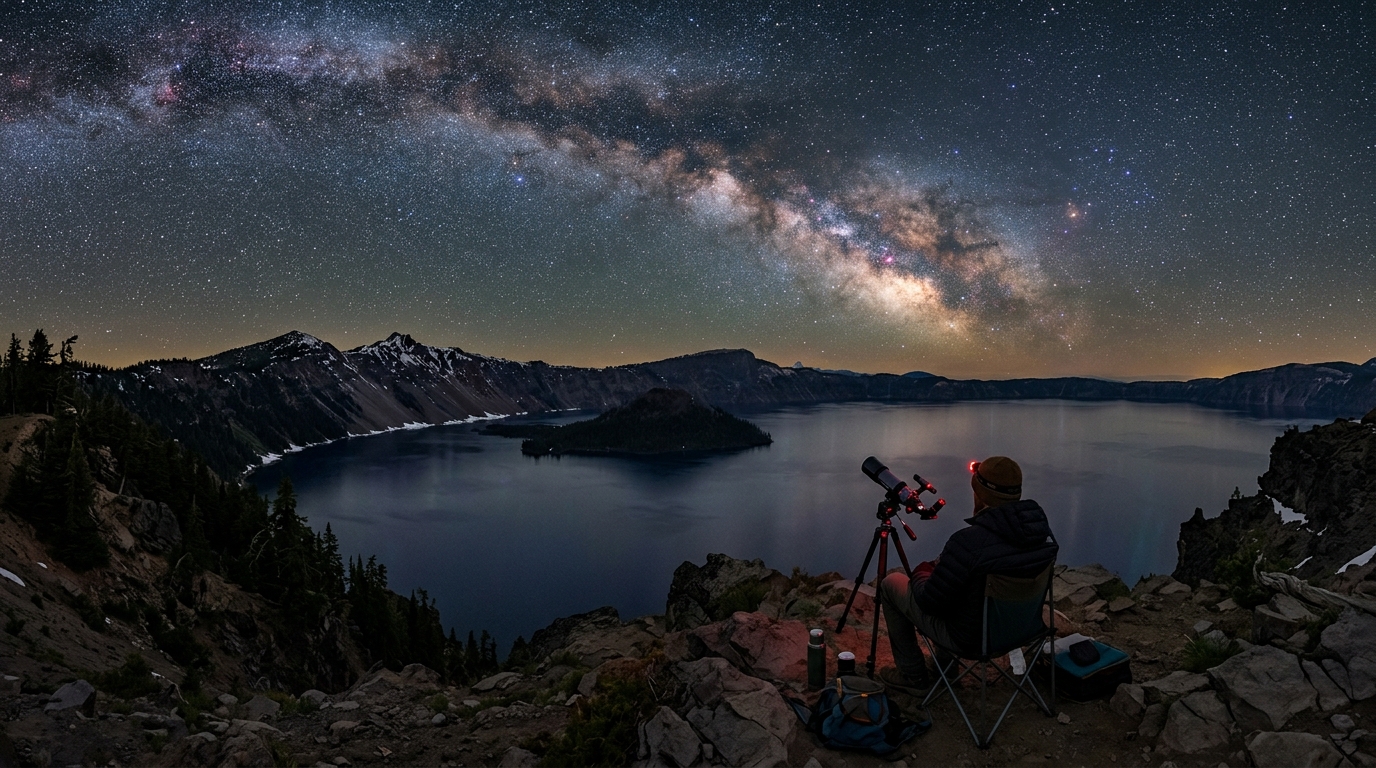
Crater Lake National Park protects some of the clearest and darkest night skies in the entire Pacific Northwest. High elevation and clean mountain air combine to give stargazers incredible views of the Milky Way, distant planets, and countless constellations without the glare of urban lights. Crater Lake National Park stargazing offers an unforgettable experience for anyone willing to brave the chilly mountain air after sunset.
Preparing for a night visit requires more than just bringing a telescope or camera. The park environment changes drastically after dark, bringing freezing temperatures even during the summer months and strict vehicle restrictions along the caldera. Visitors must understand local conditions and regulations according to the National Park Service before heading up to the rim after dark.
High-Altitude Clarity Above the Caldera Rim
High-altitude clarity above the caldera rim makes Crater Lake National Park stargazing exceptional compared to lower-elevation locations.
The park sits between 7,000 and 8,000 feet above sea level, placing observers above much of the atmospheric haze and moisture that often clouds lower valleys. This thin mountain air reduces atmospheric distortion, allowing starlight to shine through with striking sharpness and brightness. Visitors frequently see shooting stars, satellites, and the glowing dust lanes of the Milky Way stretching directly across the dark volcanic caldera.
The deep blue lake itself mirrors the bright night sky under calm weather conditions, creating a striking visual contrast between the water and the cosmos. However, standing near the steep rim in the dark introduces serious safety risks, so visitors must stay firmly on established pathways and designated viewpoints.
Weather Realities and Seasonal Access
Weather realities and seasonal access dictate when and how visitors can safely enjoy Crater Lake National Park stargazing.
Summer and early autumn provide the most reliable windows for clear night skies and accessible roads. July, August, and September usually bring dry nights, though temperatures plummet near freezing shortly after sunset due to the high altitude. Travelers must pack heavy coats, hats, and gloves even if daytime conditions felt warm.
Winter brings heavy snowfall that closes major scenic roads around the caldera and buries parking areas. Winter storms often block the night sky entirely with thick clouds for days at a time. Visitors planning cold-weather adventures should read our guide on November winter realities and planning to understand deep snow safety.
Legal Parking and Rim Access Regulations
Legal parking and rim access regulations require careful attention because vehicle rules change significantly between seasons.
During the summer months, visitors can access designated pullouts along portions of the rim drive to set up binoculars or cameras. The National Park Service strictly prohibits parking on fragile alpine meadows or blocking emergency access lanes. Nighttime driving also demands extra vigilance because deer and elk frequently roam across mountain roads after dark.
Visitors who want to explore the surrounding region during daylight hours can find plenty of inspiration in our overview of things to do near Crater Lake National Park to round out a complete mountain vacation.

Essential Gear and Survival Preparedness
Essential gear and survival preparedness ensure a safe and comfortable night out in the park.
Cell phone service is unreliable or entirely absent across large portions of the park, meaning digital maps may not load after dark. Visitors must download offline maps and navigation tools before entering the gates. Flashlights with red light settings help preserve night vision while walking along dark paths.
One major downside of night visits is the complete lack of open facilities, food, and fuel after standard operating hours. Travelers must carry emergency supplies, warm water, and heavy clothing to stay safe in the freezing mountain wilderness. Additional challenges include navigating sudden wind gusts along the open ridge, which can quickly destabilize camera tripods or chill observers who fail to wear windproof outer layers. Packing extra batteries for electronic gear is also essential because freezing temperatures rapidly drain lithium-ion batteries used in cameras and smartphones.
Frequently Asked Questions
Where is the best place for Crater Lake National Park stargazing?
Rim Village is the most popular and accessible area for night viewing because it remains open year-round and offers secure parking.
Can I park anywhere along the rim at night?
No, the National Park Service restricts nighttime parking to designated paved lots and pullouts to protect delicate alpine vegetation and maintain road safety.
What should I wear for night viewing in the summer?
Even in July and August, temperatures at the rim drop sharply after sunset, so visitors need heavy coats, long pants, hats, and gloves.
Is winter stargazing allowed?
Winter stargazing is allowed for visitors who can safely navigate heavy snow, but most roads are closed to vehicles and parking is strictly limited to the Rim Village area.
Why is cell service unreliable during a night visit?
The rugged mountain terrain and deep caldera walls block cellular signals across much of the park, making offline preparation essential.
Are there ranger-led stargazing programs?
The park occasionally hosts special astronomy events during the summer months, but visitors should check the official National Park Service schedule before arriving to confirm current offerings.

I’m Muhammad Ubaid, founder of YBR Magazine. I research and write detailed guides on America’s National Parks — covering entry fees, permits, best times to visit, and planning tips — using official NPS sources and up-to-date information.