

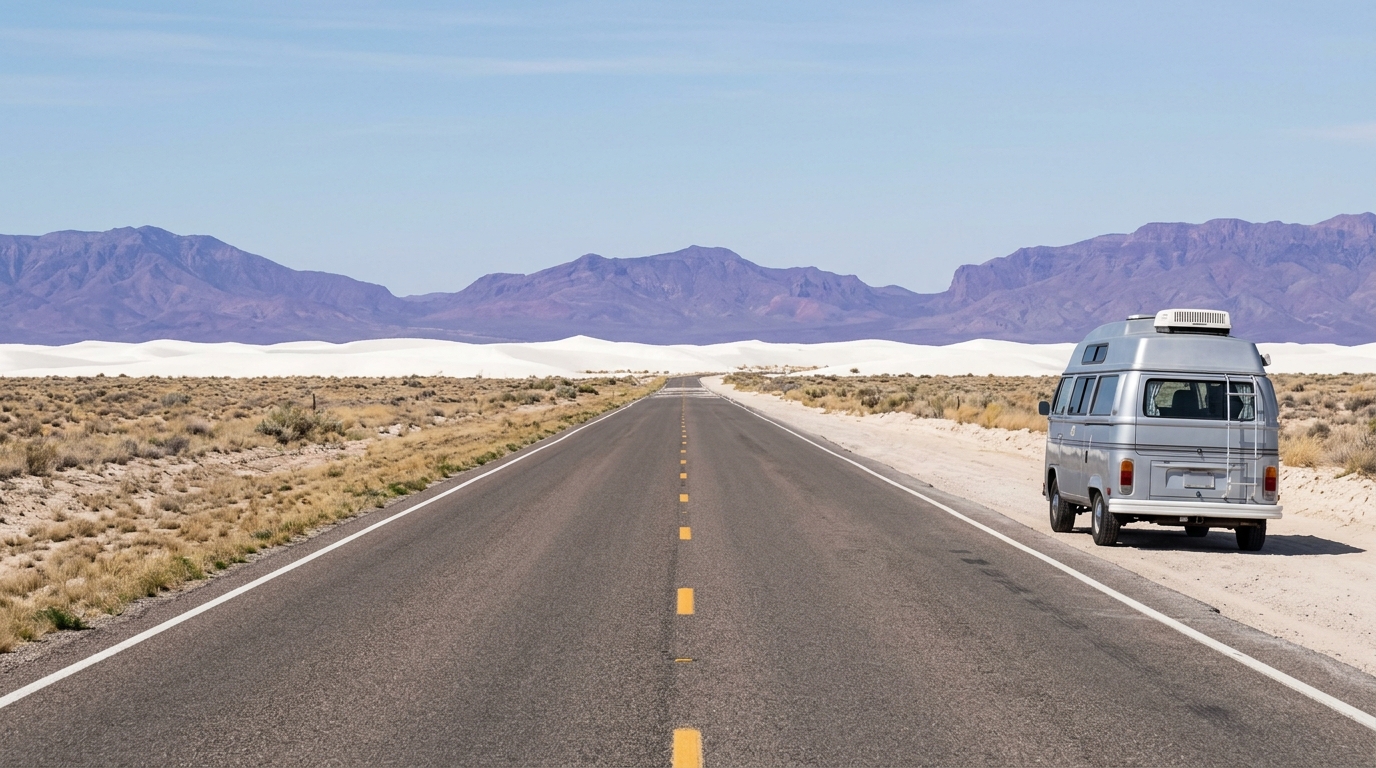
Navigating the Unique Tularosa Basin Landscape
A White Sands National Park road trip offers travelers a rare chance to drive through a vast landscape of bright white gypsum sand fields located in the Tularosa Basin of New Mexico. Unlike massive mountain parks that require extensive backcountry driving, White Sands National Park centers primarily around Dunes Drive, a paved and unpaved scenic road that puts visitors right next to towering dunes. Travelers often visit White Sands National Park as a standalone day trip or combine it with a broader southwest itinerary. Preparing for this unique road trip requires understanding regional weather patterns, vehicle maintenance after driving through fine dust, and unpredictable park schedules.
Scheduling Your Time Around Military Testing Hours
Most travelers find that a single day or even just a few hours provides plenty of time to experience the primary highlights along Dunes Drive. White Sands National Park does not require a multi-day itinerary because the main scenic areas, sledding hills, and short walking trails are concentrated within a compact 16-mile round-trip drive. Visitors planning a White Sands National Park road trip should allow at least two to three hours for driving, stopping at pullouts, and taking short walks on the shifting gypsum sand. Those who want to watch the sunset over the dunes or hike the backcountry Alkali Flat Trail should extend their visit into the late afternoon.
Coping With Sudden Gate Closures and Desert Limits
According to the National Park Service, visitors must always check official park alerts before arriving because White Sands National Park frequently closes on short notice due to missile testing at the adjacent White Sands Missile Range. Park operating hours can change depending on military operations, and gates may shut abruptly for safety reasons during active tests. Visitors should also note that entrance fees apply, and standard vehicle passes or America the Beautiful interagency passes are accepted at the front gate. Beyond military closures, travelers face practical limitations like extreme summer heat, intense glare from the gypsum sand, and a complete lack of natural shade or drinking water once inside the dune field.
Tackling Dunes Drive and Fine Gypsum Dust
Dunes Drive serves as the central artery of the park, taking motorists from the visitor center deep into the heart of the gypsum dune field. The first portion of the road is paved, while the final miles consist of hard-packed gypsum sand that regular passenger cars can navigate with normal care. Drivers should maintain steady speeds and avoid sudden braking or sharp turns that can cause tires to lose traction on loose sand patches. Fine gypsum dust gets kicked up easily by passing vehicles, meaning drivers should check their air filters and clean their windshields frequently to maintain visibility.

Sledding Slopes and Managing Intense Sunlight
Visiting the dunes involves outdoor activities like plastic sledding down steep slopes and hiking marked nature trails across the shifting landscape. According to the National Park Service, visitors can purchase plastic snow saucers and specialized wax at the park gift shop to use on the designated sledding dunes near the alkali flat edges. Hiking can be physically demanding because walking uphill on loose sand takes extra effort and drains energy much faster than walking on flat ground. Visitors must carry plenty of drinking water, wear polarized sunglasses to protect against blinding glare, and apply sunscreen repeatedly because the white gypsum reflects sunlight from all angles.
For travelers expanding their regional journey further south, you can look at our guide on scenic southern New Mexico driving routes to map out your next stop.
Frequently Asked Questions About White Sands
How long do most people spend at White Sands National Park?
Most visitors spend between two and four hours exploring Dunes Drive, stopping for photos, and trying out sand sledding.
Do I need a special vehicle for Dunes Drive?
A standard passenger car handles Dunes Drive easily because the road is well-maintained, though the final section consists of packed gypsum sand.
Why does White Sands National Park close unexpectedly?
According to the National Park Service, the park closes temporarily during missile tests conducted at the adjacent White Sands Missile Range for public safety.
Is there water available along Dunes Drive?
Water bottle filling stations are available near the visitor center, but there is no drinking water available out in the dune field.
Can I bring my dog on a White Sands National Park road trip?
Pets are welcome in the park as long as they remain on a leash at all times, but owners must clean up after them and protect their paws from hot sand.
Are sleds available for purchase inside the park?
Plastic sleds and special wax designed for gypsum sand are sold at the park gift shop near the entrance.
Disclaimer: Park hours, entrance fees, and missile range closures can change without warning. Always verify current conditions, weather alerts, and operating schedules directly from official sources like the National Park Service before starting your journey.

I’m Muhammad Ubaid, founder of YBR Magazine. I research and write detailed guides on America’s National Parks — covering entry fees, permits, best times to visit, and planning tips — using official NPS sources and up-to-date information.