

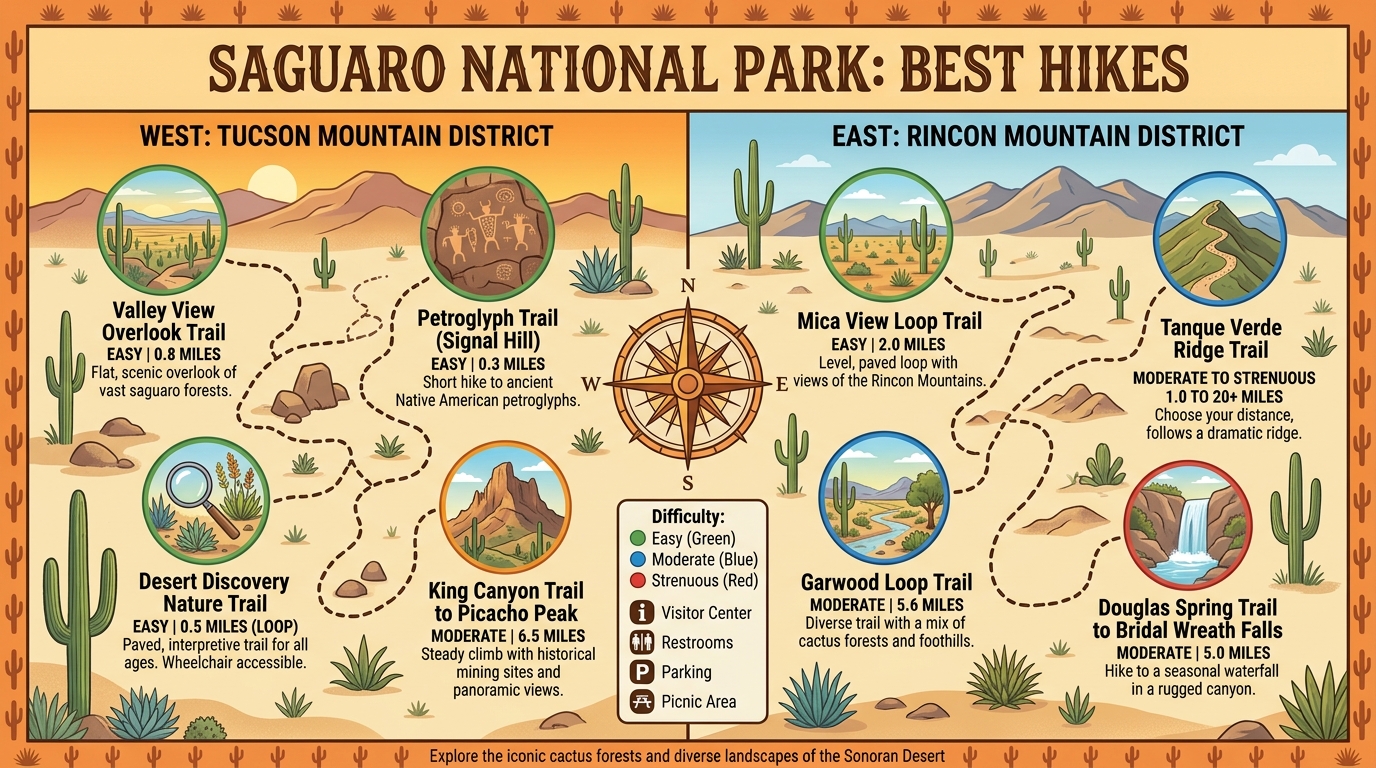
Planning a trip to see giant cacti requires understanding that Saguaro National Park is uniquely split into two separate districts. The Tucson Mountain District sits on the west side of Tucson, while the Rincon Mountain District sits on the east side. The sprawling city of Tucson separates these two protected areas, and driving between them typically takes about thirty to forty-five minutes depending on local traffic. Because the geography and landscape differ quite a bit between the two sides, finding the Saguaro National Park best hikes means deciding whether you prefer short, flat cactus walks or steep, rugged mountain climbs. Visitors must check park maps carefully before leaving their hotels so they do not accidentally drive to the wrong side of town for their intended trail.
Valley View Overlook Trail in the West District
Valley View Overlook Trail is one of the most scenic and rewarding short walks for visitors exploring the western district of the park. The trail measures about 0.8 miles round-trip and features a gentle, well-maintained slope that leads to a peaceful wooden bench overlooking an expansive valley filled with giant saguaro cacti. Saguaro National Park is famous for these towering green giants, and the western district holds some of the densest cactus forests in the entire protected area. Walking along Valley View Overlook Trail lets families and casual hikers experience the classic Sonoran Desert landscape without committing to a long or strenuous journey under the hot sun. Visitors should still wear sturdy closed-toe shoes and bring plenty of water, even on short walks, because desert heat can catch unprepared travelers off guard.
Exploring the Rincon Mountain District and Lime Kiln Trail
The Rincon Mountain District offers a completely different hiking experience characterized by rugged terrain, pine trees, and much higher elevations. Exploring the Rincon Mountain District and Lime Kiln Trail introduces hikers to historic ruins alongside sweeping desert views and shaded washes. The Lime Kiln Trail loop is roughly 2.2 miles long and takes visitors past the weathered remains of an old nineteenth-century lime kiln used during early settlement days. This eastern side of Saguaro National Park feels much quieter and wilder than the western district, and the trails climb higher into the foothills of the Rincon Mountains. Hikers tackling the Rincon Mountain District should prepare for rocky paths, uneven ground, and greater changes in elevation that require a higher level of physical endurance.

Essential Safety Tips and Desert Rules
Staying safe while hiking in the desert requires following strict rules and respecting the harsh local climate according to the National Park Service. Temperatures in the desert can soar to dangerous levels, especially during the afternoon hours from late spring through early autumn. The National Park Service strongly advises carrying at least one gallon of water per person per day and starting hikes early in the morning when conditions are considerably cooler. Hikers must also stay on designated trails at all times to protect fragile desert soils, avoid sharp cactus spines, and watch out for native wildlife such as rattlesnakes, javelinas, and Gila monsters. Cell phone service can be entirely unreliable in remote parts of the park, so downloading digital trail maps ahead of time remains a smart precaution for every visitor.
Frequently Asked Questions About Saguaro Trails
Knowing what to expect helps make a trip to the desert smooth and enjoyable for every traveler.
Do I need a permit to hike in Saguaro National Park?
Day hiking does not require any permit, but backcountry camping in the Rincon Mountain District does require a valid overnight permit according to the National Park Service.
What is the best time of year to visit Saguaro National Park?
The cooler months between November and March offer the most comfortable weather for daytime hiking and exploring the outdoor desert trails without extreme heat.
Are dogs allowed on the hiking trails?
Pets are strictly restricted to paved roads and designated picnic areas to protect local wildlife and keep dogs safe from cactus needles and extreme heat, according to the National Park Service regulations.
How much does it cost to enter Saguaro National Park?
Vehicle entrance fees apply at both districts and support park maintenance, with passes available at visitor centers and online portals managed by the National Park Service.
Which district has more giant saguaro cacti?
The Tucson Mountain District on the west side generally features denser forests of giant saguaro cacti, making it the top choice for classic desert photography.
Can I see snow on the trails in Saguaro National Park?
Higher elevations in the Rincon Mountain District occasionally receive winter snow, while the lower desert areas rarely experience freezing temperatures or snowfall.
For outdoor adventures beyond the desert, travelers can also look into other stunning landscapes such as our guide on choosing the best hikes in Grand Teton National Park.
Disclaimer: Park fees, trail conditions, and operating hours can change over time. Always verify current details directly from official sources such as the National Park Service before starting your trip.

I’m Muhammad Ubaid, founder of YBR Magazine. I research and write detailed guides on America’s National Parks — covering entry fees, permits, best times to visit, and planning tips — using official NPS sources and up-to-date information.