

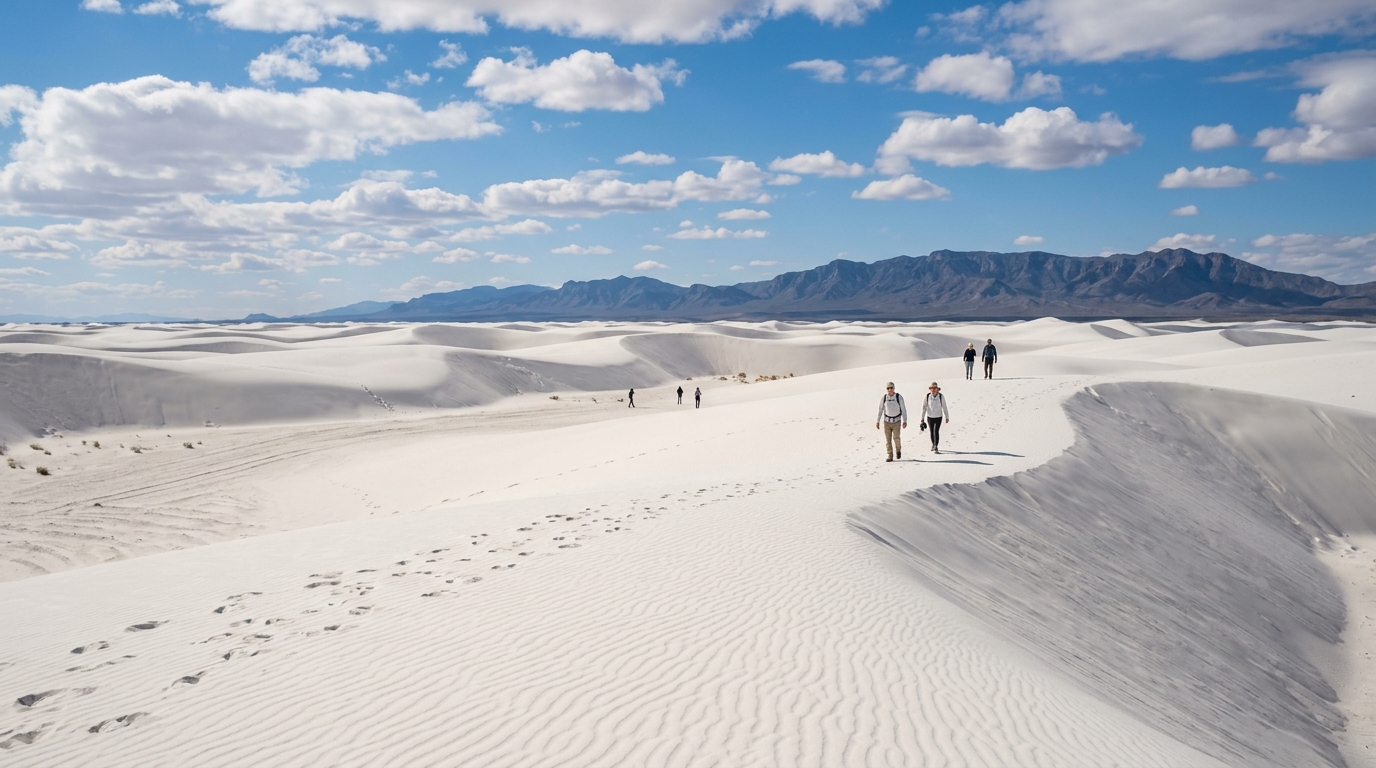
Planning a trip to White Sands National Park in March means preparing for a unique desert environment where spring weather changes rapidly. March brings strong breezes across the Tularosa Basin, shifting fine white gypsum sand across the scenic drive and testing outdoor plans. At the same time, daytime air temperatures stay pleasant compared to the intense heat of summer. Visitors exploring White Sands National Park in March need to understand how spring windstorms affect visibility, why evening temperatures drop so quickly after sunset, and what steps to take when sudden weather shifts occur.
Many standard travel blogs give basic details about white dunes and sledding slopes while ignoring the specific challenges of spring in New Mexico. They often overlook how blowing gypsum dust can irritate skin or how quickly disappearing footprints complicate trail navigation during breezy afternoons. Preparing for these seasonal realities ensures a much safer and more enjoyable journey across the shifting landscape.
Spring Windstorms and Tularosa Basin Climate Patterns
Spring windstorms and Tularosa Basin climate patterns dominate the weather experience during March, bringing high gusts that frequently lift fine gypsum dust into the air.
March is historically one of the windiest months in southern New Mexico, which means visitors often encounter hazy conditions and sudden visibility drops along Dunes Drive. While afternoon sun keeps the air feeling warm and comfortable, the lack of cloud cover lets heat escape rapidly once daylight fades. Travelers must keep a close eye on local weather forecasts because severe wind gusts can occasionally prompt temporary road closures to keep motorists safe from blinding dust clouds.
Navigating Spring Operating Schedules and Entrance Fees
Navigating spring operating schedules and entrance fees involves checking the latest guidelines set directly by the National Park Service.
According to the National Park Service, entrance fees apply to visitors aged 16 and older, while standard interagency passes cover entire vehicle entries. Park visitor center hours and entrance gate schedules can sometimes shift due to seasonal adjustments or required closures from missile testing on the adjacent military range. Travelers building a longer regional itinerary can review regional driving routes such as the scenic southern New Mexico driving route to connect their desert stops smoothly.
Enjoying Gypsum Sledding and Desert Trails
Enjoying gypsum sledding and desert trails requires adapting outdoor activities to handle active spring breezes and wide temperature swings.
Sledding down the steep white dunes remains a favorite pastime for visitors of all ages, and plastic discs with specialized wax are sold at the park gift shop to maximize speed. Hiking trails like the Interdune Boardwalk and Alkali Flat Trail offer close-up views of the unique gypsum environment, though sandy paths demand extra physical effort. Ranger programs scheduled during spring months provide fascinating insights into how these rare white sand dunes formed in the middle of a desert basin.
Critical Safety Hazards and Practical Limitations
Critical safety hazards and practical limitations during a March visit include rapid dehydration, skin irritation from blowing sand, and strict trail navigation challenges.
Blowing gypsum acts like a natural abrasive, stinging exposed skin and finding its way into sensitive camera gear or backpacks. Visitors need to carry plenty of drinking water because the park does not provide hydration stations out on the open dunes. Sticking closely to trail markers is vital because high winds quickly erase footprints, making it surprisingly easy to lose direction among identical white ridges.
Essential Gear and Layering Strategies for Desert Spring
Essential gear and layering strategies for desert spring ensure comfort against intense sunlight, daytime warmth, and freezing nighttime lows.
Dressing in multiple lightweight layers allows visitors to adjust easily as the desert warms up under afternoon sunshine and cools off abruptly after dark. Sunglasses and wide-brimmed hats protect the eyes and face from harsh UV rays bouncing off the blindingly white gypsum surface. Wearing sturdy closed-toe shoes prevents hot or wind-chilled sand from causing discomfort during long walks across the dunes.
Frequently Asked Questions About Visiting in March
Frequently asked questions about visiting in March provide quick answers to help travelers plan their spring desert adventure.
Is it always windy at White Sands National Park in March?
March is traditionally one of the windiest months of the year, frequently bringing strong gusts and blowing gypsum sand across the basin.
What daytime temperatures should I expect during March?
Daytime air temperatures are usually mild and comfortable for walking, but the weather cools down rapidly as soon as the sun sets.
Are entrance fees required for children in March?
According to the National Park Service, children aged 15 and younger enter for free, while adults aged 16 and older pay the standard individual fee.
Can the park close unexpectedly during spring windstorms?
Yes, park officials can temporarily close Dunes Drive or entry gates if blowing gypsum creates dangerous driving conditions or low visibility.
Is dune sledding open every day in March?
Dune sledding remains open year-round, though high winds and blowing sand can occasionally make sliding down the slopes less comfortable.
Where can I find real-time updates on weather and road conditions?
Visitors should check the official National Park Service website or stop by the visitor center before heading out onto the dunes.
Disclaimer: Park hours, weather conditions, and fee structures can change unexpectedly. Always verify current details through official sources before planning your trip.

I’m Muhammad Ubaid, founder of YBR Magazine. I research and write detailed guides on America’s National Parks — covering entry fees, permits, best times to visit, and planning tips — using official NPS sources and up-to-date information.