

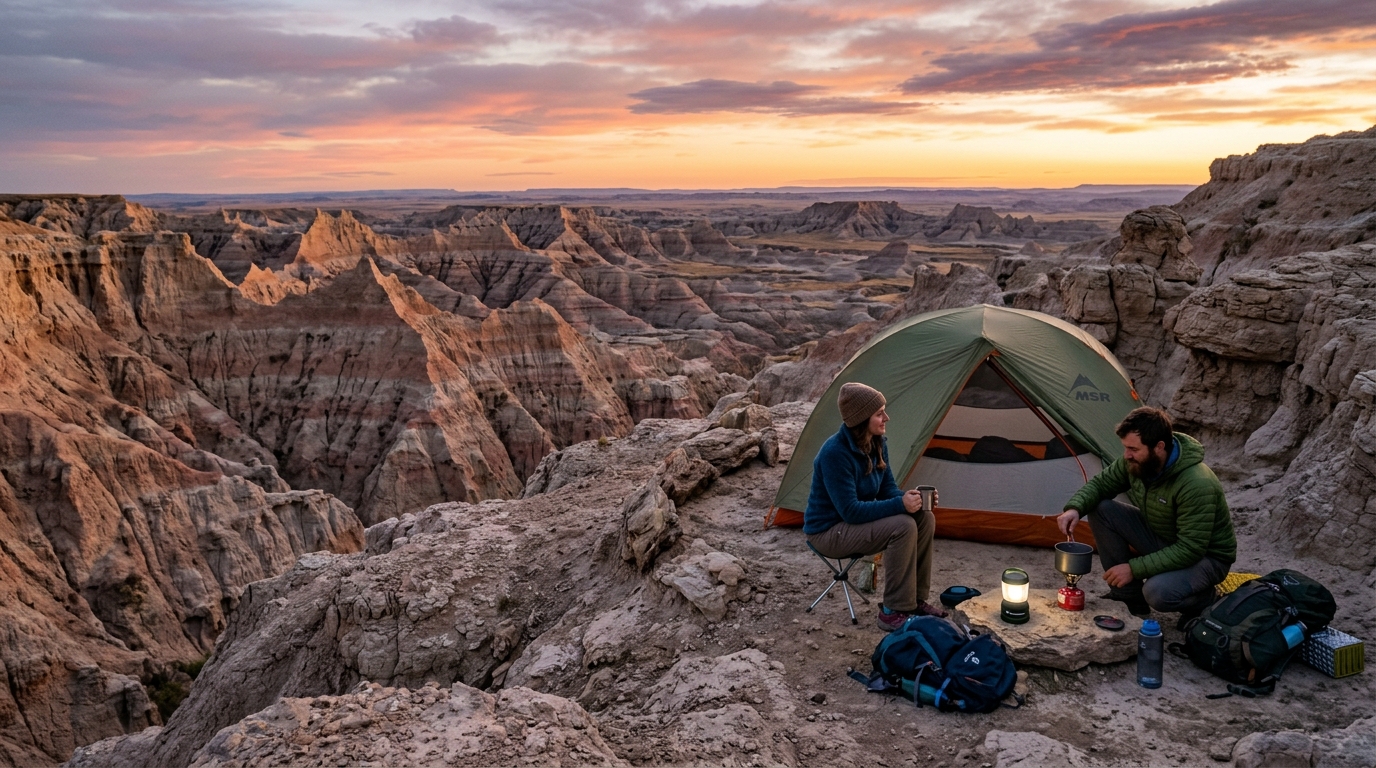
Navigating the Trail-Less Wilderness of South Dakota
Badlands National Park backcountry camping throws visitors into a vast, untamed landscape without a single marked footpath or designated tent pad to guide the way.
Badlands National Park backcountry camping requires travelers to navigate across open prairies, crumbly clay spires, and steep drop-offs entirely on foot. Because the National Park Service does not maintain official trails or backcountry campsites in these remote zones, visitors must rely heavily on topographic maps, compasses, and careful visual landmarks. The terrain changes constantly due to rapid erosion, turning simple hikes into complex route-finding exercises that demand complete self-reliance and deep respect for the harsh environment.
Mastering National Park Service Distance and Parking Directives
Campers must pitch their tents far away from paved routes to preserve the raw, isolated character of the remote wilderness.
According to the National Park Service, overnight visitors must set up camp at least one-half mile away from any road or established trail. Furthermore, all temporary shelters and gear must stay completely hidden from roadways and developed viewpoints to protect the pristine aesthetic of the prairie. Vehicles cannot be left along the side of the road overnight, meaning drivers must park their cars securely in authorized lots or trailheads before setting off on foot.
Combating Prairie Degradation and Abandoned Gear Hazards
Protecting the delicate prairie soils and native grasses requires absolute dedication to Leave No Trace principles in every action.
Badlands National Park warns against ecological harm from abandoned campsites, as discarded equipment, forgotten trash, and food scraps severely damage local wildlife habitats. The native soil and fragile vegetation recover at an extremely slow rate after being trampled or polluted by human carelessness. Campers must pack out every single item they bring into the wilderness, ensuring that no trace of human presence remains behind to disrupt local animals or ruin the landscape for future visitors.
Confronting Intense Heat and Total Water Scarcity
Backcountry visitors face extreme environmental challenges, including blazing summer temperatures and a complete absence of reliable drinking water.
The Badlands region lacks any dependable natural water sources, forcing campers to pack in every drop of drinking water needed for their stay. Seasonal streams and puddles contain heavy mineral concentrations and thick silt, making them entirely unsafe to drink even after standard filtration attempts. In addition, fierce summer heat waves, sudden thunderstorms, and sticky clay mud that turns impassable when wet make timing and weather awareness critical for survival.

Equipping Yourself for Remote Prairie Exploration
Successful wilderness trips depend on sturdy gear capable of handling fierce winds, loose rock, and unpredictable weather shifts.
Campers need lightweight, sturdy tents with strong stakes designed to hold fast in hard-packed dirt or dense clay when high winds sweep across the open flats. High-traction footwear is also essential for maintaining balance on crumbly shale and steep, eroding slopes that characterize the geologic formations. For those looking to expand their regional adventures beyond this park, exploring the activities and trails across the badlands helps outdoor enthusiasts plan visits to other remarkable badlands destinations.
Frequently Asked Questions About Badlands National Park Backcountry Camping
Do I need a permit for backcountry camping in Badlands National Park?
According to the National Park Service, backcountry camping permits are currently not required for visitors, though checking in at the visitor center for safety updates is always recommended.
How far from roads must I pitch my tent?
The National Park Service requires all backcountry campsites to be positioned at least one-half mile away from any road or marked trail.
Are campfires permitted in the backcountry?
Campfires are strictly prohibited throughout the backcountry due to extreme fire dangers, dry grasses, and unpredictable prairie winds.
Where can I find drinking water while camping?
There is no natural drinking water available in the backcountry, meaning you must carry in all the water required for drinking and cooking.
Can I leave my car parked overnight near a trailhead?
Vehicles must be left only in officially designated parking areas approved by the National Park Service, as roadside overnight parking is banned.
Are pets allowed on backcountry overnight trips?
Pets are prohibited on trails, in the backcountry, and anywhere beyond 100 feet from roads and parking lots to protect native wildlife.
Disclaimer: Park regulations, weather conditions, and safety advisories change frequently. Always verify current guidelines directly through the official National Park Service website before starting your trip.

I’m Muhammad Ubaid, founder of YBR Magazine. I research and write detailed guides on America’s National Parks — covering entry fees, permits, best times to visit, and planning tips — using official NPS sources and up-to-date information.