

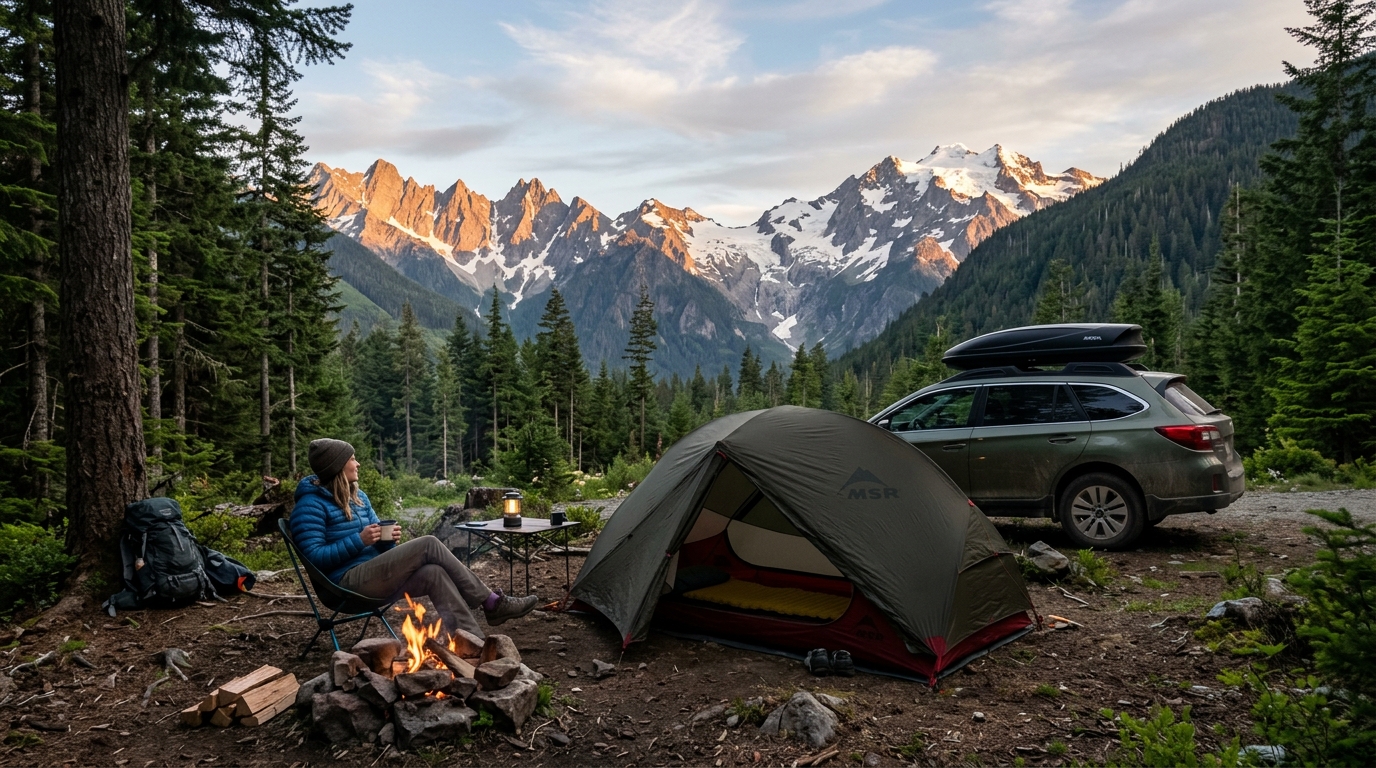
Planning an outdoor trip in Washington state requires knowing where public land boundaries start and end, especially when you want to sleep under the stars without paying nightly fees. Dispersed camping near North Cascades National Park presents unique challenges because the national park itself enforces strict backcountry permit rules and bans random roadside vehicle camping inside its borders. True free camping on undeveloped public land actually takes place on neighboring US Forest Service property within the Okanogan-Wenatchee National Forest or adjacent public tracts. Knowing how to navigate rugged mountain access routes, understanding strict federal agency guidelines, and preparing for total isolation will keep your wilderness trip safe and legal.
Understanding Where You Can Actually Camp for Free
Free dispersed camping is not allowed inside the national park itself, so you must head into the neighboring Okanogan-Wenatchee National Forest to set up camp.
Many travelers make the mistake of assuming public land rules apply uniformly across all federal acreage in the Pacific Northwest. The National Park Service operates under strict conservation mandates that prohibit random pullout camping, roadside pitching, and casual vehicle parking along State Route 20. To find genuine free camping, travelers must cross over into the bordering Okanogan-Wenatchee National Forest where dispersed camping is permitted on public multi-use land. Understanding this boundary distinction prevents heavy fines from federal rangers who regularly patrol the highway corridors.
Best US Forest Service Roads for Dispersed Camping
Forest Service roads near the towns of Marblemount, Darrington, and Winthrop offer the best legal pullouts for dispersed camping.
Finding an open spot requires turning onto unpaved US Forest Service roads that climb into the foothills surrounding the mountain range. On the western slopes near Marblemount and along the Mountain Loop Highway outside Darrington, dense evergreen canopies shade rocky pullouts and old timber spurs. On the drier eastern side of the Cascade divide near Winthrop and Mazama, gravel routes wind through pine valleys that offer different terrain options. Many of these rough roads feature deep potholes, washouts, and active timber traffic that demand high-clearance vehicles or four-wheel drive systems to prevent vehicle damage. For travelers trying to balance backcountry nights with structured sightseeing days, reviewing a detailed multi-day travel planner helps organize a balanced regional vacation.
What to Expect from Newhalem Campground and Developed Options
If dispersed camping sounds too rugged, developed spots like Newhalem Campground inside the park provide structured sites with amenities for a fee.
Campers who decide that rugged solitude, vault-toilet-free woods, and zero water sources sound too exhausting can fall back on established campgrounds managed by the National Park Service or Seattle City Light. Newhalem Campground sits right along the roaring Skagit River, providing an easy basecamp with reliable amenities and structured parking stalls. While these developed options require advance reservations and nightly fees, they eliminate the stress of hunting for an open forest pullout during peak summer weekends.
Rules, Permits, and Regulations to Follow
According to the USDA Forest Service, campers must follow strict leave-no-trace rules and respect stay limits on public lands.
Undeveloped public lands rely entirely on the personal responsibility of every visitor to stay pristine and open for future recreation. The USDA Forest Service enforces a standard stay limit that restricts campers from occupying a single spot for more than fourteen days within any thirty-day window. Campers must pack out every scrap of garbage, manage human waste properly using catholes or portable toilets, and avoid damaging live vegetation. Furthermore, summer wildfire risks often trigger total fire bans across the national forest, meaning camp stoves must replace open campfires during dry months.
Practical Downsides and Safety Realities
Remote forest roads bring challenges like rough terrain, lack of water, zero cell service, and active wildlife that require careful preparation.
Sleeping deep within the rugged mountain valleys means dealing with significant environmental hazards that catch casual tourists unawares. Cellular coverage drops completely as soon as you turn off the main highway, making satellite emergency communication devices vital for safety. Grizzly bears, black bears, and cougars roam these forests, requiring all food, scented items, and trash to be secured inside certified bear-resistant containers or locked vehicle trunks. Additionally, natural water streams require thorough filtering or boiling to eliminate microscopic parasites before drinking.
Glamping Alternatives Near the Park
Private glamping options near the park boundaries offer luxury canvas tents and cabins for travelers who want nature without roughing it.
For visitors who appreciate towering evergreens and crisp mountain air but dislike sleeping on rocky dirt or setting up wet nylon tents, private glamping operations fill the gap. These commercial sites feature real mattresses, wooden decks, heated structures, and shared bathhouses nestled right outside the federal park gates. Booking these upscale outdoor stays requires reserving months in advance, particularly during the intense summer hiking window and the autumn golden larch season.
Frequently Asked Questions About Dispersed Camping Near North Cascades
Common questions cover campfire rules, water availability, vehicle requirements, and the best months to visit.
Can I pitch a tent anywhere along State Route 20 inside the park?
No, random roadside camping and vehicle sleeping are strictly banned within North Cascades National Park boundaries.
Do I need an advance permit for dispersed camping in the national forest?
Standard dispersed camping on US Forest Service land does not require an advance permit, but you must adhere to all posted stay limits.
Are campfires permitted at my dispersed campsite?
Campfires depend entirely on current fire safety restrictions set by the USDA Forest Service, which frequently prohibit open flames during dry summer months.
What kind of vehicle do I need to reach forest campsites?
High-clearance vehicles or four-wheel drive are strongly recommended because many Forest Service roads feature severe potholes and rough gravel.
Is there cell service at dispersed campsites near the park?
Cellular reception is virtually nonexistent throughout the deep mountain canyons and forest valleys surrounding the park.
How long am I allowed to stay in one dispersed campsite?
According to the USDA Forest Service, campers are typically limited to a fourteen-day stay within any single thirty-day period in one national forest.
Disclaimer: Regulations, seasonal road openings, and fire restrictions can change rapidly due to weather events or public safety updates. Always verify current conditions with the USDA Forest Service or National Park Service before starting your trip.
I’m Muhammad Ubaid, founder of YBR Magazine. I research and write detailed guides on America’s National Parks — covering entry fees, permits, best times to visit, and planning tips — using official NPS sources and up-to-date information.