

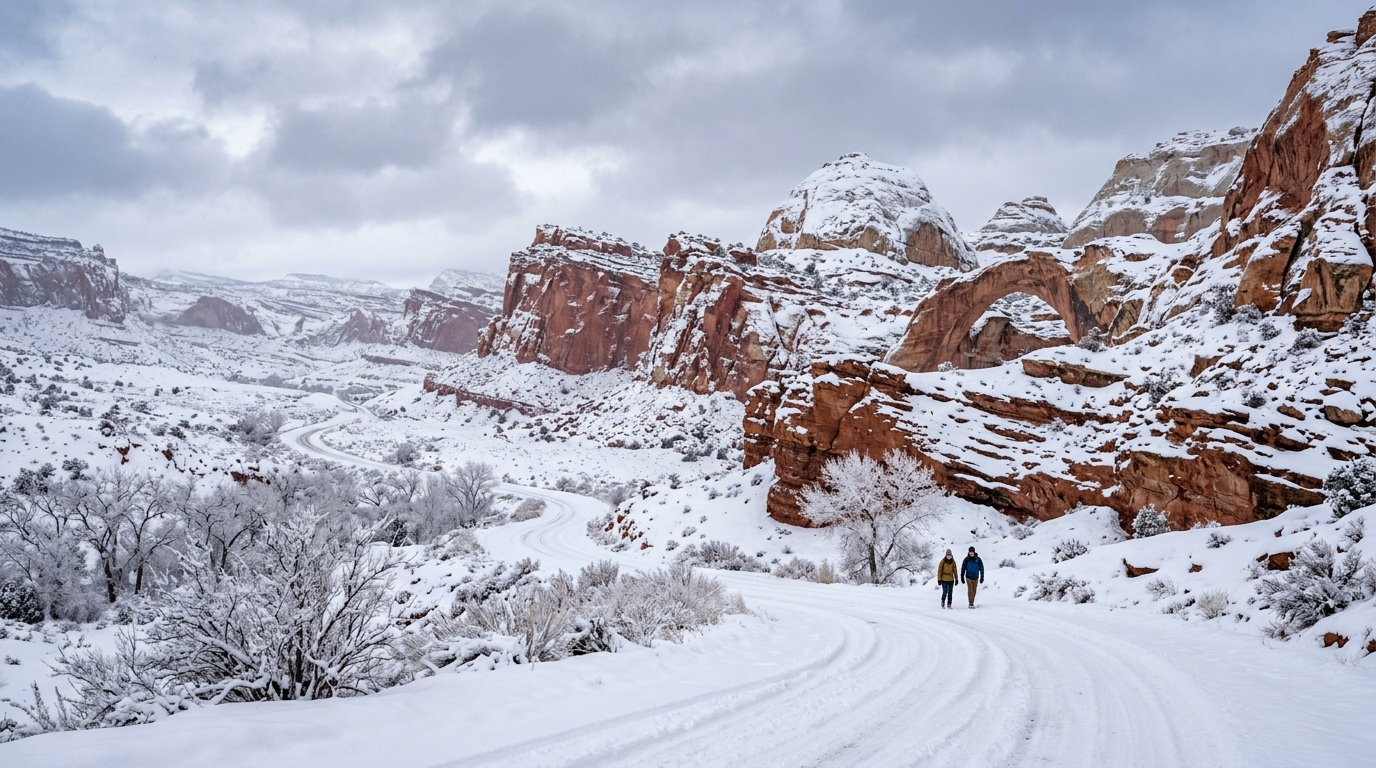
Visiting Capitol Reef National Park in winter brings crisp desert air, dramatic red rock cliffs capped with fresh white snow, and a peaceful quiet that is hard to find during the busy summer months. Unlike major parks that face heavy closures or total shutdowns, Capitol Reef National Park Winter stays mostly accessible, though the season brings freezing temperatures, icy trails, and reduced hours for nearby local services. Travelers who enjoy solitude and striking landscape photography often find that the off-season offers an entirely different perspective on the Waterpocket Fold, far away from bumper-to-bumper traffic and crowded viewpoints.
Navigating Freezing Desert Temperatures and Icy Canyon Routes
Winter weather in Capitol Reef National Park brings daytime highs that often hover in the crisp 30s and 40s Fahrenheit, while nighttime temperatures routinely drop well below freezing.
According to the National Park Service, main paved roads through the park are plowed after major winter storms, but shaded canyon stretches can hold black ice long after the sun goes down. Visitors should always check current weather forecasts and road status with rangers before heading out into remote areas. For travelers looking to compare regional desert conditions, our guide on Sonoran winter weather strategies highlights how differently southern climates handle the coldest months of the year.
Driving through the park during January and February requires extra caution because sudden flurries can quickly coat asphalt surfaces. Vehicles do not always require four-wheel drive on the main scenic drive when conditions remain dry, but having good tires is essential. If a storm hits overnight, maintenance crews prioritize main routes first, leaving dirt roads and remote backcountry tracks impassable until mud dries or snow melts naturally under the bright desert sun.
Choosing the Right Winter Month for Red Rock Snow Photography
The best time to visit Capitol Reef National Park for winter scenery is between December and February when snow is most likely to dust the Waterpocket Fold and sandstone monoliths.
January often brings the coldest temperatures and the highest chances of fresh snowfall, creating a stunning visual contrast against the red rock landscape. However, travelers must remain flexible because winter storms can temporarily close scenic drives and high-elevation routes with very little advance notice.
Early December offers quieter trails and milder daytime temperatures, though snowfall is less predictable during the start of the season. February bridges the gap between deep winter and early spring, bringing longer daylight hours while still offering crisp morning air and occasional frosted canyons. Photographers often favor these months because low-angled winter light casts long shadows across the canyon walls all day long.
Tackling Slick Trails and Muddy Desert Clay on Foot
Hiking trails inside Capitol Reef National Park remain open during the winter months, but morning ice and midday mud can make footing very tricky.
Trails that sit in deep canyons stay frozen all day long, requiring traction devices like microspikes or sturdy hiking boots with good grip. When afternoon temperatures rise above freezing, thawing snow turns clay-heavy desert soil into sticky mud that clings to shoes and makes certain paths exhausting to walk.
Popular short walks like the paths around the historic Fruita orchards remain manageable if hikers start late in the morning after the sun has warmed the ground. Longer backcountry routes demand careful preparation, warm layers of clothing, and plenty of water because dry winter air dehydrates hikers just as quickly as summer heat does. Rangers always advise leaving an itinerary with someone outside the park before attempting longer treks during the cold season.

Coping with Early Sunsets and Off-Season Gateway Town Closures
Planning a winter trip to Capitol Reef National Park requires accepting several practical downsides, such as early sunset times and limited visitor center hours.
Because the park is surrounded by steep canyon walls, the sun drops out of sight much earlier in the evening than it does in open country, plunging the valley into deep cold rapidly. Furthermore, nearby gateway towns like Torrey have reduced operating hours for restaurants, hotels, and grocery stores during the off-season, meaning visitors must plan ahead for meals and lodging.
Campgrounds inside the park also experience seasonal adjustments, and water hookups may be turned off during freezing spells to prevent pipe damage. Restrooms near popular trailheads might have restricted access or lack running water, requiring visitors to carry their own supplies. Understanding these operational limits helps prevent frustration and ensures a safe, well-prepared adventure during the coldest months of the year.
Frequently Asked Questions About Visiting in Winter
Does it snow a lot in Capitol Reef National Park in winter?
Snow falls periodically throughout the winter season, but it rarely stays on the ground for very long at lower elevations due to bright desert sunshine.
Are park roads closed during winter storms?
Main paved roads usually reopen quickly after plowing, but unpaved backcountry roads can become impassable due to deep mud or packed snow.
What should I pack for a winter trip to the park?
Pack heavy layers, wind-resistant outer shells, sturdy footwear with traction, and extra drinking water because outdoor hydration remains essential even in cold weather.
Are visitor center services available every day?
The main visitor center generally remains open daily with reduced winter hours, though closures can happen during severe weather events.
Can I camp in the park during the winter months?
Fruita Campground stays open year-round on a first-come, first-served basis or via reservations, but nighttime temperatures require proper cold-weather camping gear.
Is an entrance fee required to visit during winter?
Yes, standard entrance fees apply year-round unless you hold an annual pass, as managed by the National Park Service.

I’m Muhammad Ubaid, founder of YBR Magazine. I research and write detailed guides on America’s National Parks — covering entry fees, permits, best times to visit, and planning tips — using official NPS sources and up-to-date information.