


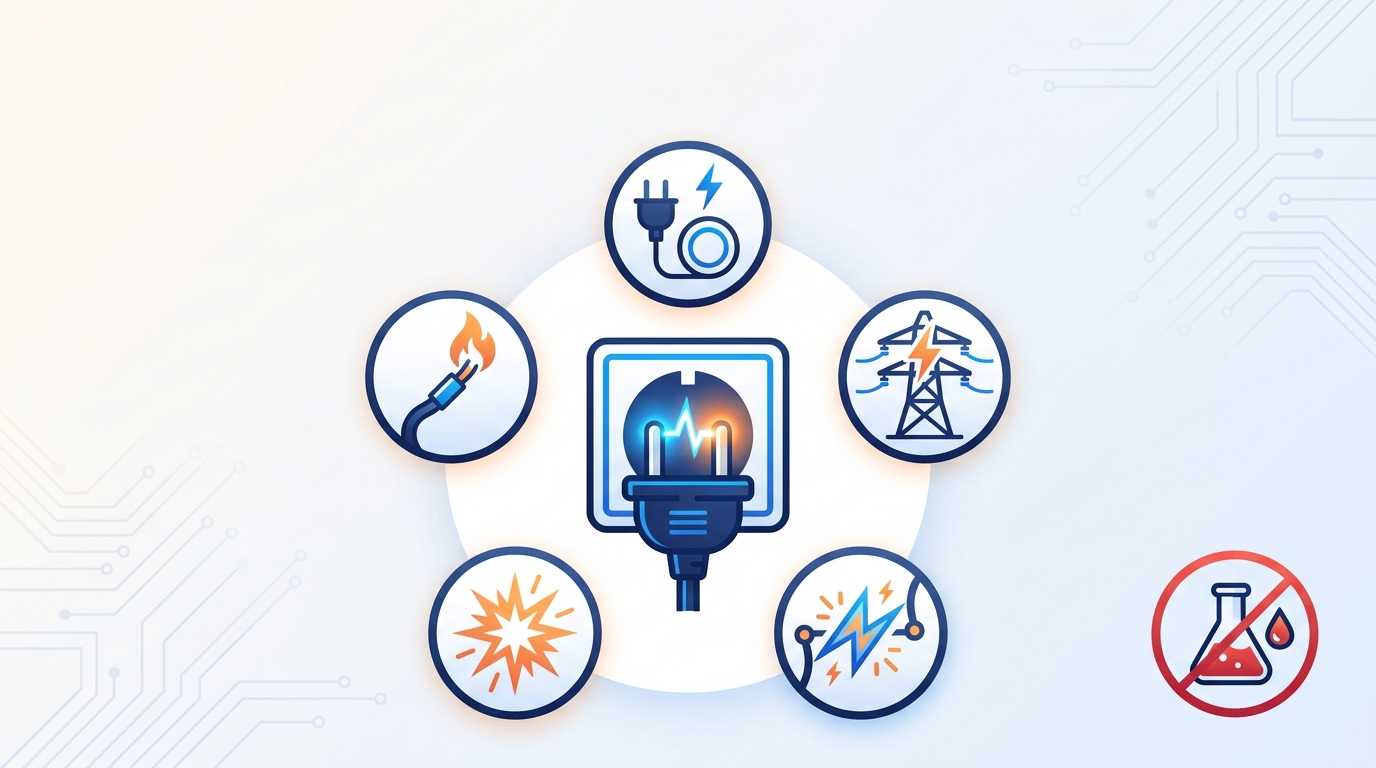
If you are studying for a first aid, nursing, or workplace safety exam, you have probably seen the question “which of the following is not a category of electrical burns?” The short answer is that chemical burns are not a category of electrical burns. The same is true of radiation burns, friction burns, and scalds from hot liquids. These injuries have their own causes and their own treatment. Electrical burns are defined by one thing only: electricity, or the heat directly produced by electricity, is the cause of the injury.
This guide explains the categories that do count as electrical burns, why exam lists sometimes look different from one another, and how you can pick the right answer with confidence. It also covers the warning signs and safety steps that matter in real life.
What Makes a Burn “Electrical”?

An electrical burn happens when electric current passes through the body, or when an electrical event such as an arc releases enough heat to damage skin and tissue. For a burn to be classified as electrical, electricity must be the direct cause. If you touch a hot electric iron and burn your finger, that is a thermal burn, because the heat came from a hot surface and not from current entering your body.
Electrical burns behave differently from ordinary heat burns. Current travels through the body along the path of least resistance, which usually means nerves, blood vessels, and muscles. As it moves, it turns electrical energy into heat, so the deepest damage can be hidden under skin that looks only slightly marked. This is why a small entry wound can hide serious injury to muscles, nerves, the heart, or the kidneys.
The Main Categories of Electrical Burns
Different textbooks and safety organizations group electrical burns in slightly different ways, but the following categories appear most often.
Low-voltage burns. These occur after contact with a source of roughly 500 volts or less, such as a household outlet, a faulty appliance, or a damaged cord. The damage is often limited to the point of contact, although a long contact time can still cause a deep and serious injury. Children who chew on electrical cords are a common example.
High-voltage burns. These happen when a person touches a source of much higher voltage, such as a power line, a transformer, or industrial equipment. Some medical studies use 1,000 volts as the cutoff between low and high voltage, while some safety sources use 500 volts, which is one reason different books give slightly different numbers. High-voltage injuries are the most dangerous because current can travel through the body and cause severe damage to deep tissues, even when the skin looks only mildly affected. They are common in occupational settings and are linked to longer hospital stays and more complex surgery.
Arc burns. An arc burn happens when current jumps through the air from one point to another, often from a high-resistance area to a low-resistance area. No direct touch is needed. The arc ionizes the air around it and produces extreme heat and pressure that can burn skin, ignite clothing, and even throw a person backward.
Flash burns. These are closely related to arc burns. A flash burn occurs when the intense light and heat of an electrical arc pass over the skin. Current does not flow through the body in this case, so internal damage is usually limited, but the burns can still be severe and cover large areas of the body.
Flame burns. These occur when clothing or a nearby object is set on fire by an electrical event. The electricity started the fire, but the actual burn is caused by flames. Many safety courses treat this as part of the electrical burn family because the electrical event is the root cause.
Oral burns. These are electrical burns in or around the mouth, most often in young children who bite or suck on a live cord or a partly plugged-in connector. They can damage the lips and mouth and need prompt medical attention.
Some medical sources also list lightning burns as a separate group, because lightning injuries follow their own pattern and can affect the heart and nervous system.
Why Exam Lists Look Different

One reason this question confuses students is that there is more than one “correct” list. A widely used medical reference describes six categories: low-voltage, high-voltage, arc, flame, flash, and oral burns. A hospital study from Brazil sorted patients into four groups instead: high voltage, low voltage, flash burns, and lightning burns. Workplace training programs, including OSHA-style electrical safety courses, often simplify things into three types: true electrical burns, arc or arc-blast burns, and thermal contact burns caused by contact with hot objects or burning clothing.
None of these lists include chemical burns. That is the key to answering the question correctly. Whichever list your course uses, chemical burns are caused by acids, alkalis, or other corrosive substances, not by electricity, so they never appear as a category of electrical burns.
How to Answer the Question Correctly
When you see a multiple-choice version of this question, ask yourself one simple thing about each option: is electricity, or heat produced directly by electricity, the cause? If so, the option is a real category. If the cause is a chemical, radiation, friction, or a hot liquid, it is the odd one out.
Typical options and how to sort them:
- Low-voltage burn, high-voltage burn, arc burn, flash burn, and flame burn are electrical categories.
- Oral burns from cords are an electrical category in many references.
- Chemical burns, radiation burns, friction burns, and scalds are not electrical categories.
There is one small trap. If your course uses the three-type OSHA-style list, “thermal contact burn” may be listed as a category. In that setting it is correct, because the hot object was heated by an electrical event. If the exam gives you both “thermal burn” and “chemical burn,” chemical is still the safer answer for “not a category.”
Why Electrical Burns Can Be Deceptive

The visible wound is often the smallest part of the injury. Electrical current can cause irregular heart rhythms, muscle damage, and kidney problems. When muscle is badly damaged, it releases substances into the blood that can harm the kidneys, and this can happen hours after the incident. Current can also cause nerve damage, cataracts later on, and problems with bones and joints, and a strong shock can throw a person and cause a fall injury on top of the burn.
For these reasons, medical professionals recommend that anyone who has had a significant electrical shock be evaluated by a doctor, even when the skin looks fine and the person feels well. Heart monitoring and blood or urine tests are often needed.
What to Do If Someone Suffers an Electrical Burn
Your first priority is to keep yourself safe. Do not touch a person who may still be in contact with a live source. Turn off the power at the switch or circuit breaker if you can do so safely, or unplug the device. If the cause is a downed power line, stay well back, warn others to stay away, and call the emergency services or the power company, because the ground nearby can carry current.
Once the area is safe, call for emergency medical help for any serious electrical injury. If the person is not breathing or has no pulse, begin CPR if you are trained. For the burn itself, cover the area with a clean, dry, non-stick dressing or a clean cloth. Do not apply ice, butter, or ointments, do not break blisters, and do not pull away clothing that is stuck to the skin. Try to keep the person warm and still until help arrives.
Simple Ways to Prevent Electrical Burns
Most electrical burns can be prevented with basic habits at home and at work. Replace frayed or damaged cords, avoid overloading outlets, and keep electrical devices away from water. Use outlet covers and keep cords out of reach when small children are around. Never touch a device with wet hands, and install residual current devices (also called GFCI or RCD protection) in kitchens and bathrooms.
At work, follow lockout and tagout procedures before maintenance, wear the correct protective equipment, and keep a safe distance from overhead power lines during construction or crane work. Only trained and authorized people should work on live equipment.
Quick Summary
The answer to “which of the following is not a category of electrical burns” is chemical burns, along with other non-electrical injuries such as radiation burns, friction burns, and scalds. True electrical burn categories include low-voltage, high-voltage, arc, flash, flame, and oral burns, and some sources also add lightning burns. The exact list depends on the textbook or training program, so it is worth checking which one your exam follows. What stays constant is the rule that electricity must be the direct cause of the injury.
Frequently Asked Questions
Are thermal burns a category of electrical burns?
Only in some classification systems. A burn from a hot object or a fire is thermal, but many safety courses include thermal contact burns because the heat originated from an electrical event, such as an arc heating metal or igniting clothing.
Can an electrical burn look minor and still be serious?
Yes. The skin may show only a small mark while muscles, nerves, or the heart are damaged underneath, which is why medical evaluation is recommended after any significant shock.
Do arc burns require touching a live wire?
No. Arc burns can occur when current jumps through the air, so the person does not have to touch the source directly.
What is the difference between arc burns and flash burns?
They are closely related. An arc burn involves the electrical arc itself and its heat and pressure, while a flash burn refers to the intense light and heat from the arc passing over the skin without current flowing through the body.
Disclaimer: This article is for general educational purposes only and is not medical, legal, or professional safety advice. Classification of electrical burns varies between textbooks, courses, and organizations, so always follow the material used by your school or employer for exams. In any electrical injury, contact your local emergency services or a qualified healthcare professional immediately.

I’m Muhammad Ubaid, founder of YBR Magazine. I research and write detailed guides on America’s National Parks — covering entry fees, permits, best times to visit, and planning tips — using official NPS sources and up-to-date information.

