

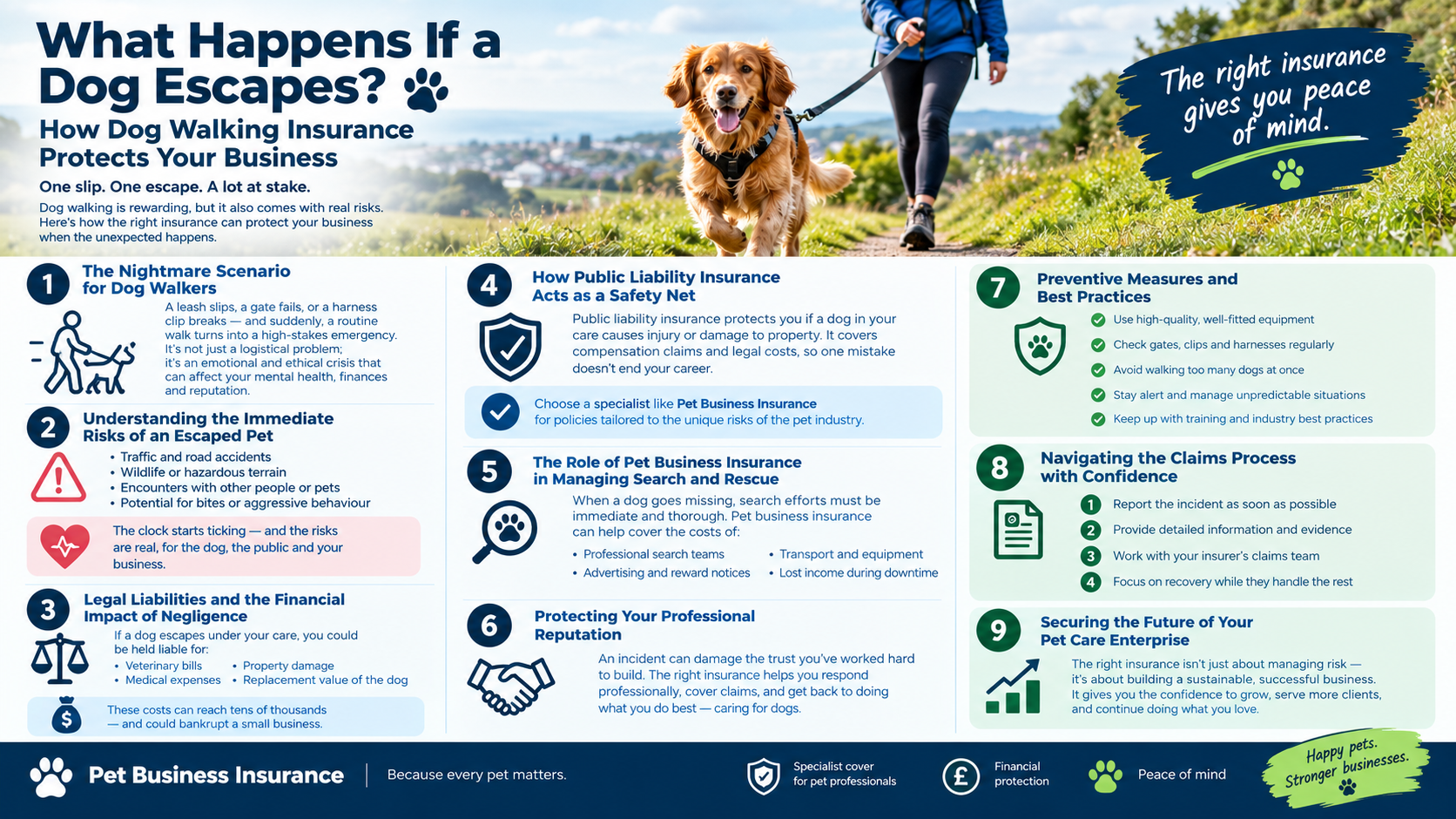
Table of Contents
- 1. The Nightmare Scenario for Dog Walkers
- 2. Understanding the Immediate Risks of an Escaped Pet
- 3. Legal Liabilities and the Financial Impact of Negligence
- 4. How Public Liability Insurance Acts as a Safety Net
- 5. The Role of Pet Business Insurance in Managing Search and Rescue
- 6. Protecting Your Professional Reputation After an Incident
- 7. Preventive Measures and Best Practices for Canine Security
- 8. Navigating the Claims Process with Confidence
- 9. Securing the Future of Your Pet Care Enterprise
The Nightmare Scenario for Dog Walkers
Every professional dog walker has experienced that momentary flash of panic when a leash slips or a gate fails to latch properly. While most of these moments end with a quick recovery and a sigh of relief, the reality of a dog escaping is a constant shadow over the industry. The transition from a routine walk to a high stakes emergency can happen in the blink of an eye. Whether it is a sudden loud noise that spooks a nervous rescue or a faulty clip on a harness, the physical loss of a dog is the ultimate test of a business owners preparation and resilience.
This situation is not merely a logistical problem; it is an emotional and ethical crisis. As a professional, you are entrusted with the safety of a family member. When that trust is broken by an escape, the consequences ripple through your business, affecting your mental health, your financial stability, and your standing in the local community. Understanding the mechanics of what happens next is the first step in building a robust defense for your livelihood.
Understanding the Immediate Risks of an Escaped Pet
When a dog escapes, the clock begins ticking against several immediate dangers. The most pressing concern is the physical safety of the animal. In urban environments, traffic represents the greatest threat, as a panicked dog rarely observes the rules of the road. In more rural settings, the risks shift toward local wildlife, hazardous terrain, or the dog becoming trapped in dense undergrowth.
Beyond the physical danger to the pet, there is the risk of third party damage. An unrestrained dog can cause a multi car pileup if it darts into a busy intersection. It might also encounter other pedestrians or pets, leading to aggressive confrontations caused by fear. The stress of being lost often triggers a fight or flight response, meaning even the gentlest dog might nip at a well meaning stranger trying to help. These immediate risks translate directly into potential legal claims against your business, making it essential to have comprehensive coverage from a provider like Pet Business Insurance to handle the fallout.
The Psychological Toll on the Walker
It is important to acknowledge the secondary impact on the professional walker. The adrenaline spike and subsequent guilt can lead to poor decision making in the heat of the moment. Having a clear protocol in place allows you to act systematically rather than emotionally. This systematic approach is what separates a hobbyist from a seasoned professional who understands the gravity of their responsibilities.
Legal Liabilities and the Financial Impact of Negligence
From a legal perspective, a dog escaping under your care is often viewed through the lens of negligence. As a bailee, you have a legal duty of care to the animal and the public. If a court determines that the escape was preventable, perhaps due to a worn out leash you failed to replace or walking too many dogs at once, you could be held liable for a wide range of costs.
1. Veterinary bills if the dog is injured during its time away.
2. Property damage caused by the dog to third parties.
3. Medical expenses for individuals injured by the dog.
4. The replacement value of the dog if it is never recovered or suffers a fatal accident.
These costs can easily reach tens of thousands of dollars. Without a dedicated policy, these expenses must be paid out of pocket, which is enough to bankrupt most small pet care operations. The financial impact extends beyond the immediate bills; you may also face legal fees to defend yourself in court, even if the case is eventually dismissed.
How Public Liability Insurance Acts as a Safety Net
Public liability is the cornerstone of any pet professional’s risk management strategy. This specific type of coverage is designed to protect you if a dog in your care causes injury to a person or damage to property. If a dog escapes and causes a cyclist to crash, or wanders into a boutique and destroys expensive inventory, public liability insurance steps in to cover the compensation claims and legal costs.
This is where the distinction between a standard business policy and a specialized one becomes clear. A general policy might not understand the nuances of animal behavior or the specific risks associated with dog walking. By choosing Pet Business Insurance, you ensure that the policy language is tailored to the unique challenges of the pet industry. This specialized focus means you are less likely to encounter exclusions that could leave you vulnerable when a dog manages to slip its collar.
Coverage for Third Party Injuries
One of the most expensive claims a walker can face involves a dog causing a car accident. If a driver swerves to miss an escaped dog and hits a pole or another vehicle, the dog walker can be held responsible for the damages. Public liability insurance is designed to absorb these massive financial shocks, ensuring that one mistake does not end your career.
The Role of Pet Business Insurance in Managing Search and Rescue
When a dog goes missing, the search efforts must be immediate and exhaustive. This often involves more than just walking around the neighborhood calling the dog’s name. Modern search and rescue efforts might include hiring professional pet trackers, printing hundreds of high quality flyers, and utilizing social media advertising to alert the local community.
Specialized dog walking insurance protects your business by often including provisions for the costs associated with recovering a lost pet. These costs can add up quickly.
1. Professional pet detective fees and tracking dog services.
2. Rewards offered to the public for the safe return of the animal.
3. Advertising costs across various local platforms.
4. Temporary boarding fees if the dog is found by someone else and needs a place to stay before the owner can be reached.
Having these costs covered by Pet Business Insurance allows you to pull out all the stops to find the dog without worrying about the mounting debt. This proactive approach not only increases the chances of a happy ending but also demonstrates to the client that you are doing everything humanly possible to rectify the situation.
Protecting Your Professional Reputation After an Incident
In the age of social media, news of a lost dog spreads like wildfire. Local community groups and Nextdoor apps can quickly become a forum for criticism. How you handle the escape will define your reputation for years to come. If you are seen as proactive, honest, and fully insured, the community is more likely to view the incident as an unfortunate accident rather than a sign of incompetence.
Being able to tell a client that you have comprehensive Pet Business Insurance shows that you are a responsible professional who has prepared for the worst. It provides a level of reassurance that, while things have gone wrong, there is a formal process and financial backing to handle the consequences. Transparency is key here. Hiding an escape, even for a few hours, can be catastrophic for your brand. Immediate communication, backed by the knowledge that your insurance provider is ready to assist, is the best way to manage the narrative.
Preventive Measures and Best Practices for Canine Security
While insurance is your safety net, prevention is your first line of defense. Implementing strict safety protocols reduces the likelihood that you will ever need to file a claim. Professionals should regularly audit their equipment and their environment to identify potential points of failure.
1. Use double leashing techniques, such as a slip lead in addition to a standard harness and leash.
2. Inspect all equipment for wear and tear before every single walk.
3. Conduct thorough assessments of a dog’s temperament and flight risk before accepting them as a client.
4. Ensure all gates and doors are double checked before releasing a dog from a vehicle or into a yard.
5. Use GPS tracking collars for dogs known to be nervous or high energy.
By integrating these habits into your daily routine, you demonstrate a high level of professionalism. Many insurance providers look favorably on businesses that have documented safety protocols, as it shows a commitment to risk mitigation.
Navigating the Claims Process with Confidence
If the worst happens and a dog escapes, knowing how to navigate the insurance claim process is vital. Documentation is your best friend in these scenarios. You should keep a detailed log of the events leading up to the escape, the exact time it happened, and the steps you took immediately afterward. Taking photos of the equipment used and the location where the escape occurred can provide essential evidence.
Contact your insurance provider as soon as possible. They can offer guidance on the next steps and help manage communications with third parties who may have been affected. A smooth claims process is dependent on your ability to provide clear, factual information. Avoid admitting fault prematurely to third parties; instead, let your insurance adjusters handle the legalities and negotiations. This professional distance helps protect your interests and ensures that settlements are fair and based on the facts of the case.
Securing the Future of Your Pet Care Enterprise
The pet care industry is built on the foundation of the bond between humans and their animals. As a dog walker, you are a guardian of that bond. While no one wants to imagine a dog escaping, being prepared for that possibility is what distinguishes a top tier professional from the rest. Insurance is not just a monthly expense; it is a strategic investment in your business’s longevity and your own peace of mind.
By combining rigorous safety standards with the comprehensive protection offered by Pet Business Insurance, you create a resilient business model. You gain the freedom to focus on what you love, providing excellent care and exercise for your canine clients, knowing that you have the support and resources to handle any crisis that comes your way. Protecting your business means protecting the pets in your care, and that level of dedication is what will ultimately lead to long term success and a sterling reputation in the pet care community.