

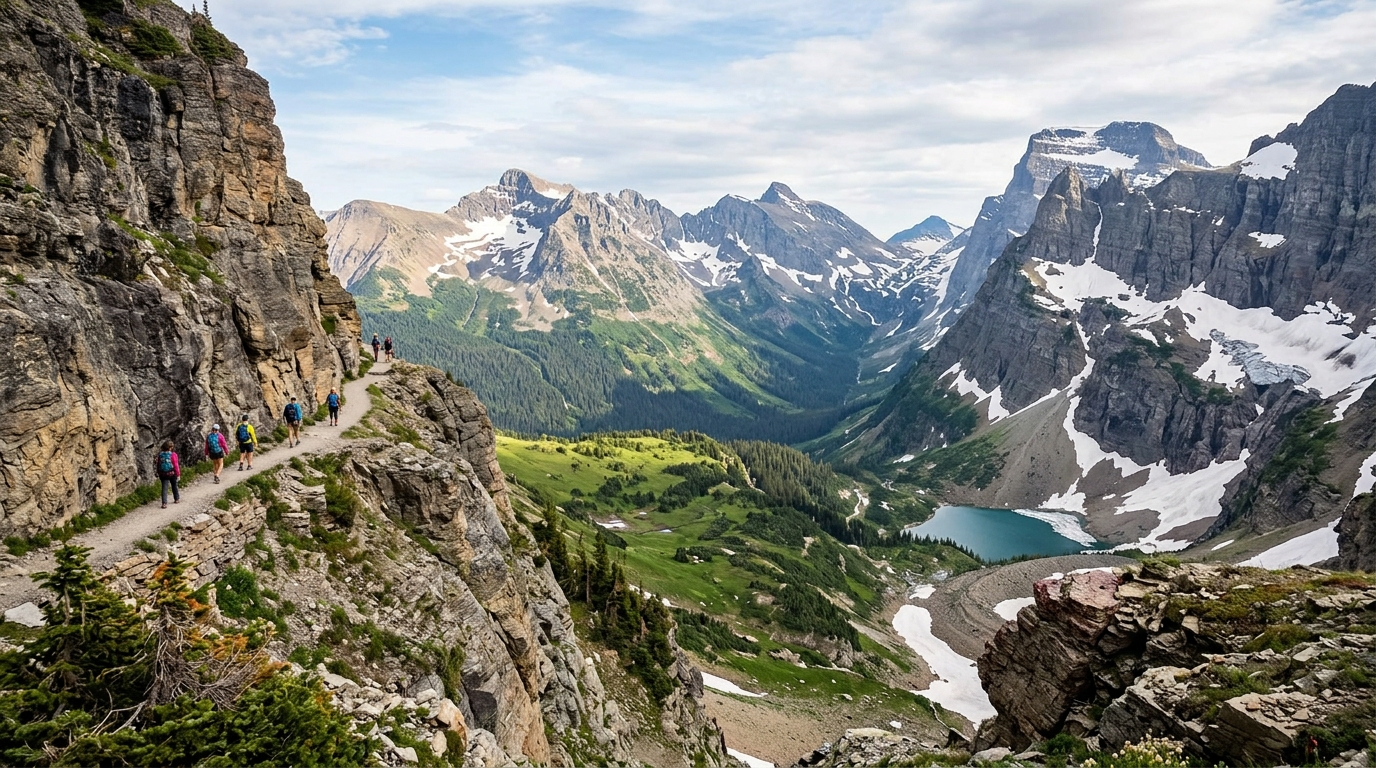
Navigating the Best Full-Day Alpine Treks
The top day hikes in Glacier National Park offer unforgettable views of rugged peaks, pristine lakes, and sweeping high-altitude meadows. Glacier National Park’s best hikes require careful planning because weather conditions and trail access change rapidly throughout the summer season. The Grinnell Glacier trail stands out as one of the most famous full-day treks in the entire park. This route takes hikers past turquoise glacial lakes and close to active ice fields carved into the mountain walls. Another major favorite is the Avalanche Lake hike, which treats visitors to a lush forest walk ending at a stunning cliff-rimmed basin fed by cascading waterfalls.
When preparing for these full-day journeys, visitors must keep in mind that alpine trails often hold snow well into July. Park rangers regularly update trail status reports to inform visitors about ice patches or temporary wildlife closures. Setting out early in the morning helps hikers secure parking spots at popular trailheads like Many Glacier or the Loop along Going-to-the-Sun Road. Early starts also help travelers avoid afternoon thunderstorms that frequently build over the Continental Divide during peak summer months.
Shorter Family-Friendly Walking Routes
Visitors who want incredible mountain scenery without extreme physical exertion will find plenty of shorter, accessible options across the park. Easy hikes at Glacier National Park give travelers a chance to experience alpine wonders without committing to steep, all-day climbs. The Hidden Lake Overlook trail begins at Logan Pass and climbs gently on boardwalks before opening up to sweeping views of a high-alpine bowl. The Rocky Point trail near Lake McDonald offers a quieter, shaded walk through cedar forests with lovely glimpses of the water.
Shorter walks still demand respect for local wildlife and changing mountain weather patterns. Hikers on family-friendly routes should carry extra layers, water, and lightweight rain gear because mountain showers can appear without warning. For travelers planning a broader trip itinerary across the region, crafting a well-rounded alpine schedule helps maximize your time on the trails. You can read more about organizing your daily route by reviewing a comprehensive multi-day alpine itinerary before you arrive.
Regional Trail Profiles Across Many Glacier and Two Medicine
The different geographic zones of Glacier National Park each provide distinct trail profiles, unique weather patterns, and varied wildlife viewing opportunities. The Many Glacier region hosts the Cracker Lake trail, where hikers traverse a long valley beneath towering red rock walls to reach a remarkably bright turquoise lake. Over in the Two Medicine region, the Scenic Point hike rewards steady climbers with vast panoramic vistas stretching across the eastern front of the Rocky Mountains.
Exploring these distinct regional zones allows visitors to escape the heavy crowds found along the main central highway corridors. Each region features its own visitor contact stations, boat tour operations, and ranger-led programs that add depth to the hiking experience. Travelers should consult local park maps to understand driving times between regions, as mountain roads can make transit between Many Glacier and Two Medicine take significantly longer than expected.
Critical Equipment and Safety Requirements
Proper equipment is vital for staying safe and comfortable while exploring high-altitude mountain environments. Glacier National Park weather can shift from warm sunshine to freezing rain or snow in a matter of hours. Hikers should always pack sturdy, broken-in hiking boots, moisture-wicking layers, a waterproof shell jacket, and plenty of water. Because Glacier National Park is prime grizzly bear territory, carrying EPA-approved bear spray and knowing how to use it is a strict safety requirement for every trail.
Having the right gear extends beyond clothing and bear protection to include reliable navigation tools. Cell service is notoriously unreliable or completely absent across most backcountry regions of the park. Carrying physical topographic maps, a compass, and a downloaded digital trail guide ensures you stay on track. Trekking poles also provide valuable stability when navigating steep gravel switchbacks or crossing residual snowfields.
Alternative Activities for Non-Hikers and Rest Days
Non-hikers and visitors taking a rest day can still enjoy the stunning landscapes through a variety of alternative activities. Glacier National Park offers historic boat cruises on crystal-clear waters, leisurely scenic drives along Going-to-the-Sun Road, and educational ranger-led programs. These experiences allow everyone to appreciate the park’s natural beauty and rich history without hitting the backcountry trails.
Visitors can also spend time relaxing near the shores of Lake McDonald or Saint Mary Lake for peaceful photography and wildlife watching. Ranger talks at various amphitheaters provide fascinating insights into glacial geology, native plant species, and local history. Combining these alternative activities with your trail adventures creates a balanced and memorable vacation experience.
Frequently Asked Questions
What are the most popular day hikes in Glacier National Park?
The most popular day hikes include the Grinnell Glacier trail and the Avalanche Lake hike due to their incredible scenery and accessible trailheads.
Are there easy trails suitable for families in Glacier National Park?
Yes, trails like the Hidden Lake Overlook and the Rocky Point trail offer shorter distances and gentler grades that work well for families.
Do I need a vehicle reservation to access trailheads along Going-to-the-Sun Road?
Yes, vehicle reservations are typically required for entering certain park corridors during peak summer months, so check official park rules ahead of time.
Is bear spray necessary for hiking in Glacier National Park?
Carrying bear spray is strongly recommended for all visitors, and everyone should know how to access and deploy it safely before stepping onto any trail.
What is the best time of year to hike in Glacier National Park?
The peak hiking season runs from July through September when most high-alpine trails are free of deep winter snow.
Can I bring my dog on hiking trails in Glacier National Park?
Pets are generally not allowed on dirt hiking trails within the park to protect local wildlife and ensure visitor safety.

I’m Muhammad Ubaid, founder of YBR Magazine. I research and write detailed guides on America’s National Parks — covering entry fees, permits, best times to visit, and planning tips — using official NPS sources and up-to-date information.