

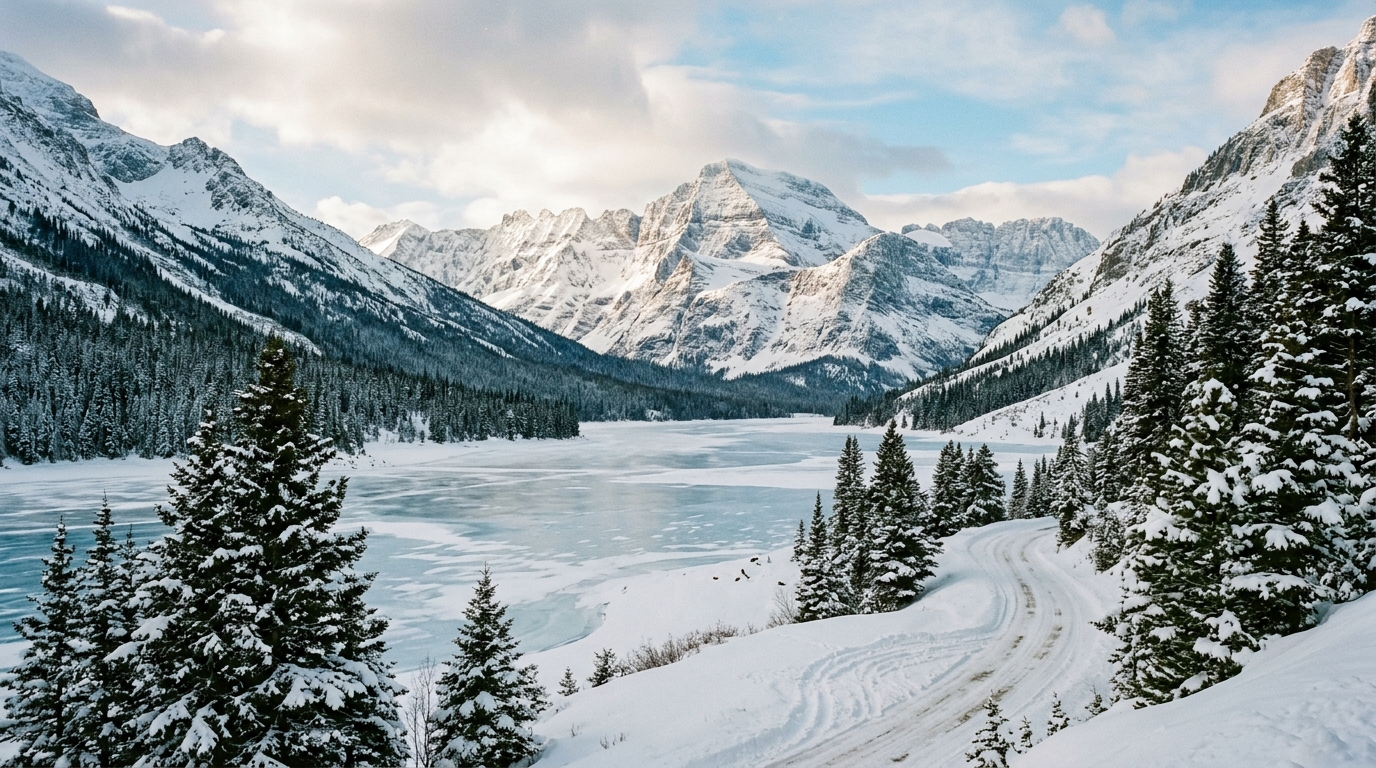
Glacier National Park in Montana during the winter is a radically different experience compared to its crowded summer season. Most park roads, including the famous Going-to-the-Sun Road, close to regular vehicle traffic and turn into snow-covered trails for cross-country skiing and snowshoeing. The winter season brings deep isolation, extreme cold, heavy snowfall, and limited visitor services, making safety, preparation, and route planning far more critical than during warmer months. When visitors arrive during the colder months, Glacier National Park’s Montana winter reveals a quiet wilderness that demands respect and careful preparation.
Transitioning From Busy Summer Trails to Deep Snow Isolation
Winter transforms Glacier National Park into a quiet, snow-covered landscape where most roads close and visitor services shut down.
During Glacier National Park’s Montana winter months, deep snow blankets the mountains, valleys, and frozen lakes, turning the busy summer trails into isolated backcountry routes. Weather conditions can shift rapidly, bringing sub-zero temperatures and fierce winds across the Continental Divide. Visitors will find that ranger stations, visitor centers, and park lodges close their doors, leaving the natural environment completely untamed for those who venture out into the cold.
Managing Seasonal Road Closures and Non-Motorized Access
Understanding winter road closures is essential because the Going-to-the-Sun Road and other major routes close to cars and transition to non-motorized use.
Park officials gate the Going-to-the-Sun Road near Lake McDonald Lodge on the west side and near St. Mary on the east side once heavy snow accumulates. Motorized vehicles cannot drive over Logan Pass during the winter season. Instead, these snow-packed asphalt routes become ideal corridors for cross-country skiers and snowshoers looking to explore without vehicle traffic. Travelers planning an extended cold-weather excursion often research regional transportation and driving distances, such as checking out a comprehensive multi-day alpine itinerary before arriving in Montana.
Engaging With Quiet Backcountry Recreation and Wildlife Viewing
Visitors can enjoy cross-country skiing, snowshoeing, winter photography, and wildlife viewing across the snowy landscape.
Lake McDonald and the lower portions of the Going-to-the-Sun Road provide scenic paths for gliding across the snow. Wildlife such as elk, deer, and bighorn sheep often move to lower elevations, giving quiet observers a chance to spot animals against the white backdrop. Photographers find incredible opportunities to capture snow-draped pine trees, frozen waterfalls, and dramatic mountain peaks under crisp winter skies.
Navigating Sub-Zero Temperatures and Avalanche Hazards
Staying safe in Glacier National Park during winter requires heavy winter layers, avalanche awareness, and proper emergency supplies.
Temperatures often plummet well below freezing, meaning cotton clothing should be avoided in favor of moisture-wicking base layers, insulating fleece, and windproof outer shells. Backcountry travelers must carry avalanche beacons, probes, and shovels when venturing onto slopes where snow slides can occur. Cell service is unreliable or nonexistent across most of the park, so carrying a satellite communicator and emergency medical gear is crucial for self-reliance.
Sourcing Warm Lodging in Nearby Gateway Communities
Since park-operated accommodations and most inside-the-park facilities close for the season, travelers must look to nearby gateway towns for lodging.
Communities like West Glacier, Columbia Falls, and Whitefish remain open year-round and provide hotels, vacation rentals, and restaurants. Staying in these nearby towns ensures that visitors have a warm place to sleep after spending a long day exploring the snowy park boundaries. It is important to book lodging in advance because winter tourism in the surrounding Flathead Valley has grown steadily.
Answers to Common Cold-Weather Trip Questions
Clear answers to common questions help travelers understand what to expect when visiting during the coldest months of the year.
Is Going-to-the-Sun Road open in the winter?
No, the Going-to-the-Sun Road closes to regular vehicle traffic for the winter season due to deep snow and avalanche danger, though portions remain open for non-motorized recreation.
Can I drive through Glacier National Park in January?
No, through-driving is impossible in January because the alpine sections of the park roads are completely closed and blocked by deep snowpacks.
What wildlife can I see during winter in the park?
Visitors may spot elk, deer, mountain goats, bighorn sheep, and occasionally wolves or snowshoe hares braving the cold winter landscape.
Are park visitor centers open during the winter months?
Most visitor centers and park-operated facilities close for the winter season, though some limited information services or self-help bulletin boards may be available near park entrances.
What safety gear do I need for snowshoeing in the park?
Snowshoers need sturdy waterproof boots, warm layered clothing, trekking poles, a map, extra food, water, and basic avalanche safety equipment if traveling in avalanche terrain.
Where are the best places for cross-country skiing?
The lower section of the Going-to-the-Sun Road near Lake McDonald and the Apgar area offer some of the most accessible and scenic cross-country skiing routes.
Disclaimer: Winter weather conditions in Montana can change rapidly and unpredictably. Always verify current road status, weather forecasts, and avalanche safety reports from official park sources before starting your trip.

I’m Muhammad Ubaid, founder of YBR Magazine. I research and write detailed guides on America’s National Parks — covering entry fees, permits, best times to visit, and planning tips — using official NPS sources and up-to-date information.