

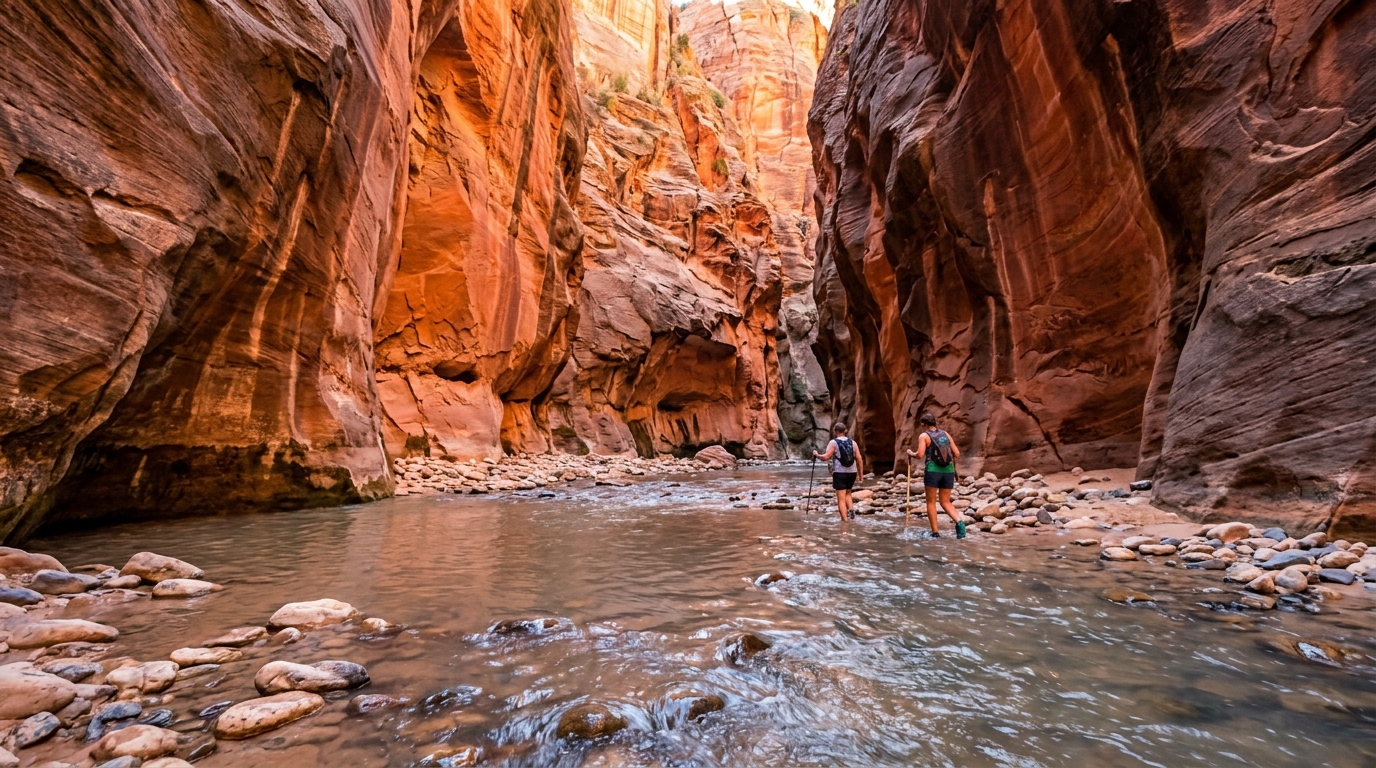
Navigating the Dramatic Landscape of Zion Canyon
Zion National Park features very dramatic terrain, ranging from deep canyon floors to high cliff edges. This dramatic landscape creates a wide variety of trail types that require very different skill levels and physical preparation. Unlike parks with rolling hills, Zion National Park includes famous wet canyon routes like the Narrows and steep drop-off routes like Angels Landing. Visitors need clear guidance on physical difficulty, shuttle logistics, and safety gear because conditions change fast based on weather and water levels. General travel guides often list popular trails without explaining the physical demands or permit rules clearly. Many articles fail to separate easy walks from strenuous climbs, leaving beginners unprepared for steep drop-offs or river currents. This guide organizes trails by exact difficulty and practical need so visitors can match their fitness level to the right path safely.
Gentle Walks and Paved Pathways Along the River
Finding gentle paths lets visitors enjoy the scenery of Zion National Park without facing steep climbs or grueling drop-offs. The Riverside Walk is a paved, flat trail that winds along the Virgin River and serves as the gateway to the famous Narrows route. It measures about 2.2 miles round-trip and provides lovely views of hanging gardens and weeping walls without demanding advanced physical fitness. Another great option is the Lower Emerald Pool Trail, which offers a gentle paved stroll to a dripping oasis and lower waterfall view. These short paths allow families and casual walkers to experience the deep canyon beauty of Zion National Park comfortably.
Strenuous Ridge Climbs and River Trekking Adventures
Tackling strenuous routes in Zion National Park requires permits, steady footing, and careful planning. Angels Landing is one of the most famous and difficult climbs in the park, featuring steep switchbacks and a narrow rock fin with chains bolted into the stone for safety. Hikers must secure an advance permit through seasonal or day-before lotteries managed by recreation officials before attempting Angels Landing. Scouts Lookout marks a good turnaround point for those who reach the base of the chain section but prefer not to walk the dizzying ridge. Another legendary full-day adventure is hiking up the Virgin River into the Narrows, where participants wade through moving water surrounded by towering sandstone walls. When planning a broader southwestern vacation, many travelers also look into the Utah park-to-park travel route to connect their canyon explorations efficiently.
Footwear, Hydration, and Traction Equipment
Proper equipment protects hikers from rugged terrain, shifting weather, and unexpected physical strain across various trails in Zion National Park. Sturdy hiking boots or shoes with deep tread help maintain grip on slippery river rocks or steep sandstone switchbacks. Water capacity is another vital concern because desert temperatures rise quickly, meaning visitors need to carry plenty of hydration or filtration systems. For wet canyon routes like the Narrows, specialized neoprene socks and sturdy walking poles provide essential warmth and balance against river currents. Visitors should also pack sun protection, including hats, sunglasses, and sunscreen, because many canyon sections lack shade during midday hours.
Shuttle Logistics, Weather Hazards, and Park Rules
Understanding park transportation and weather hazards keeps visitors safe during busy seasons in Zion National Park. Most of the main canyon scenic drive is closed to private vehicles for much of the year, requiring visitors to ride the official park shuttle buses to reach major trailheads. Shuttle buses run frequently from the visitor center up into the canyon, but lines can grow long during peak morning hours. Flash flood risks are another serious concern in narrow slot canyons, so hikers must always check weather forecasts with rangers before entering water routes. Summer heat can also cause dehydration and heat exhaustion very quickly, making early morning starts the safest choice for strenuous climbs.
Frequently Asked Questions
What are the best hikes in Zion National Park for beginners?
Beginners enjoy the Riverside Walk and the Lower Emerald Pool Trail because both paths feature flat, well-maintained surfaces and gentle slopes.
Do I need a permit to hike Angels Landing?
Yes, visiting hikers must obtain an advance permit through the online lottery system managed by recreation officials before hiking the chained section of Angels Landing.
How long is the hike through the Narrows?
The Narrows does not have a set length because hikers turn around whenever they choose, but a typical bottom-up day hike covers several miles of river wading.
When is the best time of year to visit Zion National Park for hiking?
Spring and fall offer the most comfortable daytime temperatures for hiking, whereas summer brings intense desert heat and winter brings freezing conditions.
Can I drive my own car to the main canyon trailheads?
Private vehicles are generally restricted from the main canyon scenic drive when the park shuttle system is operating, so visitors must ride the shuttle buses.
What kind of footwear is needed for river hikes?
Hikers tackling wet routes like the Narrows usually wear sturdy closed-toe shoes with good grip, neoprene socks, and rentals like walking sticks.
How can I avoid large crowds on the trails?
Starting your hike early in the morning before the first shuttle buses fill up is the best way to enjoy quieter trails.
Disclaimer: Trail conditions, weather hazards, and park shuttle schedules can change rapidly. Always verify current rules and weather alerts with official park sources before starting any hike.

I’m Muhammad Ubaid, founder of YBR Magazine. I research and write detailed guides on America’s National Parks — covering entry fees, permits, best times to visit, and planning tips — using official NPS sources and up-to-date information.