

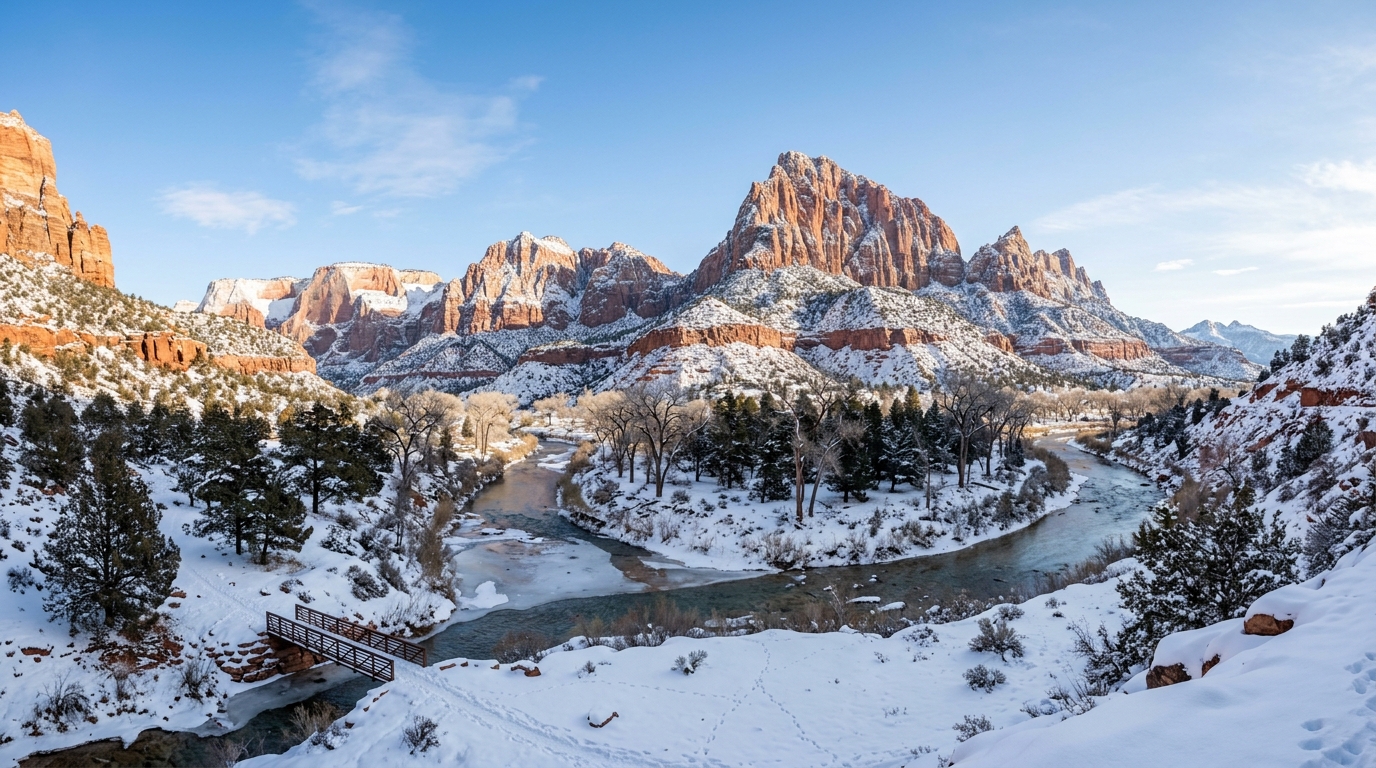
Navigating Freezing Temperatures and Snow in Zion Canyon
Winter brings quiet trails and chilly air to Zion National Park, creating a stark contrast to the busy summer months. Daytime temperatures in Zion National Park frequently reach a mild fifty or sixty degrees when the sun shines brightly against the red rock walls. Nighttime temperatures in Zion National Park regularly drop below freezing, sometimes falling into the twenties before sunrise. Snowfall occasionally blankets the main canyon floor, but low-elevation snow usually melts quickly during the afternoon hours. Higher elevation spots like Scout Lookout hold onto ice and packed snow much longer, requiring careful planning for any winter hike.
Travelers visiting Zion National Park must prepare for rapid weather shifts that happen as cold fronts move across the desert. Bright morning sunshine can turn into biting winds sweeping through the narrow sandstone gorges within minutes. The combination of brilliant red cliffs and fresh winter snow provides exceptional photography opportunities for visitors who embrace the quiet season. Understanding these temperature drops ensures that every visitor brings the right clothing and gear for comfort.
Shuttle Bus Suspensions and Private Vehicle Canyon Access
Zion National Park permits visitors to drive personal vehicles up Zion Canyon during the winter season because regular shuttle operations pause for most of these months. Private cars do not require a park shuttle ticket during this period, giving travelers total flexibility over their daily sightseeing schedules. Parking lots at popular trailheads like the Grotto and Temple of Sinawava still fill up early on sunny weekends and holidays. National Park Service rangers occasionally restrict private vehicle entry if ice or snow makes the scenic drive dangerous.
Driving your own car allows you to stop at scenic overlooks on your own schedule without waiting for public transport. When winter weather brings icy patches to the asphalt, park maintenance crews work hard to clear the road, but temporary safety closures can still occur. Checking road conditions at the visitor center before starting your morning drive prevents unexpected delays along the main canyon corridor.
Cold Weather Trail Conditions and Traction Gear
Classic walking routes like the Riverside Walk remain open during the colder months, offering gentle paths with beautiful canyon views. Trails that climb steeply toward Scout Lookout require extra caution because packed snow and black ice frequently form on stone stairs. Hikers should check current trail conditions with park rangers at the visitor center before setting out on any elevated route. Travelers who enjoy exploring regional desert scenery often combine a winter park trip with a scenic drive along a Utah park-to-park travel route to see nearby red rock formations covered in frost.
Lower elevation walks provide a great alternative when high-altitude trails become too icy or risky for casual hikers. The Pa’rus Trail is fully paved and remains accessible throughout most of the winter season, offering gentle strolls alongside the Virgin River. Because winter days are shorter than summer days, hikers must start their journeys early to ensure they return to the trailhead before darkness falls over the canyon walls.
Essential Winter Layering and Safety Equipment
Dressing in warm layers is the most important rule for staying comfortable while exploring Zion National Park during the winter season. Morning hikes start out in freezing temperatures that require heavy fleece jackets, wool hats, and insulated gloves. Afternoon sunshine warms the canyon quickly, which means visitors often peel off outer layers while walking on exposed trails. Waterproof boots keep feet dry from melted snow or seasonal puddles along unpaved pathways. Traction devices or microspikes that attach securely to hiking boots are essential gear for walking safely across icy trail sections.
Packing extra food and water is equally important during winter excursions because cold weather burns energy faster and dehydration can happen easily when temperatures are low. Carrying a portable headlamp in your backpack provides essential insurance if your hike takes longer than expected and sunset arrives earlier than planned. Taking time to assemble a well-prepared daypack ensures your cold-weather adventures remain safe and enjoyable from start to finish.
Frequently Asked Questions About Visiting in Winter
Do I need a shuttle ticket to visit Zion National Park in winter?
Private vehicles can drive up Zion Canyon without a shuttle ticket for most of the winter season when shuttle buses are not running.
How cold does it get in Zion National Park during winter?
Daytime highs often reach the fifties, but nighttime temperatures regularly drop below freezing.
Can I hike Angel’s Landing in the winter?
Angel’s Landing remains open, but ice and snow on the narrow chain section make the hike dangerous without proper traction devices.
Does it snow often on the Zion Canyon floor?
Snow does fall in the main canyon, but it usually melts quickly during sunny winter afternoons.
Are park facilities and visitor centers open in winter?
The main Zion Canyon Visitor Center stays open daily throughout the winter months, except during severe weather closures.
What should I pack for winter hiking in Zion?
Pack warm layers, sturdy waterproof boots, and microspikes for your boots to handle icy trail patches safely.
Are restrooms available along the scenic drive during winter?
Most major restrooms at popular trailheads and visitor areas remain open throughout the winter season, though some remote facilities may close temporarily.
Disclaimer: Weather conditions, road rules, and park operations can change quickly during the winter season. Always verify the latest updates and current safety alerts on the official National Park Service website before starting your trip.

I’m Muhammad Ubaid, founder of YBR Magazine. I research and write detailed guides on America’s National Parks — covering entry fees, permits, best times to visit, and planning tips — using official NPS sources and up-to-date information.