

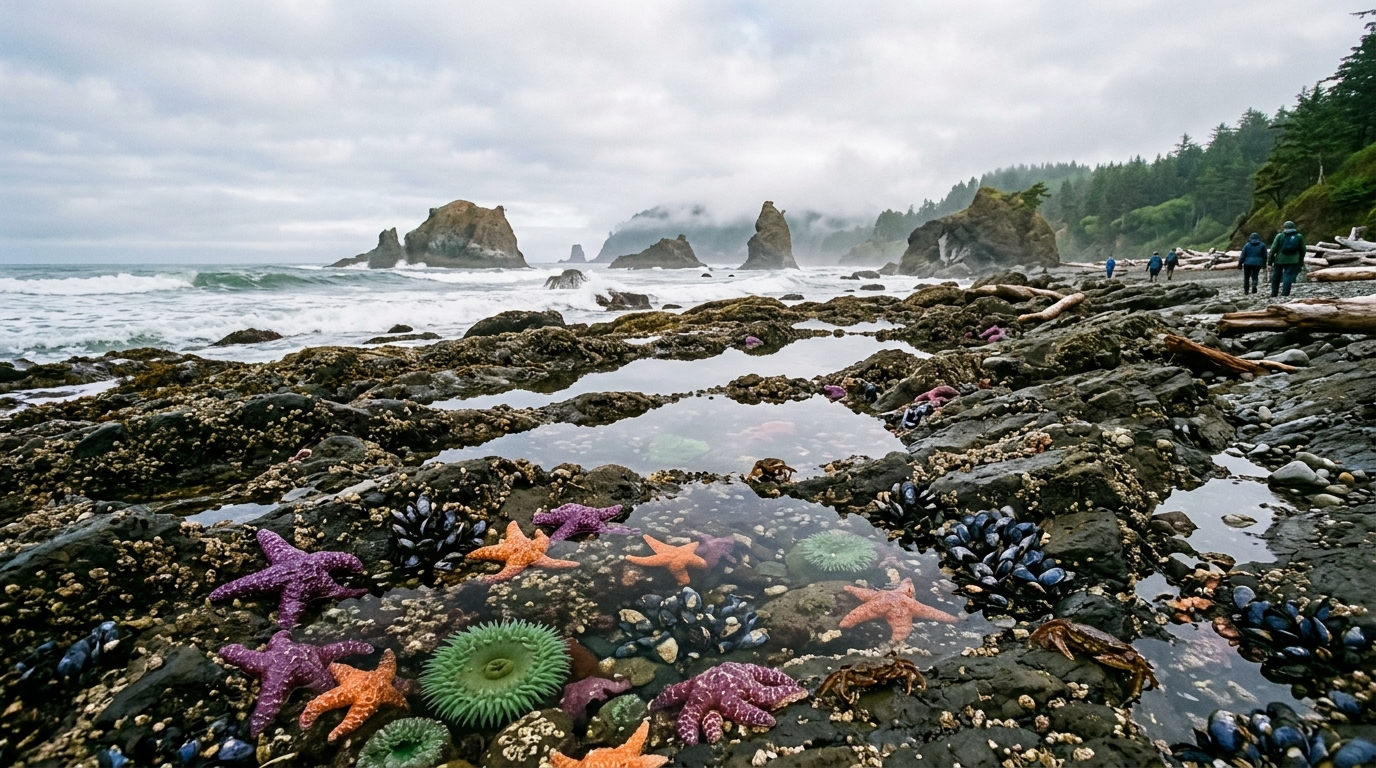
Exploring the rugged Pacific coastline offers a close look at a rich and dynamic marine world. Olympic National Park tide pools sit within a wild and protected coastal strip of Washington state, far away from urban beaches. Visitors must coordinate their trips with extreme low tides and navigate slippery terrain to see sea stars, anemones, and crabs. Because this experience depends entirely on natural ocean cycles rather than park operating hours, understanding safety and tide charts is essential for a successful visit.
Pacific Coastal Ecosystems and Intertidal Zones
Olympic National Park tide pools offer a direct look into rich marine ecosystems along the rugged Pacific coastline.
The coastal strip of the park features rocky shores, sea stacks, and intertidal zones that change drastically throughout the day. When the ocean recedes, rocky pools left behind trap water and marine organisms that must survive both underwater and air exposure. Olympic National Park tide pools reveal fascinating creatures like purple sea stars, green sea anemones, chitons, and tiny sculpins darting between rocks. This delicate environment supports diverse plant and animal life that has adapted to harsh wave action and shifting temperatures.
Top Accessible Beach Locations for Marine Viewing
Specific beaches along the Olympic coastline provide the most reliable and diverse tide-pooling experiences.
Not every beach along the Pacific Northwest coast features good tide pools, as sandy beaches hide most marine life beneath shifting sediment. Rocky headlands and boulder-strewn shores offer the best habitat for intertidal creatures to anchor themselves against heavy surf. Popular access points for exploring these areas include Third Beach, Ruby Beach, and parts of the Kalaloch area. Visitors planning a longer stay often look into a Pacific Northwest park expedition to experience both the rainforests and the coastal tide zones efficiently.
Navigating Daily Ocean Cycles and Extreme Low Tides
Safe and successful tide-pooling depends entirely on checking local tide charts and arriving during extreme low tide.
Ocean tides follow a daily cycle that shifts roughly an hour later each day, meaning visitors cannot rely on visiting at the same time every afternoon. Successful explorers check official tide tables well in advance and aim to arrive at the beach about one hour before the lowest tide mark. This timing gives visitors the maximum amount of exposed rock to explore safely before the ocean begins its upward climb. Arriving too late risks getting caught by incoming water, which can cut off return routes and trap people against steep coastal cliffs.
Coastal Weather Hazards and Sneaker Wave Safety
Navigating slick rocks, cold water, and unpredictable sneaker waves requires constant attention and caution.
Coastal weather in Washington is notoriously unpredictable, bringing sudden rain, heavy mist, and cold winds that make rocks even more slippery. Algae-covered boulders and barnacle-encrusted stones require sturdy footwear with deep traction or rubber boots to prevent painful falls. Furthermore, visitors must keep their eyes on the ocean at all times to watch for sudden large swells known as sneaker waves. These unexpected waves can surge high up the beach without warning and sweep people off coastal rocks into freezing water.
Federal Regulations and Marine Conservation Ethics
Touching or moving sea creatures harms fragile tide pool habitats and violates federal park regulations.
The animals living in these rocky pools are surprisingly delicate despite their tough exterior shell or leathery texture. Natural oils and sunscreen residue on human skin can transfer harmful chemicals to creatures when people touch them directly. Federal regulations within Olympic National Park strictly prohibit removing, harming, or collecting any marine life, shells, or rocks from the tide pool areas. Visitors must practice gentle observation, stepping only on bare rock rather than on living organisms like seaweed and barnacles.

Quick Facts About Coastal Exploration
Reviewing key planning details helps ensure a smooth trip to the Pacific shoreline.
| Planning Detail | Recommendation |
|---|---|
| Best Season | Spring and summer offer the lowest daytime tides. |
| Arrival Time | One hour before the lowest tide mark. |
| Footwear | Sturdy shoes with deep treads or rubber boots. |
| Collection Rule | Strictly prohibited to take any shells or sea life. |
Frequently Asked Questions
When is the best time of year to visit Olympic National Park tide pools?
Spring and summer generally offer the lowest daytime tides and milder weather, making them ideal for coastal exploration.
Do I need a special permit to visit the tide pools?
Standard park entrance fees apply, but no special backcountry permit is needed for day-use beach visits.
Can I touch the sea stars and anemones in the tide pools?
You should avoid touching marine life because natural oils from human hands can harm them.
Are dogs allowed on the beaches with tide pools?
Pets are restricted on most wilderness coastal trails and beaches to protect local wildlife and nesting birds.
How far in advance should I check the tide tables?
Check official tide tables at least a day before your visit and aim to arrive one hour before the lowest tide mark.
What shoes should I wear for tide-pooling?
Wear sturdy shoes with deep treads or rubber boots because the rocks are covered in slick algae and barnacles.
Disclaimer: Coastal conditions, tide schedules, and park regulations can change. Always verify current weather warnings and official tide charts through the National Park Service before heading out.

I’m Muhammad Ubaid, founder of YBR Magazine. I research and write detailed guides on America’s National Parks — covering entry fees, permits, best times to visit, and planning tips — using official NPS sources and up-to-date information.