

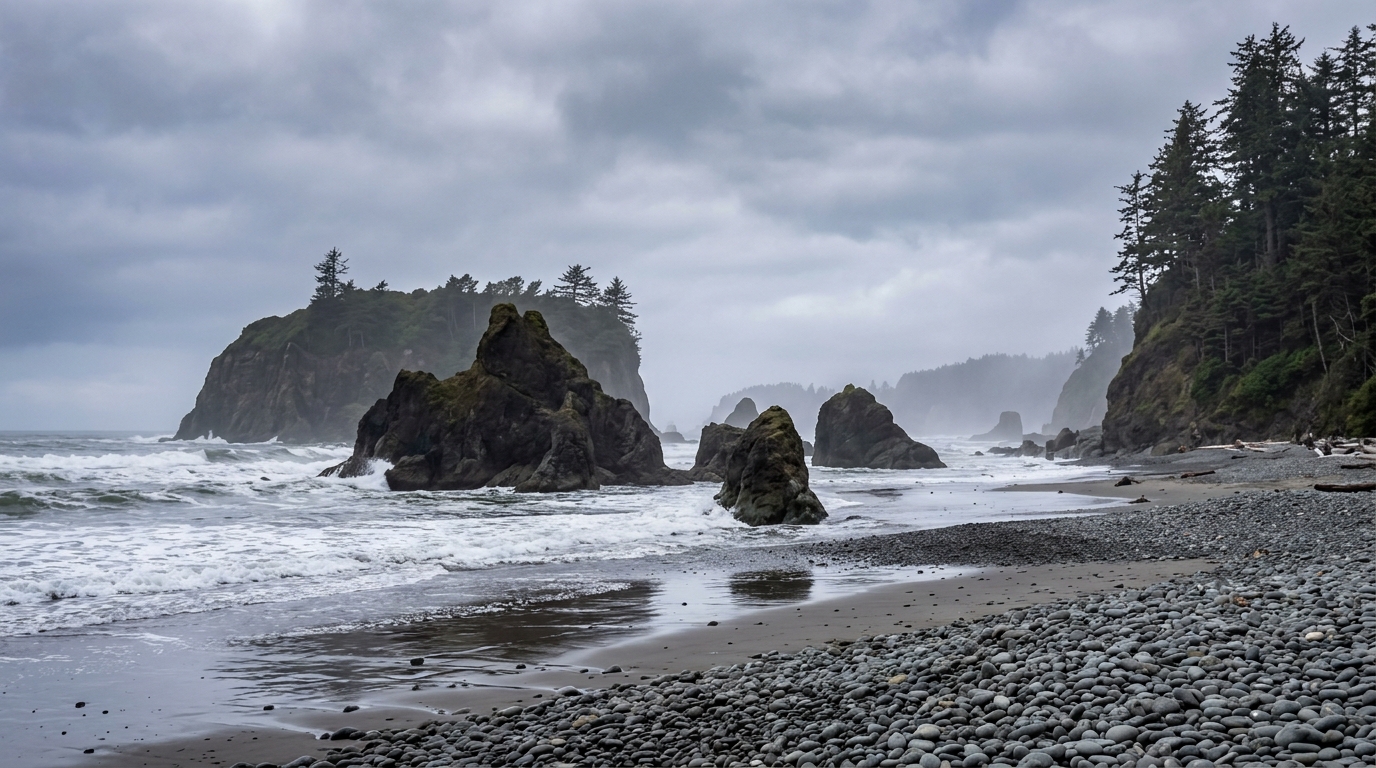
Planning a trip to Washington state requires a thoughtful Olympic National Park itinerary because the landscape is vast and incredibly diverse. Olympic National Park contains multiple completely different ecosystems packed into one massive protected area. Visitors can explore rugged ocean beaches, deep temperate rainforests, and high alpine mountains all in a single region. Because these distinct areas are spread far apart and connected by winding two-lane roads rather than straight highways, a standard point-to-point travel plan does not work well. A proper travel plan for Olympic National Park must account for massive driving times between the coast and the mountains, helping travelers avoid spending their entire vacation trapped in a car.
Most travel guides offer generic lists of popular sights without explaining how long it actually takes to drive between them. They often fail to help visitors choose the right number of days based on realistic travel speeds. These guides rarely provide a clear geographic breakdown that keeps travelers from backtracking across the rugged Olympic Peninsula. This article fills those gaps by focusing heavily on realistic driving times, grouping nearby sights logically by region, and giving clear advice on whether a short trip or a longer road trip is best.
Geographic Realities and Time Management on the Peninsula
Understanding the vast distances between contrasting park zones helps travelers design a realistic Olympic National Park itinerary that avoids exhaustion.
Trying to see everything in a single day means spending nearly all your daylight hours driving past forests and coastlines without stopping. A two-day visit allows for a fast-paced look at mountain viewpoints and one famous lake, but it leaves out the wild ocean beaches and deep rainforests. Three days provides a balanced schedule to add the Hoh Rain Forest or a coastal stretch. Four or five days gives travelers the freedom to complete a full loop around the peninsula without burning out from long hours behind the steering wheel.
The Alpine and Lake Crescent Quick Loop
A fast-paced two-day Olympic National Park itinerary focuses on the most accessible northern highlights like Hurricane Ridge and Lake Crescent.
On day one, travelers should arrive early in Port Angeles and head straight up the winding mountain road to Hurricane Ridge for sweeping alpine views. After spending the morning looking out over the jagged peaks, visitors can drive west toward the stunning waters of Lake Crescent by the afternoon. Day two can be dedicated to exploring the rocky shoreline of Salt Creek Recreation Area or taking a short walk along the Sol Duc River trail to see the local waterfalls before heading back out of the region.
Balancing Rainforests and Coastlines in Three Days
A balanced three-day travel plan adds the famous Hoh Rain Forest to the northern mountain route without requiring dangerous levels of nonstop driving.
Day one covers Hurricane Ridge and Lake Crescent, keeping visitors based around Port Angeles or Forks for the night. Day two takes travelers deep into the Hoh Rain Forest to walk among towering moss-draped ancient trees and listen to the quiet riverbed. Day three brings visitors out to the wild Pacific coast beaches, such as Rialto Beach or Ruby Beach, where sea stacks rise out of the crashing ocean surf. For travelers interested in expanding their Pacific Northwest travels beyond this region, checking out a comprehensive multi-day alpine itinerary provides great inspiration for other mountain parks.
Completing the Full Peninsula Loop Over Five Days
A relaxed, looping four- or five-day travel schedule allows visitors to explore remote southern valleys and coastal wilderness areas without rushing.
Spreading the journey across multiple days lets travelers base themselves in different towns around the peninsula rather than driving across the entire park in a single afternoon. Days one and two cover the northern mountains and Lake Crescent. Days three and four focus on the Hoh Rain Forest and the rugged Pacific coastline. Day five gives visitors time to explore the Quinault Rainforest in the southern portion of the park, where elk roam freely and quiet forest trails offer a peaceful escape from the busier northern trailheads.
Navigating Highway 101 and Seasonal Weather Shifts
Navigating the long driving distances, changing weather conditions, and seasonal road closures safely requires careful preparation.
The main route circling the park is U.S. Highway 101, which winds along coastlines and river valleys with very few passing lanes. Weather in the mountains can change instantly from bright sunshine to heavy rain or thick fog, so drivers should always check official park updates before heading up to high elevations. Cell service is extremely limited in many interior valleys and remote coastal zones, making downloaded offline maps essential for navigation. Travelers should also keep an eye on seasonal gate opening times for mountain areas like Hurricane Ridge, as snow can linger well into the spring months.
Frequently Asked Questions
How many days do you need in Olympic National Park?
Most visitors need at least three to five days to experience the mountains, rainforests, and coastlines comfortably without excessive driving.
Is a 2-day itinerary for Olympic National Park enough?
A two-day trip is very rushed and only allows time for a couple of northern highlights like Hurricane Ridge and Lake Crescent.
What is the best time of year to visit Olympic National Park?
Summer and early autumn offer the most reliable weather, clear mountain views, and fully open park roads.
Can you drive all the way through Olympic National Park?
No major highways cross directly through the center of the park due to the high, rugged Olympic Mountains, requiring drivers to loop around the perimeter.
Are reservations required to enter Olympic National Park?
Timed-entry reservations are not standard for general park entry, but certain busy areas or campgrounds may have specific requirements depending on the season.
What should I pack for a trip to Olympic National Park?
Pack sturdy waterproof boots, breathable layers, and a reliable rain jacket since the park experiences heavy rainfall and wet coastal conditions.
Disclaimer: Park conditions, road schedules, and weather patterns can change quickly. Always verify current details from official National Park Service sources before starting your trip.

I’m Muhammad Ubaid, founder of YBR Magazine. I research and write detailed guides on America’s National Parks — covering entry fees, permits, best times to visit, and planning tips — using official NPS sources and up-to-date information.