

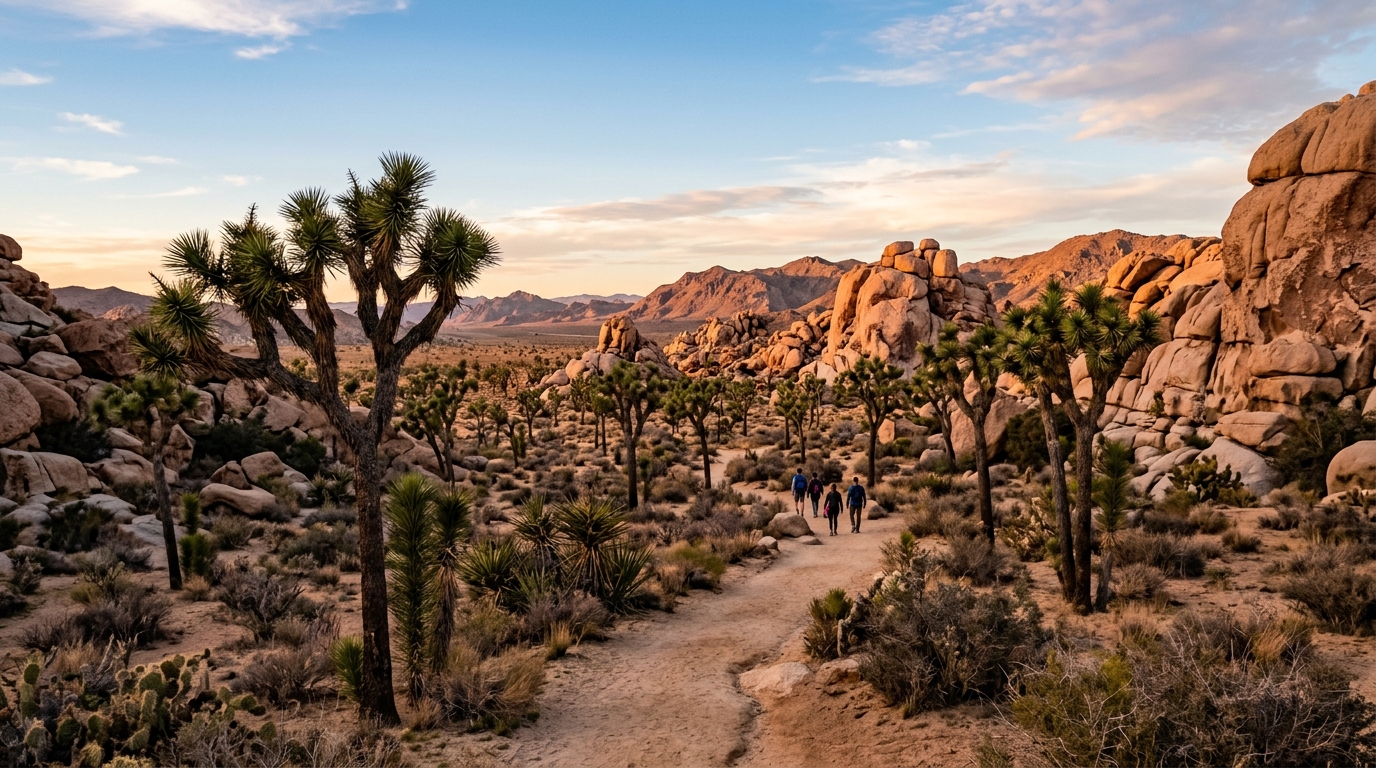
Joshua Tree National Park stands apart from other protected lands by blending raw desert wilderness with giant rock formations and a distinct creative arts culture. Visitors do not simply hike traditional dirt paths the way they might in forested mountain parks. Instead, travelers come to wander among strange spiky trees, scramble up massive granite boulders, and experience vast dark skies. The landscape sits right where two distinct environments meet, known as the Mojave Desert and the Colorado Desert. This unique geography creates a striking contrast between high rocky ridges and flat, open sandy valleys.
Preparing for a visit means learning how these two desert ecosystems interact under changing daily weather. When searching for the best things to do at Joshua National Park, travelers should plan for physical shifts in the terrain. Every section of the protected area offers a totally different atmosphere, requiring both daytime exploration strategies and nighttime viewing plans.
See the Famous Joshua Trees Up Close
Walking among the iconic, twisted branches of the park’s signature trees remains the top visual priority for nearly every visitor.
These unusual plants belong to the yucca family and thrive in the higher, cooler elevations of the Mojave section. Travelers can spot dense clusters of these silhouettes by driving along the main paved routes or stepping onto short sandy footpaths like the Hidden Valley loop. The spiky green leaves and woody trunks stand out against bright blue skies, creating unforgettable desert photography moments. Slow-paced walks here offer a quiet chance to observe how resilient plants survive extreme sun and minimal rainfall.
Climb and Explore the Massive Rock Formations
Climbers and outdoor explorers focus much of their energy on the massive stone formations scattered throughout the valleys.
Granite piles make locations like Jumbo Rocks and Barker Dam world-famous among outdoor enthusiasts. Visitors do not need professional climbing gear to enjoy these geological wonders, as many rock fields allow for easy scrambling and short walks up to scenic vantage points. Navigating these stone mazes reveals hidden water basins, tight crevices, and smooth surfaces carved by millions of years of wind and flash flood erosion.
Take Scenic Desert Drives and Stop at Viewpoints
Driving through the park provides a comfortable way to witness dramatic shifts in scenery without hiking miles under intense heat.
Key View serves as an essential roadside stop, sitting high along the crest of the Little San Bernardino Mountains. From this lofty overlook, visitors gaze down into the Coachella Valley and spot the distant trace of the San Andreas Fault cutting across the floor below. Other notable stops include Skull Rock and the Cholla Cactus Garden, each showcasing a completely different slice of local ecology. Travelers who enjoy comparing regional desert layouts can also find helpful planning insights in our guide on how many days to spend in Death Valley National Park.
Watch the Night Sky and Stargaze
Stargazing transforms the park into an entirely different world once daylight fades and complete desert darkness sets in.
Official International Dark Sky Park status protects the region from nearby urban light pollution, ensuring crystal-clear night viewing. Visitors regularly set up camp or pull into designated turnout areas to gaze at countless visible stars, distant planets, and the glowing dust lanes of the Milky Way. Low humidity and wide horizons create exceptional astronomical viewing conditions throughout most months of the year. Experienced stargazers always pack a dim red flashlight to protect their night vision while walking across uneven ground.

Essential Tips for Visiting the Desert Safely
Staying secure in this isolated environment requires serious preparation because natural hazards and extreme temperatures are constant factors.
Cell phone connectivity fails across most interior sections of the park, making offline maps and physical guidebooks mandatory. Visitors must pack an abundant supply of drinking water, map out their daily routes thoroughly, and check weather updates before stepping away from their vehicles. Afternoon temperatures can rise to dangerous levels very quickly, even during cooler seasons. Bringing high-SPF sunscreen, plenty of nourishing food, and sturdy footwear guarantees a safe and comfortable wilderness journey.
Disclaimer: Park regulations, weather safety warnings, and admission fees fluctuate over time. Always double-check current guidelines through official park websites before launching your trip.
Frequently Asked Questions About Joshua Tree National Park
What season offers the best weather for exploring the park?
Spring and autumn provide the most comfortable daytime temperatures, making extended outdoor exploration much more enjoyable than during scorching summer months.
Do I need to secure an advance entry reservation?
Advanced entry permits are not required for regular park access, but all visitors must pay an established entrance fee at the gate or present a valid annual pass.
Are dogs permitted on the dirt hiking trails?
Pets are allowed inside the park boundaries, but park rules strictly require them to stay on short leashes and forbid them from entering dirt hiking paths to safeguard native wildlife.
Can visitors camp overnight among the boulder fields?
The park maintains several popular campgrounds nestled directly against the rock piles, though nearly all spots require advance reservations via official booking platforms.
Is reliable drinking water available at visitor centers?
Potable water is extremely limited at remote facilities, meaning visitors must pack all the drinking water they will need for the duration of their visit.
How much time is required to see the primary sights?
Most travelers spend at least one full day driving the main park roads, walking short interpretive paths, and viewing the massive rock formations.

I’m Muhammad Ubaid, founder of YBR Magazine. I research and write detailed guides on America’s National Parks — covering entry fees, permits, best times to visit, and planning tips — using official NPS sources and up-to-date information.