


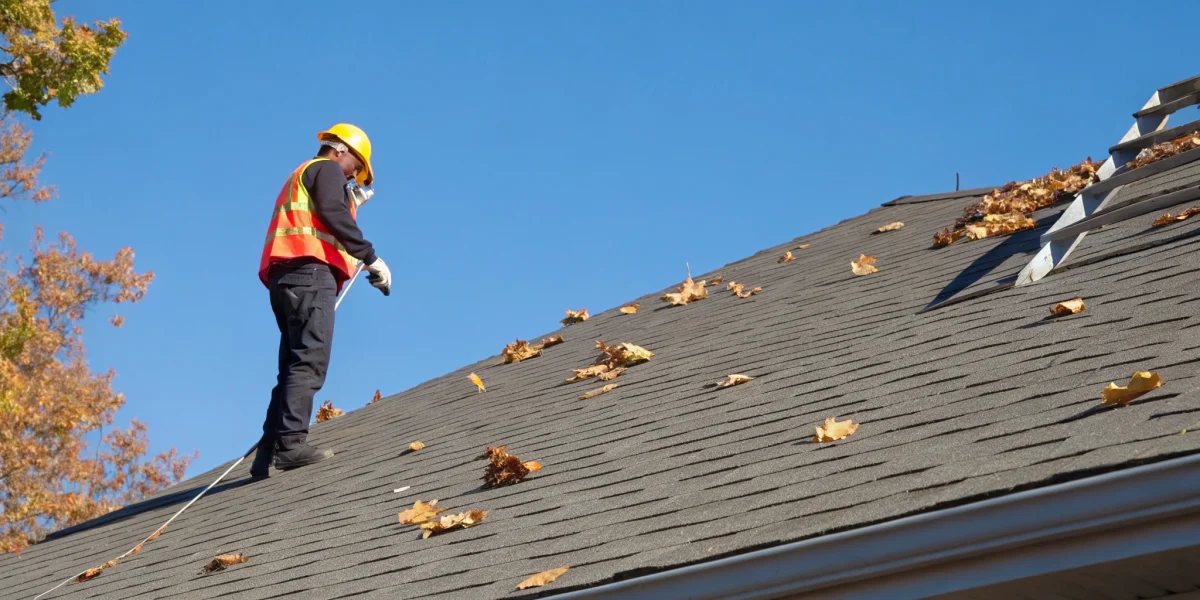
Hail damage is one of the most misunderstood problems a homeowner faces. The storm passes, the sky clears, and from the ground the roof looks unchanged. What the ground view misses is the damage the hailstones punched into the shingle surface, the flashing, the gutters, and, in harder impacts, the roof deck beneath. By the time a visible leak appears indoors, the underlying damage may be months old, making timely inspection and hail damage roof repair essential for preventing further deterioration.
This guide covers what hail physically does to a roof, how a professional inspector reads that damage, what insurers require to approve a claim, and the repair steps a roofer carries out once the claim clears.
What Hail Does to an Asphalt Shingle Roof
Asphalt shingles shed water because of their granule coating: the small, grit-like particles pressed into the surface during manufacturing. Those granules also absorb UV radiation that would otherwise break down the asphalt mat beneath them.
A hailstone hits the shingle at speed and does two things at once. It dislodges granules from the impact zone, leaving a circular bare spot where the mat is exposed. And it compresses the mat below the surface, cracking the fiberglass reinforcement inside. That internal crack is what insurers call a “functional defect,” because water can eventually work through a cracked mat even without a visible hole.
Larger hailstones, typically three-quarters of an inch in diameter or above, produce dents visible from a normal inspection distance. Smaller stones leave impacts that read clearly only when the inspector examines the shingle at a low angle in strong light. Both types cause functional damage; size determines how quickly that damage progresses.
What inspectors document after a hail event:
- Circular bare spots where granules have scattered, usually 1 to 3 centimeters in diameter
- Soft spots under the surface that compress when pressed, called “bruising,” indicating mat fracture beneath intact-looking granules
- Granule accumulation in gutters and at downspout outlets, visible after rain flushes the roof.
- Dented aluminum ridge vents, pipe boots, and flashing at valleys and penetration points
- Split or cracked shingles along the edges of impact zones on older roofs where the mat has already stiffened
The pattern across the roof matters as much as any individual impact. Hail falls on all exposed roof slopes simultaneously. An inspector who finds impacts concentrated on one slope only, particularly the slope facing the prevailing storm direction, cross-references that pattern against local weather data to confirm the event date, which the insurer then matches against the claim.
How Hail Damage Differs From Normal Wear
Adjusters are trained to separate storm damage from general aging, and a successful claim depends on the inspector documenting that distinction clearly.
Normal wear produces granule loss that spreads evenly across the entire roof field. It produces cracking along shingle edges and tabs, and blistering caused by heat and trapped moisture. Wear-related damage is gradual and follows the roof’s age curve.
Hail damage is event-specific. It shows as clustered impacts on the side of the roof that faced the storm. It dents metal components that ordinary wear does not touch: aluminum vents, copper flashing, steel valleys. It produces granule loss in a pattern of discrete circles, not a gradual thinning.
An inspector with hail experience photographs both the storm-damaged areas and the areas that show only normal aging, side by side. That documentation gives the adjuster a comparison baseline that makes the event-specific damage legible on paper.
Does Insurance Cover Roof Hail Damage?
Most standard homeowners’ insurance policies cover roof damage caused by hail under the dwelling coverage section. Whether a specific claim pays depends on four factors.
1. Policy type: RCV vs. ACV
Replacement Cost Value (RCV) policies pay to replace the damaged roof sections with materials of like kind and quality, minus the deductible. Actual Cash Value (ACV) policies apply a depreciation deduction based on the roof’s age before paying out. A 15-year-old roof on an ACV policy may receive a significantly reduced settlement. Homeowners should check their declarations page before a storm season begins, not after a claim is filed.
2. The reporting window
Most policies require the homeowner to report storm damage within one year of the event date, and some set that window as short as 180 days. Filing after the window closes is grounds for claim denial regardless of the physical damage present. This is the single most common reason legitimate hail damage claims go unpaid.
3. The deductible structure
Some policies carry a standard flat deductible that applies to all claims. Others carry a separate wind and hail deductible, expressed as a percentage of the dwelling’s insured value, typically one to two percent. On a home insured at $400,000, a two-percent hail deductible is $8,000 out of pocket before the insurer pays. Homeowners in hail-active regions should verify which deductible structure their policy carries.
4. A documented inspection report
An insurer cannot approve a repair scope without evidence of what was damaged. A claim submitted with a professional inspection report, photographs of each impact zone, and a written damage summary moves through the adjustment process faster and with less back-and-forth than a claim submitted without documentation. The inspection report is the claim’s foundation.
The Inspection Process: What a Roofer Examines
A thorough hail damage roof inspection covers the entire roof field, not just the slope visible from the street. The inspector accesses each slope and works across it in a systematic grid, photographing every impact zone with a reference ruler in frame so the adjuster can read the size and distribution of impacts from the photos.
The inspection covers:
- All asphalt shingle fields on every roof slope
- Ridge caps, which absorb impacts on two sides and show damage earlier than field shingles
- All metal components: ridge vents, pipe boots, step flashing at walls, valley flashing, gutters, and downspouts
- Any skylights, solar panel mounting hardware, or HVAC equipment on the roof
- Gutters and downspouts for denting and granule accumulation
At the end of the inspection, the roofer produces a written summary identifying the number and distribution of impacts per slope, the condition of each metal component, and a recommended repair scope. That document goes to the homeowner and, with the homeowner’s authorization, to the adjuster.
Many contractors also attend the adjuster’s on-site visit to walk the roof alongside the adjuster, answer technical questions about the damage pattern, and clarify the repair scope. This step reduces the frequency of supplemental claims and speeds up approval.
What the Repair Covers After a Claim Is Approved
Once the insurer approves the claim, the roofer carries out the work specified in the approved scope. That scope is documented and agreed before work starts.
Common repair tasks after a hail event:
- Shingle replacement: Damaged sections are stripped to the deck, the underlayment is inspected and replaced if compromised, and new shingles are installed and nailed to manufacturer specifications.
- Ridge cap replacement: Ridge caps receive disproportionate hail exposure and are almost always included in a legitimate storm damage scope.
- Flashing repair and resealing: Step flashing at dormer walls and chimney bases is re-bedded and sealed. Valley flashing is inspected and replaced where dented or cracked.
- Vent and boot replacement: Damaged pipe boots and ridge vents are swapped out. A dented aluminum vent does not seal correctly; it is replaced, not straightened.
- Deck assessment: Where the inspector found soft spots suggesting deck damage, the decking is exposed and inspected. Damaged sections are sistered or replaced before new shingles are installed.
The contractor documents completed work with photographs, which the homeowner retains for the claim file and for the home’s records. A well-documented repair file is also useful if the home is sold: it confirms the roof was inspected, claimed, and repaired to scope after a verifiable storm event.
The Claim Timeline: What Homeowners Should Expect
A well-prepared claim follows a predictable sequence.
Inspection: The roofer inspects the roof, documents the damage, and prepares the written report. In active storm seasons, inspections are scheduled within one to three days of contact.
Filing: The homeowner files the claim with the insurance company, submitting the inspection report as supporting documentation.
Adjuster visit: The insurer schedules an on-site adjuster visit, typically within one to two weeks. The roofer attends alongside the homeowner.
Scope approval: The adjuster issues a written scope of loss. If items are missing from the adjuster’s scope that the inspection documented, the roofer files a supplement with supporting evidence.
Repair scheduling: Once the scope is approved and the first insurance payment is issued, the roofer schedules the repair. Material lead times vary by season; storm-season demand extends timelines.
Final payment: After the repair is complete and documented, the insurer releases the holdback (the depreciation amount on RCV policies) upon receipt of the contractor’s completion certificate.
The full process from inspection to final payment typically runs four to eight weeks on a straightforward claim. Claims with supplemental negotiations or disputed scope items run longer.
Getting an Inspection Scheduled Before the Claim Window Closes
The single most useful step a homeowner can take after a hailstorm is to schedule a professional roof inspection within the first two weeks. That inspection establishes the damage record before the next weather event mixes in additional wear, before granules wash further down the slope, and well inside any policy reporting window.
Homeowners across Middle Tennessee and Robertson County who need a free hail damage roof repair inspection and claim documentation can contact a licensed roofing contractor in Springfield, TN, who specializes in storm damage assessment and insurance coordination. Apple Roofing provides free hail damage inspections, prepares adjuster-ready documentation, and carries out approved repairs from reshingling to full section replacement across the greater Nashville corridor.
<p><iframe src=’https://batchgeo.com/map/Local-Roofers-in-Nashville’ frameborder=’0′ width=’100%’ height=’550′ sandbox=’allow-top-navigation allow-scripts allow-popups allow-popups-to-escape-sandbox allow-same-origin allow-modals allow-forms’ allow=’geolocation https://batchgeo.com’ style=’border:1px solid #aaa; position: relative;’ scrolling=’no’ referrerpolicy=’strict-origin-when-cross-origin’ allowfullscreen></iframe></p><p><small>View <a href=’https://batchgeo.com/map/Local-Roofers-in-Nashville’>Your Local Roofing Experts in Nashville</a> in a full screen map</small></p>
Media Contact:
Company Name: Apple Roofing
Phone: 615-235-1822
Address: 811 Memorial Blvd
City: Springfield
State: TN
ZIP Code: 37172
Country: United States
Website: https://appleroof.com/springfield-tn/
Social Media:
”


