

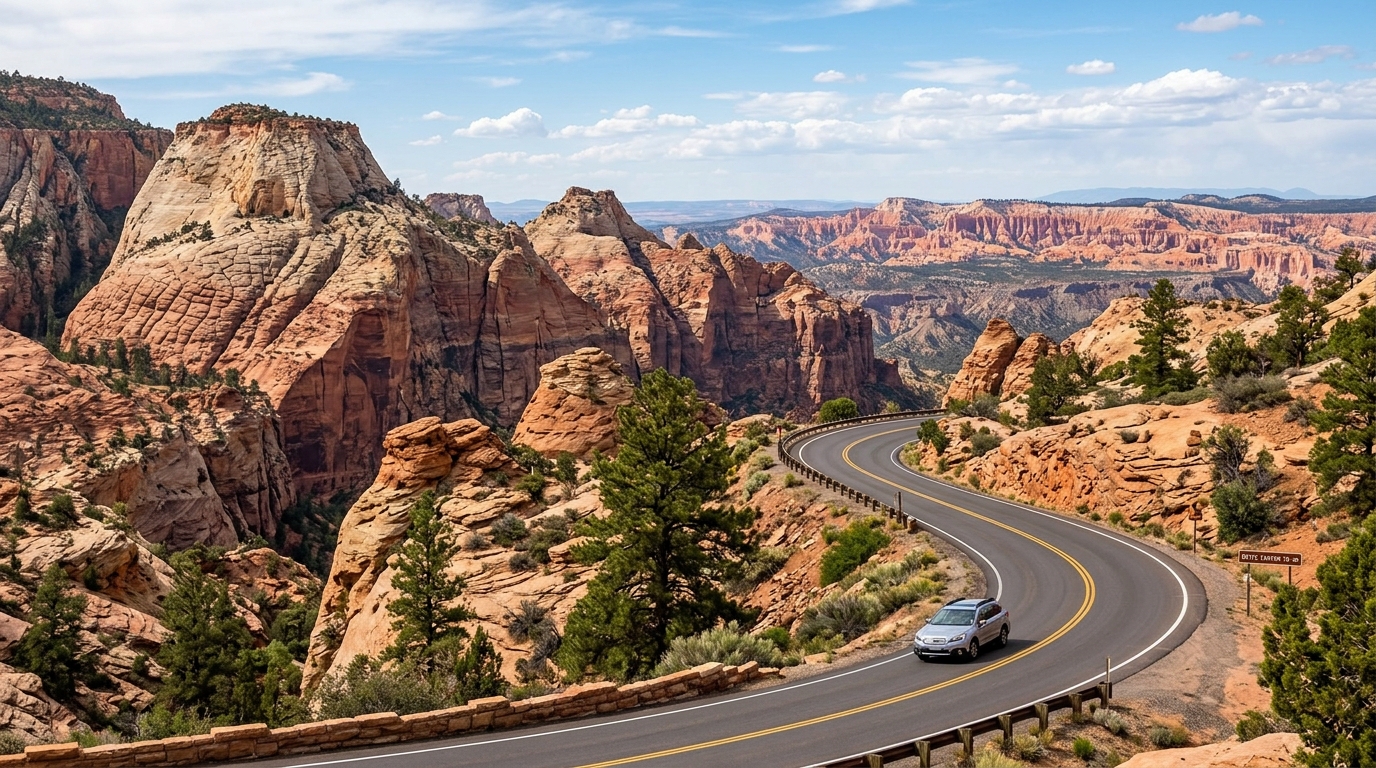
Planning a trip through southern Utah often means visiting two of the country’s most famous natural landscapes in one single journey. Travelers moving between these protected areas need clear facts about mileage, road conditions, and travel times. Understanding the Zion National Park to Bryce Canyon distance helps visitors plan their daily schedules, hotel bookings, and sightseeing stops without any guesswork.
Driving Distance and Time Between Zion and Bryce Canyon
The actual driving distance between Zion National Park and Bryce Canyon National Park is roughly 70 to 85 miles, depending on the exact starting point within Zion and the specific route chosen by the driver.
Most travelers begin their journey near the main entrance of Zion National Park close to Springdale and drive to the main visitor center area of Bryce Canyon National Park. This drive typically takes about one hour and thirty minutes to two hours under normal traffic and weather conditions. While the straight-line geographic distance on a map looks much shorter, the mountainous terrain and winding roadways mean vehicles must travel at varying speeds.
The Main Route: Driving via Utah State Route 9 and US-89
Drivers traveling between Zion National Park and Bryce Canyon National Park primarily rely on Utah State Route 9 and US-89 North to complete the journey.
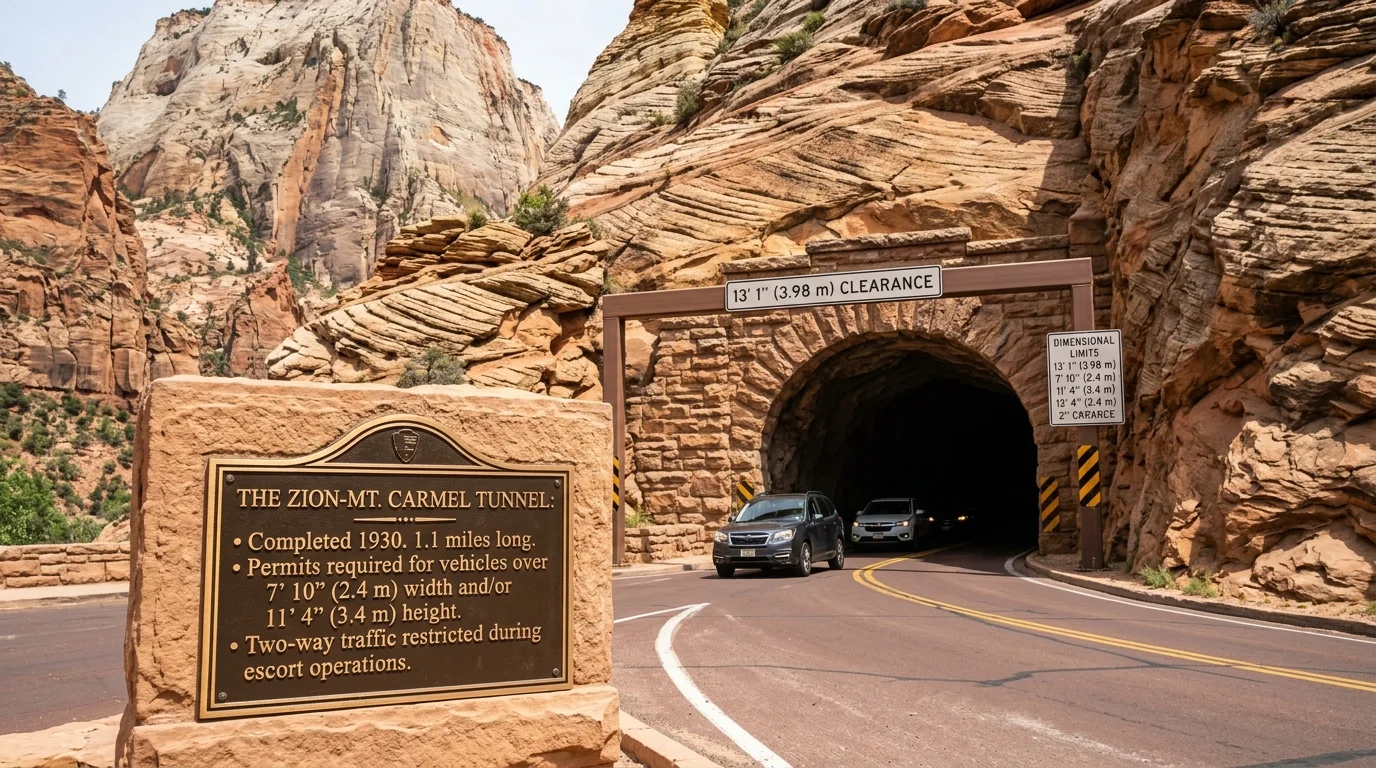
When leaving Zion National Park from the south entrance near Springdale, motorists travel east along Utah State Route 9. This scenic highway climbs steeply through the park, passing through the historic Zion-Mount Carmel Tunnel before reaching the east entrance. After exiting the eastern side of Zion National Park, drivers continue on Route 9 until it intersects with US-89. Travelers then turn north on US-89 toward Mount Carmel Junction and Panguitch. Finally, motorists turn east onto Utah State Route 12, which leads directly toward the entrance of Bryce Canyon National Park.
Navigating the Zion-Mount Carmel Tunnel and Vehicle Permits
Oversized vehicles traveling between Zion National Park and Bryce Canyon National Park must secure a special tunnel permit and follow strict traffic control rules inside the Zion-Mount Carmel Tunnel.
Built in the 1930s, the Zion-Mount Carmel Tunnel cannot accommodate large RVs, buses, and commercial trucks at the same time as opposing traffic. Vehicles that measure 11 feet 4 inches in height or 7 feet 10 inches in width, or larger, require a permit to drive through the tunnel. Park staff stop oncoming traffic so these larger vehicles can drive down the center of the narrow tunnel safely. Drivers of oversized vehicles must pay a tunnel permit fee at the entrance station before attempting the drive along Utah State Route 9.
Scenic Highlights and Stops Along the Way
Travelers can turn the simple transit between Zion National Park and Bryce Canyon National Park into a memorable sightseeing excursion by stopping at several notable points of interest along the route.
Key locations worth visiting include Checkerboard Mesa inside Zion National Park, where unusual cross-bedded sandstone creates a striking grid pattern. Just outside the park boundaries, open desert vistas give way to high-plateau landscapes. Further north along US-89, travelers pass through rural farming communities and red rock formations. Some visitors also choose to take a short detour to explore the stunning slot canyons around Kanab, Utah, before continuing north toward Bryce Canyon National Park.
Best Times of Year for the Zion to Bryce Drive
Seasonal weather patterns and mountain elevation changes heavily influence the quality of the drive between Zion National Park and Bryce Canyon National Park.
Spring and autumn offer the most comfortable driving conditions, with mild temperatures and clear roads. Summer brings heavy visitor traffic, leading to potential delays at park entrance stations and slower movement along Utah State Route 9. Winter weather introduces snow and ice, particularly at Bryce Canyon National Park, which sits at a much higher elevation than Zion National Park. Drivers during winter months must check local road conditions and carry emergency supplies, as snowstorms can temporarily close mountain highways.
Frequently Asked Questions
What is the exact Zion National Park to Bryce Canyon distance?
The driving distance ranges between 70 and 85 miles depending on your exact starting and ending points within the two parks.
How long does it take to drive from Zion to Bryce Canyon?
The drive usually takes between one hour and thirty minutes and two hours under normal conditions.
Do I need to pay a fee to drive through the Zion-Mount Carmel Tunnel?
Standard passenger vehicles do not pay an extra fee beyond the standard park entrance fee, but oversized RVs and commercial vehicles require a specific tunnel permit.
Which highway connects Zion National Park to Bryce Canyon National Park?
The primary route uses Utah State Route 9, connects to US-89 North, and finishes via Utah State Route 12 East.
Can I make this trip as a day trip?
Yes, many travelers visit Bryce Canyon as a day trip from Zion, or vice versa, because the driving time is relatively short. For help deciding how to structure your time, check out this guide on Bryce Canyon or Zion National Park which is better for your overall itinerary.
Are there gas stations along the driving route between the two parks?
Gas stations are available near Springdale, Mount Carmel Junction, and towns along US-89, but drivers should fill up before entering remote mountain stretches.
Does Bryce Canyon get more snow than Zion National Park?
Yes, Bryce Canyon sits at an elevation of over 8,000 feet, making it much colder and more prone to heavy winter snowfall than Zion National Park. If you are planning an extended desert vacation that includes other iconic parks, you might also want to research how many days in Death Valley National Park to structure your schedule properly. To experience the stunning autumn colors and cooler temperatures in these parks, read more about Zion National Park in fall. If your upcoming travel plans involve exploring cold-weather landscapes further afield, you might also want to review tips for exploring canyon trails during freezing months. For travelers hoping to map out a multi-day schedule, following a structured extended visit itinerary for the park helps minimize hassles.

I’m Muhammad Ubaid, founder of YBR Magazine. I research and write detailed guides on America’s National Parks — covering entry fees, permits, best times to visit, and planning tips — using official NPS sources and up-to-date information.