

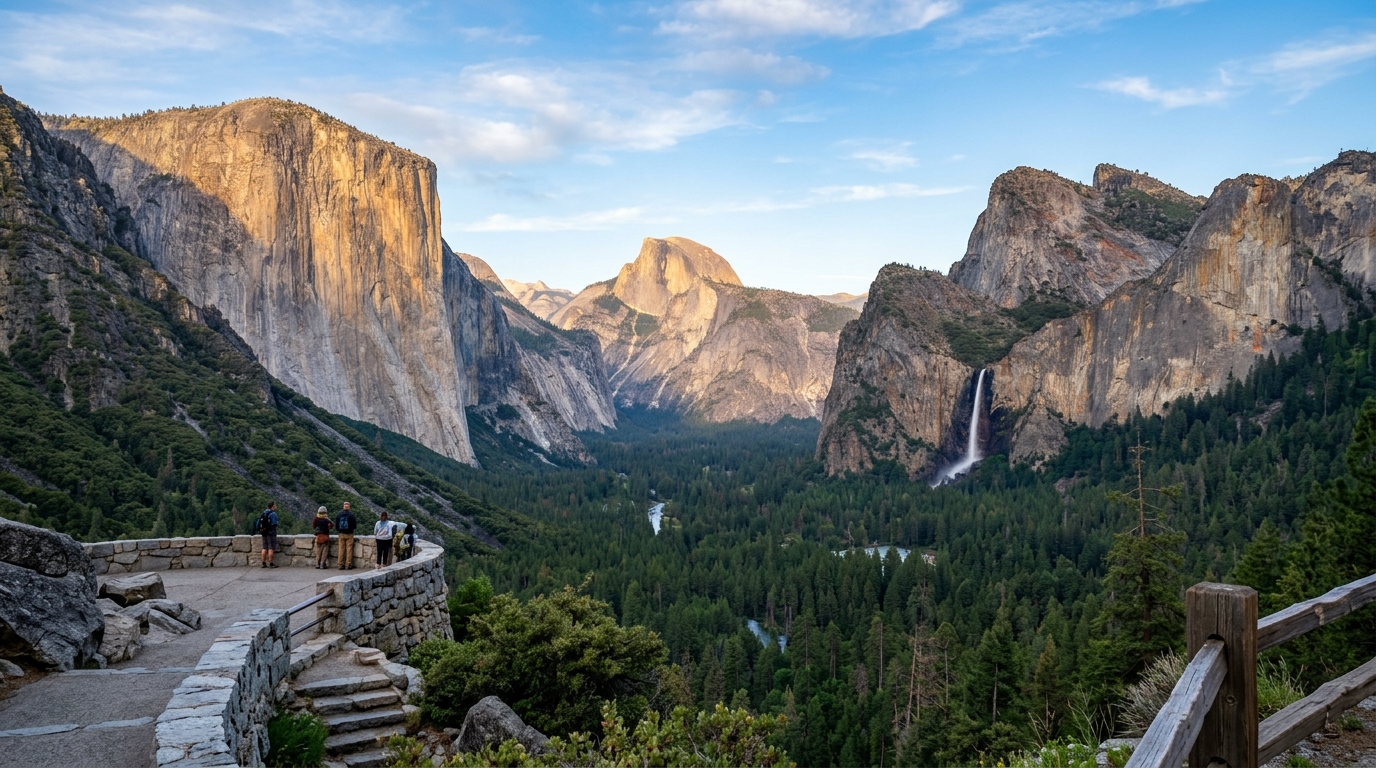
Yosemite National Park photography offers some of the most dramatic mountain landscapes in the world, combining towering granite walls with winding rivers and ancient forests. Capturing these massive natural scenes successfully requires more than just showing up with a camera. Yosemite National Park photography demands careful planning around strict park rules, shifting seasonal weather, and specific mountain light. Knowing how to navigate these elements helps photographers capture images that truly show the raw beauty of the region.
Navigating Access Rules and Reservation Systems for Yosemite National Park Photography
Photographers planning a trip must check current park entry rules and permit requirements because regulations often change based on the season and daily visitor volume. If you are pressed for time, learning how to plan Yosemite National Park in two days can save you countless hours behind the wheel.
Yosemite National Park photography frequently involves commercial filming or specific permit needs if photographers use commercial equipment setups or stage professional shoots with models. Drones are strictly prohibited across all areas of Yosemite National Park to protect wildlife and maintain the peaceful experience of other visitors. Visitors must always stay on established trails to protect fragile meadows and wildlife habitats while capturing images.
Planning Around Seasonal Shifts and Mountain Weather
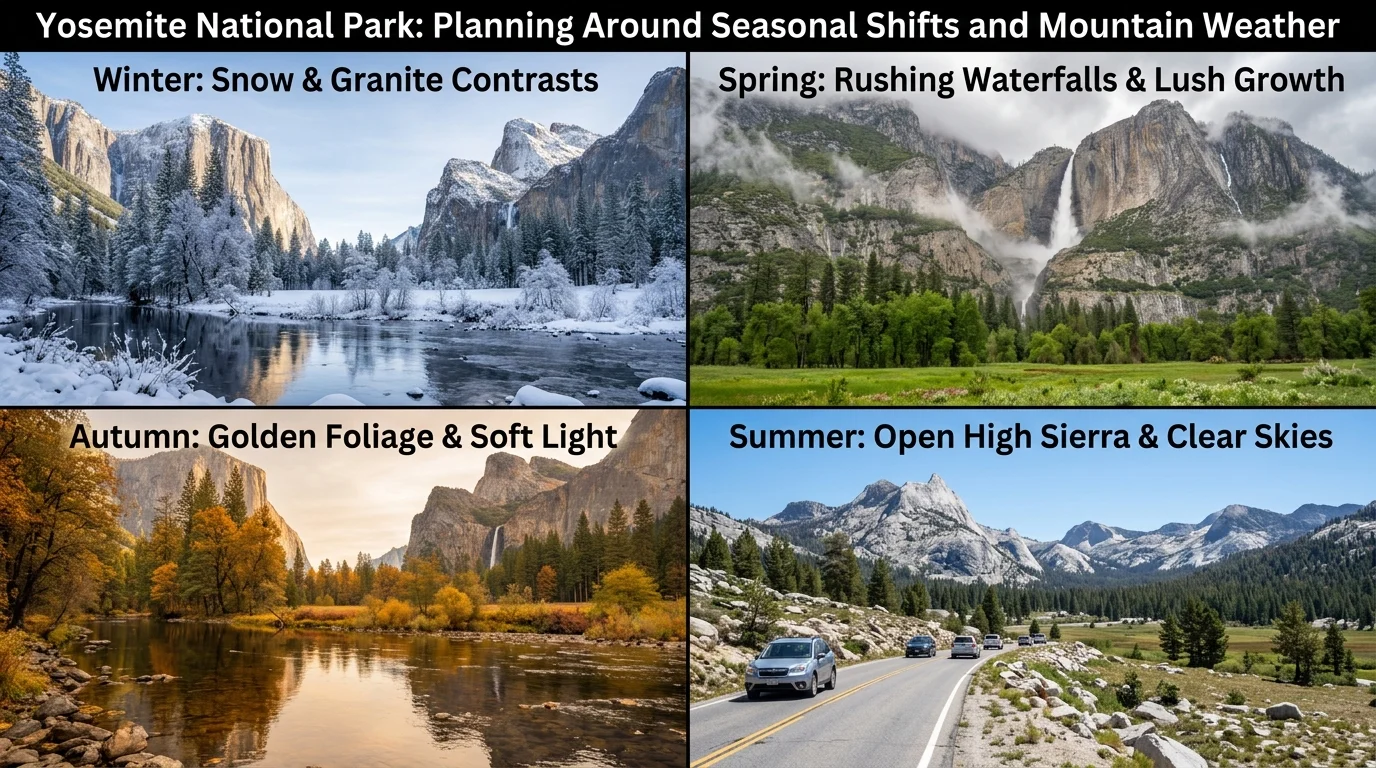
Winter snow, spring snowmelt, summer crowds, and autumn colors completely change the visual character of Yosemite National Park photography throughout the year.
Spring brings rushing waterfalls because melting snow feeds famous landmarks like Yosemite Falls and Bridalveil Fall. Winter covers the valley floor in white snow, creating stark contrasts against dark granite cliffs like El Capitan and Half Dome. Summer offers clear roads and open access to high-elevation areas, though midday light can be harsh and bright. Autumn introduces warm golden tones to the oak trees along the Merced River, providing softer light for landscape compositions. For seasonal comparison tips, you can also read about Zion National Park in fall weather patterns and autumn foliage timing.
Framing Iconic Valley Monoliths and High Overlooks
Valley viewpoints and high-elevation overlooks provide the best framing for Yosemite National Park photography across the entire park.
Tunnel View offers a classic sweeping vista of El Capitan, Half Dome, and Bridalveil Fall all in one frame. Valley View sits near the Merced River and gives a lower perspective that reflects the surrounding cliffs in calm water. Glacier Point provides an elevated angle looking down directly onto the valley floor and across at Half Dome. Valley floor meadows allow photographers to capture towering trees and river bends with massive granite monoliths rising straight up behind them.
| Location | Best Feature | Recommended Lens |
|---|---|---|
| Tunnel View | Classic panoramic valley vista | Wide-angle (24mm or 16-35mm) |
| Valley View | River reflections and cliffs | Standard zoom (24-70mm) |
| Glacier Point | High-altitude view of Half Dome | Telephoto (70-200mm) |
Packing Weather-Sealed Gear and Optical Filters
Carrying the right camera equipment ensures that photographers can handle the vast scale and unpredictable weather conditions inside Yosemite National Park.
A sturdy tripod is necessary for capturing sharp images during low-light conditions at sunrise and sunset. Weather-sealed camera bodies and lenses protect equipment from sudden rain showers, mist near waterfalls, and freezing winter temperatures. Circular polarizers help cut glare off wet rocks and foliage, while neutral density filters allow for long exposures of moving water in rivers and waterfalls.
Timing Golden Hour Light Against Granite Cliffs
Shooting during the golden hours of early morning and late evening provides the softest, most dramatic light for Yosemite National Park photography.

Sunrise lights up the upper faces of El Capitan and Half Dome with a warm, glowing orange color. Midday light creates harsh shadows and high contrast, making it a good time to rest or scout new locations instead of shooting. Evening light casts long shadows across the valley floor and highlights the rugged texture of the granite walls as the sun sets behind the mountains.
Disclaimer: Park reservation systems, road access rules, and weather conditions can change quickly. Always verify the latest guidelines and safety alerts from official park resources before starting any trip.
Are drones allowed for Yosemite National Park Photography?
No, drones are strictly prohibited everywhere inside Yosemite National Park to protect wildlife and preserve visitor quiet.
Do I need a special permit for Yosemite National Park Photography?
Standard park entrance passes cover regular photography, but commercial filming or professional photo shoots with models usually require a special permit.
What is the best month to visit for waterfall photography?
May and June are generally the best months for capturing powerful waterfalls because spring snowmelt flows heavily down the granite cliffs.
Can I access Glacier Point during winter?
Glacier Point Road closes to vehicles during the winter snow season, though cross-country skiers can still reach parts of the area.
What camera lens is most useful in Yosemite?
A standard zoom lens like a 24-70mm handles most valley scenes, while a telephoto lens helps isolate distant details on Half Dome.
Are bears a concern for photographers in Yosemite?
Black bears live throughout the park, so photographers must store all food and scented items securely in bear-proof lockers.
What is the famous Firefall event?
The Firefall is a rare natural event in February where the setting sun illuminates Horsetail Fall to look like glowing lava.
For those planning other dramatic western desert landscapes, deciding an ideal schedule for Death Valley is another great excursion. If your travel plans extend far to the north across international borders, you can also look into routes connecting US and Canadian parks.
I’m Muhammad Ubaid, founder of YBR Magazine. I research and write detailed guides on America’s National Parks — covering entry fees, permits, best times to visit, and planning tips — using official NPS sources and up-to-date information.