

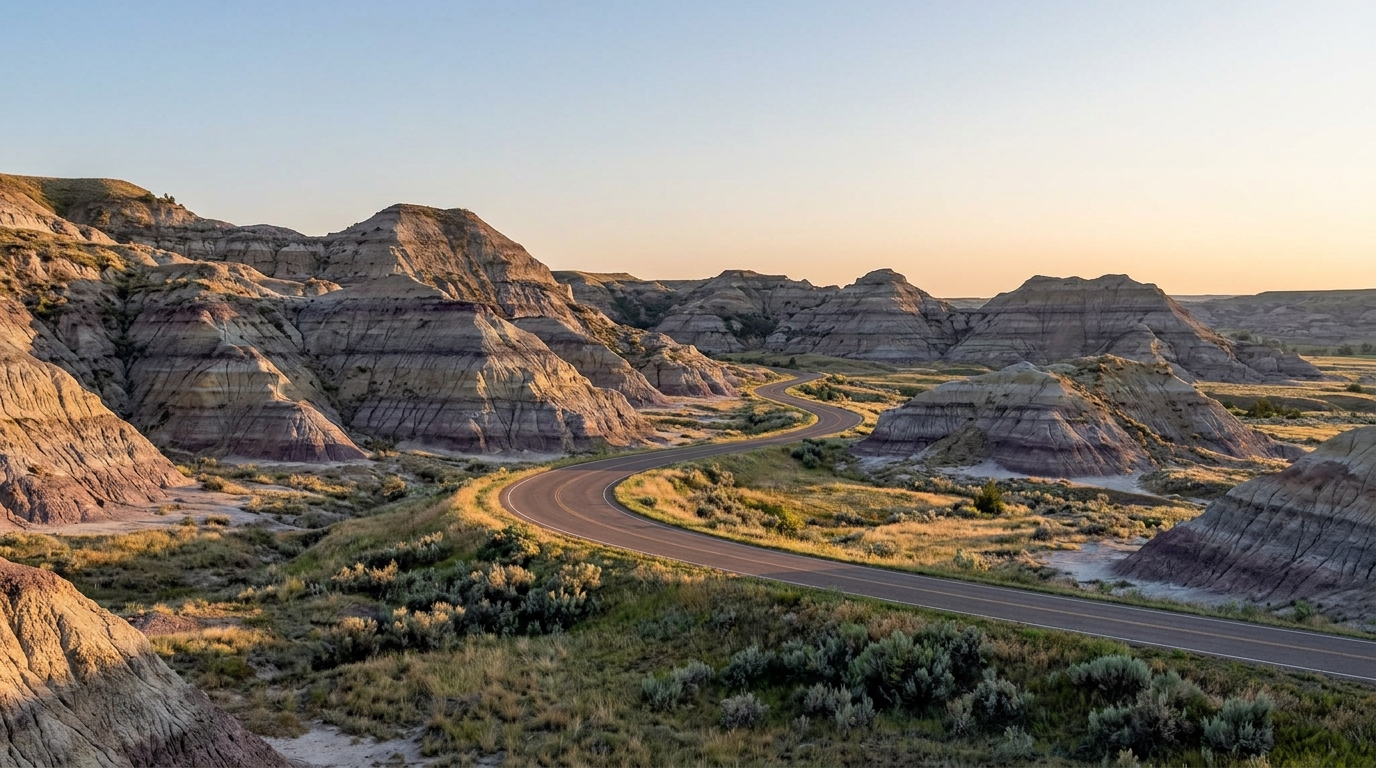
Theodore Roosevelt National Park sits out in the rugged badlands of western North Dakota. This unique destination preserves the sweeping views and raw terrain that inspired the conservation ethics of President Theodore Roosevelt. Unlike traditional national parks that visitors can tour by following a single continuous loop road, Theodore Roosevelt National Park is split into three separate sections known as the North Unit, the South Unit, and the Elkhorn Ranch Unit. Because these areas are separated by miles of open highway and farm country, travelers need careful logistical planning before arriving. Understanding how the badlands are laid out helps visitors avoid wasted driving time and make the most of their outdoor adventures.
Navigating the Separated Units of the Badlands
Visitors must understand that the North Unit and South Unit of Theodore Roosevelt National Park are separated by a long highway drive of roughly one hour and twenty minutes.
The South Unit sits directly alongside the historic town of Medora, offering immediate access to a scenic loop road and visitor center facilities. The North Unit sits much further north near Watford City, featuring a completely different wilderness feel with dramatic canyon walls and fewer crowds. The Elkhorn Ranch Unit rests in between the two main sections, holding the quiet, remote foundation site of Theodore Roosevelt’s original ranch home. Travelers should check official road conditions and weather updates through the National Park Service before setting out, because sudden heavy rain can make unpaved backcountry roads impassable. Planning separate days for each major unit prevents long, frustrating hours spent driving back and forth across empty interstate highways.
Exploring Top Sights and Trails Across the Park
Discovering the best landmarks requires a mix of scenic driving, short walks, and historical sightseeing across the badlands.
- Drive the South Unit Scenic Loop Drive: This thirty-six-mile paved road winds through deep canyons, prairie dog towns, and overlooks where bison frequently graze near the asphalt.
- Hike the Painted Canyon Trail: Located right off Interstate 94, this trail drops visitors directly into a colorful badlands basin filled with layered clay and sandstone formations.
- Visit the Maltese Cross Cabin: Situated right behind the South Unit Visitor Center in Medora, this historic log cabin served as President Theodore Roosevelt’s home on the open range.
- Drive the North Unit Scenic Road: This fourteen-mile road offers sweeping views of the Little Missouri River and leads to the dramatic overlook at Oxbow Bend.
- Walk the Caprock-Coulee Trail: This popular loop trail in the North Unit takes hikers through rugged ravines, wooded draws, and stunning badlands ridges.
Keeping Safe Around Badlands Wildlife
Wildlife viewing is one of the main highlights of visiting Theodore Roosevelt National Park, but safety requires keeping a respectful distance from large animals.
Bison, wild horses, mule deer, and elk roam freely throughout all sections of the park. While seeing a herd of bison crossing the road is thrilling, visitors must remember that these animals are completely wild and unpredictable. According to the National Park Service, visitors should stay at least twenty-five yards away from bison, feral horses, and elk at all times, and keep at least one hundred yards away from bears or mountain lions if encountered. Stepping too close for a photograph puts people at serious risk of being charged or injured. Bringing binoculars or a telephoto camera lens allows travelers to enjoy close-up views of the animals safely without disturbing their natural habits.

Practical Tips, Fees, and Park Rules
Knowing the operational rules and entrance fees helps travelers avoid unexpected delays during their vacation.
According to the National Park Service, an entrance fee is required for all private vehicles entering Theodore Roosevelt National Park, with passes valid for multiple consecutive days. Visitors can also use America the Beautiful interagency annual passes to cover their entry. Cell phone service is notoriously spotty or entirely missing across large parts of the badlands, so downloading offline maps before leaving town is essential. Summer afternoons bring intense heat and sudden thunderstorms, meaning hikers should carry plenty of drinking water and rain gear. For travelers planning broader regional road trips across western public lands, our guide on seeing and protecting park wildlife provides helpful context on sharing natural habitats responsibly.
Frequently Asked Questions
What is the best time of year to visit Theodore Roosevelt National Park?
The best time to visit is during the summer months from June through August, or in the shoulder season of September when autumn colors begin to appear. Winter brings freezing temperatures and heavy snow that can close park roads.
How many days do you need to see Theodore Roosevelt National Park?
Most travelers spend at least two to three full days exploring the park. This allows one full day for the South Unit, another day for the North Unit, and extra time to visit the Elkhorn Ranch site or hike longer trails.
Can you drive through the whole park on one road?
No, you cannot drive straight through the park on a single road because the North Unit and South Unit are physically separated by miles of outside highway. You must exit the park and drive around via public highways to travel between units.
Are pets allowed on hiking trails in Theodore Roosevelt National Park?
Pets are heavily restricted to protect native wildlife and park resources. According to the National Park Service, pets are only allowed on paved roads, parking areas, and picnic grounds, and they are strictly prohibited on all dirt hiking trails.
Is there camping available inside Theodore Roosevelt National Park?
Yes, the park features established campgrounds such as Cottonwood Campground in the South Unit and Juniper Campground in the North Unit. Sites are available on a first-come, first-served basis or via advance reservations during peak season.
Where should I stay if I want hotel lodging near the park?
The town of Medora sits directly adjacent to the South Unit entrance and offers numerous hotels, motels, and rental cabins. Watford City is the closest town with extensive lodging options for visiting the North Unit.
Disclaimer: Park hours, entrance fees, and weather conditions can change without warning. Always verify current operating details and safety alerts directly from official sources like the National Park Service before your trip.

I’m Muhammad Ubaid, founder of YBR Magazine. I research and write detailed guides on America’s National Parks — covering entry fees, permits, best times to visit, and planning tips — using official NPS sources and up-to-date information.