

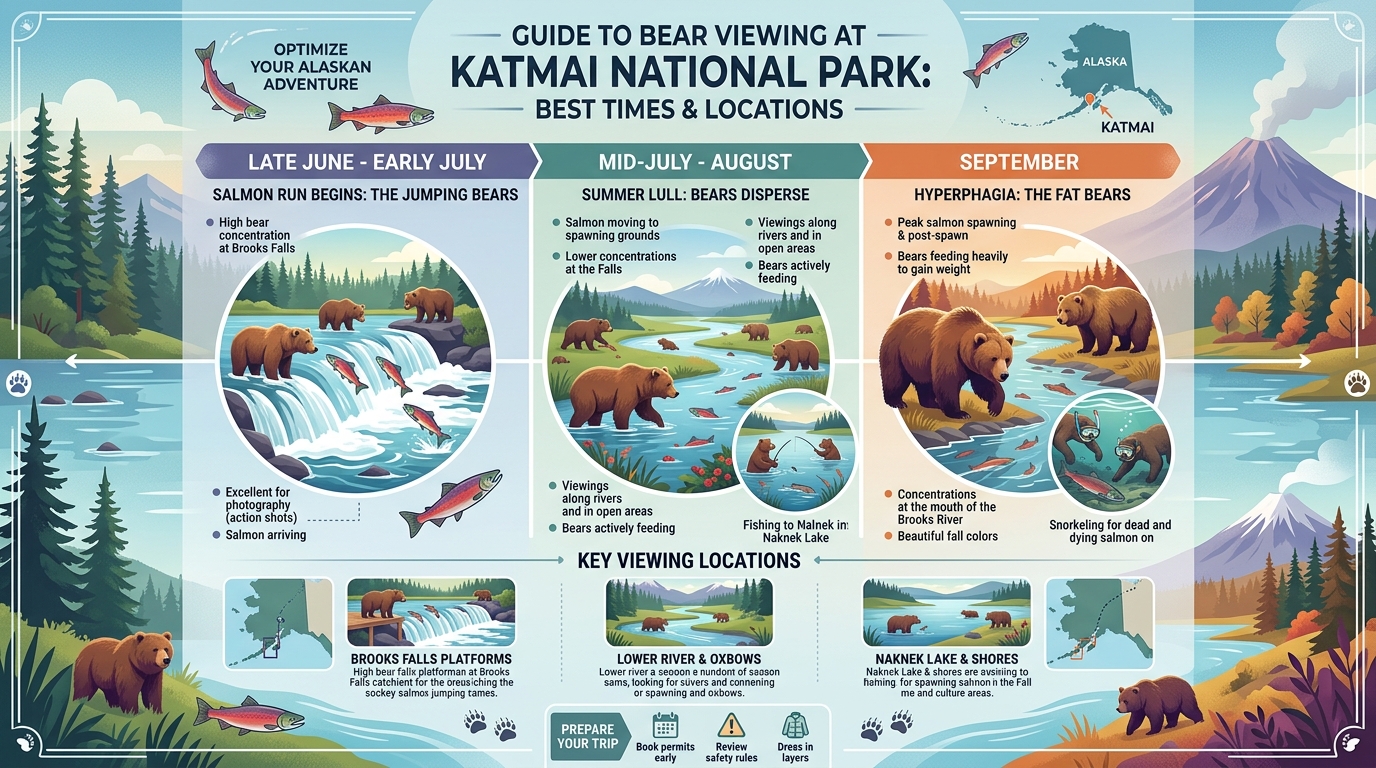
Planning a wilderness journey to watch brown bears requires understanding how seasonal salmon migrations dictate wildlife movement across remote Alaskan river systems. Knowing the best time to see bears at Katmai National Park helps travelers choose between the high-energy waterfall crowds of midsummer and the quieter, widespread feeding patterns of early autumn. Every month brings unique challenges related to floatplane travel, booking competition, and shifting animal behavior.
Understanding the Bear Seasons at Brooks Falls
The best time to see bears at Katmai National Park depends on whether travelers want to watch dramatic waterfall fishing in July or relaxed riverbank foraging in September.
Brown bear activity at Brooks Camp revolves entirely around the arrival of sockeye salmon pushing upstream from Naknek Lake. Early summer brings hungry bears emerging from winter dens to feed on early fish runs and sedge grass along the shorelines. As the season progresses, massive concentrations of brown bears gather at the falls, creating a predictable and world-famous wildlife viewing spectacle. Travelers interested in broader wildlife protection strategies can explore our guide on seeing and protecting native wildlife in protected natural areas.
Why July Offers the Classic Salmon-Fishing Action
July brings the highest concentration of bears to Brooks Falls as they compete for the first big wave of migrating salmon.
During peak weeks in July, wildlife photographers and day-trippers fill the wooden viewing platforms managed by the National Park Service. Because space on these platforms is limited to prevent overcrowding and stress for the bears, park rangers often enforce strict waiting systems and time limits. This high demand means visitors must accept heavy crowds, buzzing floatplanes, and intense competition for every square foot of viewing space near the water.
Why September is Best for Big, Relaxed Bears
September offers a quieter experience where you can watch massive, well-fed bears roam the lower river areas as the tourist crowds disappear.
By the time September arrives, the intense summer rush dissolves, leaving a much calmer environment around Brooks Camp and the surrounding waterways. The brown bears have spent months gorging on rich salmon, making them remarkably large, calm, and focused entirely on gathering final fat reserves before winter hibernation. While the famous waterfall action slows down because the main salmon run concludes, bears remain highly visible along the river as they dig for clams and rest in the crisp autumn air.
The Hidden Challenge of Booking Brooks Camp Permits and Lodging
Securing a spot to stay near the bears requires booking many months ahead through the National Park Service and official concessionaires.
Visiting Katmai National Park involves navigating a highly competitive reservation system for the limited cabins and campsites available at Brooks Camp. According to the National Park Service, overnight permits and lodge rooms often book out nearly a full year in advance when reservation windows open. Day-trippers face stiff competition as well, as water taxi and floatplane seats fill up quickly, leaving little room for spontaneous travel plans.
How Weather and Remote Travel Can Disrupt Your Trip
Flying into Katmai National Park on small floatplanes means sudden weather delays can easily alter your travel schedule and budget.
Because no roads connect to Katmai National Park, every visitor must arrive via small bush planes or water taxis operating out of coastal Alaskan hubs like King Salmon or Homer. Unpredictable weather, thick fog, and high winds frequently ground these small aircraft for hours or even days at a time. Visitors must build extra schedule flexibility into their vacation itineraries to account for potential travel disruptions and emergency lodging expenses.

Essential Rules for Staying Safe Around Katmai Bears
Following the strict safety guidelines from the National Park Service protects both visitors and the local bear population.
Human safety in bear country requires strict adherence to regulations enforced by park rangers, who provide mandatory orientation talks to every arriving visitor. According to the National Park Service, visitors must maintain a safe distance from all wildlife, store food in designated bear-resistant containers, and never approach animals on foot. Respecting these boundaries ensures that the brown bears at Katmai National Park remain wild and undisturbed by human presence.
Frequently Asked Questions
When is the absolute peak time to see bears at Katmai National Park?
The peak viewing window occurs in July when salmon jump at Brooks Falls, and again in September when massive bears feed heavily along the rivers.
Can I visit Katmai National Park as a day trip?
Yes, many visitors fly in for a single day from King Salmon or Homer, though weather delays can occasionally disrupt day-trip schedules.
Do I need a permit to visit Brooks Camp?
Yes, visiting the Brooks Camp area requires advance planning, and specific day-use or overnight permits or reservations are required through official park systems.
How do I get to Katmai National Park?
The park has no roads, so visitors must travel by floatplane, small bush plane, or boat from nearby Alaskan towns.
Are bear viewing platforms crowded in July?
July is the busiest month of the year, meaning viewing platforms at Brooks Falls often have strict visitor limits and waiting times.
What should I do if a bear approaches me?
Visitors must follow National Park Service guidelines, which include staying calm, avoiding running, speaking in a firm voice, and maintaining required distances.
Is lodging available inside Katmai National Park?
Limited cabins and a campground operate at Brooks Camp through official concessionaires, but they sell out almost a full year in advance.
Disclaimer: Park regulations, weather conditions, and permit rules can change. Always verify current details directly through the National Park Service before planning your trip.

I’m Muhammad Ubaid, founder of YBR Magazine. I research and write detailed guides on America’s National Parks — covering entry fees, permits, best times to visit, and planning tips — using official NPS sources and up-to-date information.