

Planning a trip to a remote high-desert destination requires looking closely at seasonal shifts, road conditions, and elevation changes rather than just checking standard vacation months. When travelers look for the best time to visit Great Basin National Park, they often overlook how winter weather shapes the landscape for most of the year. Great Basin National Park sits in eastern Nevada, far away from large cities, and its extreme geography defines every single travel decision.
Summer: The Only Window for Full Wheeler Peak Access
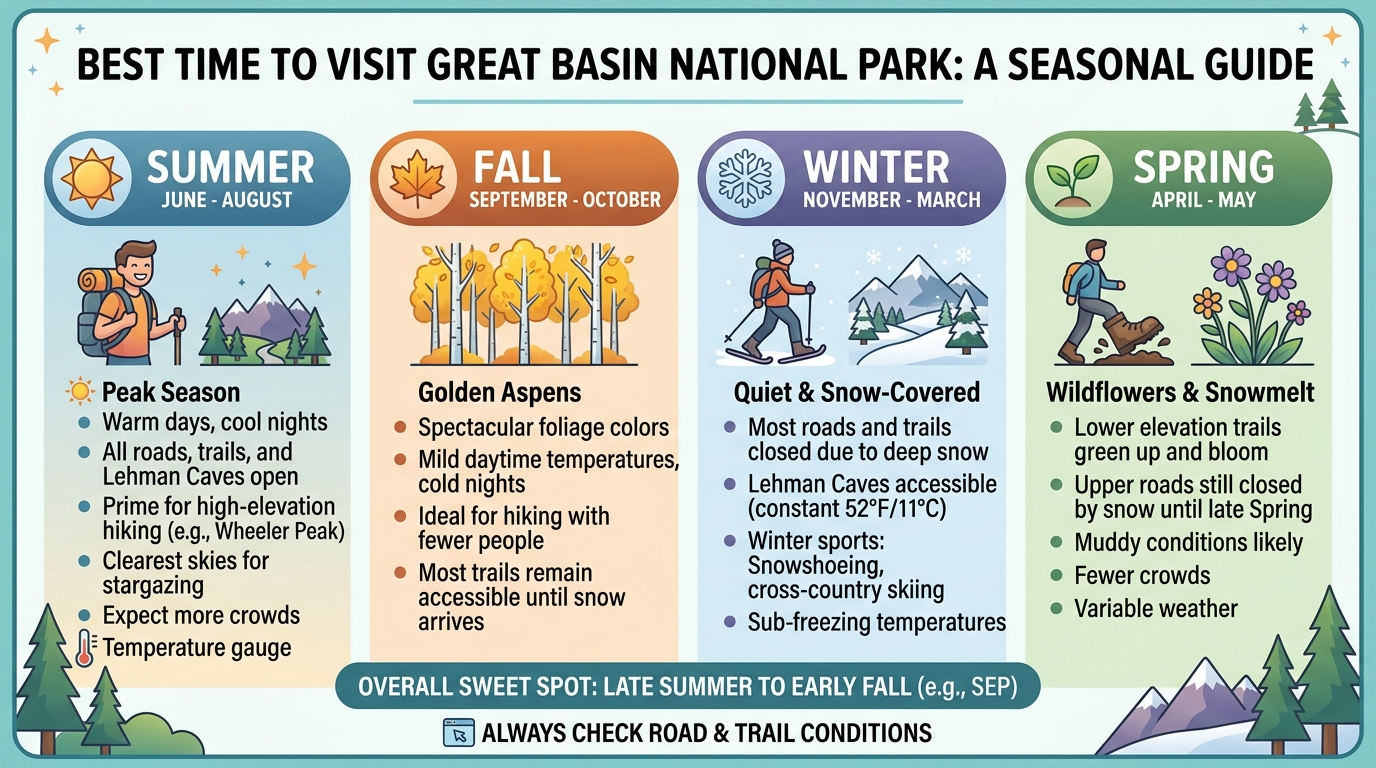
Summer is the best time to visit Great Basin National Park if you want to drive up Wheeler Peak Scenic Drive and explore the high-altitude hiking trails without snow blockages.
During July and August, daytime temperatures in the lower areas of Great Basin National Park can be warm and pleasant. Higher up near the ten-thousand-foot mark, temperatures stay much cooler, providing a welcome break from desert heat. Wheeler Peak Scenic Drive usually opens fully by late June or early July, depending entirely on how much snow fell during the previous winter months. Hikers can access popular alpine routes like the Bristlecone Pine Trail and the Glacier Trail during this short summer window. However, visitors must prepare for afternoon thunderstorms that bring sudden lightning risks to exposed alpine ridges.
Fall: Crisp Air and Peak Stargazing Conditions
Autumn offers some of the clearest skies and most comfortable daytime hiking weather in the entire region.
September and early October bring crisp air, turning autumn leaves gold in select canyon areas around Lehman Creek. Because Great Basin National Park is famous for having some of the darkest night skies in the United States, autumn nights provide incredible stargazing opportunities as the sun sets earlier in the evening. Park rangers often host astronomy events during these clear autumn months when the Milky Way stretches vividly overhead. Travelers should keep a close eye on the weather forecast during this time, because early autumn snowstorms can sweep into the high peaks without warning and close Wheeler Peak Scenic Drive abruptly.
Spring: High Uncertainty and Snow-Blocked Alpine Trails
Spring is generally a difficult season for travelers hoping to explore the upper elevations of Great Basin National Park.
March, April, and May bring heavy mountain snowpacks that linger long after the surrounding Nevada valleys warm up. Wheeler Peak Scenic Drive remains closed to vehicles during most of the spring season due to deep snow drifts and avalanche hazards. Lower trails might be clear of snow, but hikers will often encounter muddy paths and chilly winds sweeping off the peaks. Travelers visiting during spring should stick to lower valley walks and check daily road conditions directly through the National Park Service before making the long drive into the basin.
Winter: Deep Snow and Complete High-Elevation Isolation
Winter turns Great Basin National Park into a quiet, snow-covered landscape meant only for solitude and specialized winter recreation.
From November through May, heavy snowfall completely shuts down the main scenic drive and most backcountry trailheads to motor vehicles. Rangers staff the visitor center year-round, but visitor numbers drop sharply as freezing temperatures set in across the high desert. Cross-country skiers and snowshoers occasionally venture into the lower canyons when snow conditions permit safe travel. Driving along the highways near Great Basin National Park in winter requires proper winter tires, emergency supplies, and extreme caution due to blowing snow and icy mountain passes.

Practical Downsides and Safety Warnings to Keep in Mind
Visitors must understand the unique physical challenges and remote nature of Great Basin National Park before arriving.
The park features extreme elevation changes, with the visitor center sitting around six thousand eight hundred feet and Wheeler Peak rising past thirteen thousand feet. Driving straight from low elevations up to the higher viewpoints can trigger altitude sickness, causing headaches, dizziness, and fatigue. Cell service is virtually non-existent inside most of Great Basin National Park, making digital maps and online travel planning useless once you arrive. Furthermore, gas stations and grocery stores are very limited in the immediate surrounding area, requiring drivers to fill their tanks and stock up on supplies well before reaching the park boundaries. For travelers interested in exploring other remote wilderness environments or looking for trip ideas during different months, reading about finding the best national park to visit in october for fall foliage and mild weather can help broaden your travel calendar with other seasonal highlights.
Frequently Asked Questions
When does Wheeler Peak Scenic Drive open each year?
Wheeler Peak Scenic Drive usually opens by late June or early July, depending entirely on the amount of winter snowfall and spring melting rates.
Is Great Basin National Park crowded during the summer?
Great Basin National Park remains one of the least visited national parks in the country, meaning summer crowds are very small compared to major destination parks.
Can I see the ancient bristlecone pines in the winter?
The trails leading to the ancient bristlecone pine groves are buried under deep snow during winter and spring, making them inaccessible to casual hikers.
What should I pack for summer weather in the park?
Visitors should pack layers for sudden temperature drops, sturdy hiking boots, rain gear for afternoon thunderstorms, and plenty of drinking water.
Are pets allowed on hiking trails in Great Basin National Park?
Pets are restricted to parking lots, campgrounds, and designated administrative roads to protect local wildlife and fragile alpine ecosystems.
Is there an entrance fee for Great Basin National Park?
According to the National Park Service, there is no entrance fee required to enter Great Basin National Park.

I’m Muhammad Ubaid, founder of YBR Magazine. I research and write detailed guides on America’s National Parks — covering entry fees, permits, best times to visit, and planning tips — using official NPS sources and up-to-date information.