

When travelers first look into national parks Alabama destinations, they often expect massive mountain ranges and deep alpine wilderness areas like those found out west. Instead, the National Park Service manages a very different kind of experience in the Yellowhammer State. Official units in Alabama focus heavily on profound American history, civil rights milestones, military heritage, and unique southern ecosystems featuring deep sandstone canyons, winding rivers, and ancient limestone caves. Knowing what these distinct sites actually offer helps visitors plan a realistic, meaningful itinerary.
Understanding Official Federal Units Versus State Lands
Official national park sites in Alabama focus more on American history and distinct southern ecosystems than on massive wilderness areas.
Travelers exploring national parks Alabama options frequently get confused because many popular scenic spots in the state are actually state parks, national forests, or wildlife refuges managed by separate agencies. The official National Park Service units protect specific cultural and natural treasures rather than vast tracts of backcountry land. Recognizing this distinction prevents confusion and ensures you visit the exact historic monuments or preserves you set out to see.
Exploring Little River Canyon National Preserve
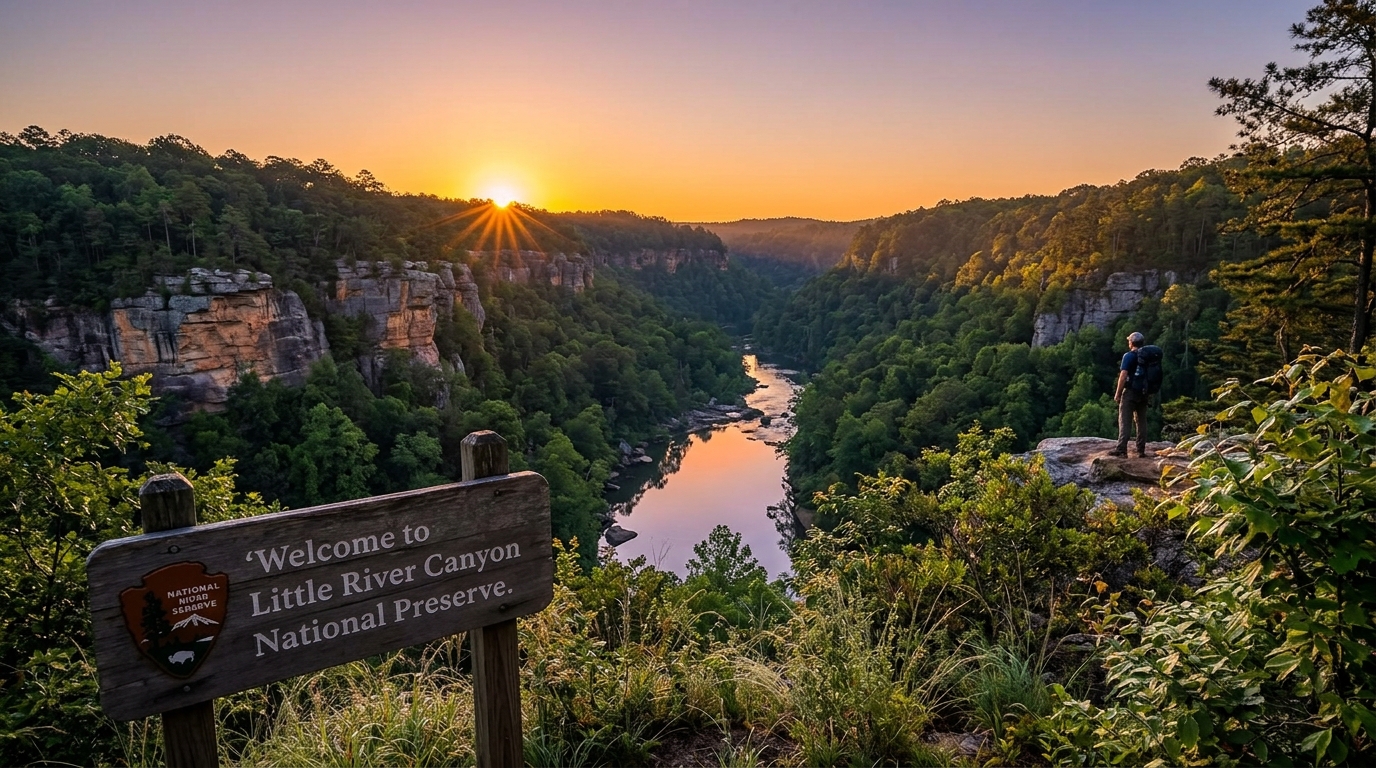
Little River Canyon National Preserve protects a deep sandstone canyon with rare plant life, waterfalls, and scenic driving routes.
Perched atop Lookout Mountain, Little River Canyon National Preserve delivers some of the best outdoor recreation managed by federal authorities in the region. Visitors can enjoy hiking trails, fishing, whitewater paddling, and stunning overlooks along the canyon rim. The preserve protects one of the highest free-flowing river systems in the region, creating a rich habitat for rare plants and animals that thrive in the gorge.
Uncovering History at Russell Cave National Monument
Russell Cave National Monument preserves a massive limestone rock shelter that shows evidence of thousands of years of human habitation.
Russell Cave National Monument gives visitors a fascinating look into prehistoric life in the northern part of Alabama. Archaeologists have uncovered a nearly continuous record of human habitation dating back over ten thousand years within the cavern walls. A dedicated visitor center and museum showcase artifacts left behind by indigenous peoples, while short walking trails let visitors explore the lush surrounding valley.
Walking Through Tuskegee Institute National Historic Site
Tuskegee Institute National Historic Site preserves the historic campus founded by Booker T. Washington and honors the legacy of George Washington Carver.
Tuskegee Institute National Historic Site preserves a vital cornerstone of American higher education and civil rights history. Booker T. Washington founded the school in 1881, and renowned scientist George Washington Carver conducted his groundbreaking agricultural research right on the grounds. Visitors can tour the campus, explore historic buildings, and learn about the profound impact of these educational pioneers.
Honoring Aviation Pioneers at Tuskegee Airmen National Historic Site
Tuskegee Airmen National Historic Site honors the courageous Black military pilots who trained during World War II at Moton Field.
Located just a short drive from the university campus, the Tuskegee Airmen National Historic Site commemorates the first African American military aviators who served during World War II. Moton Field served as the primary flight training facility for these historic pilots. Today, a modern museum honors their courage, resilience, and lasting contributions to military aviation history.
Tracing the Selma to Montgomery National Historic Trail
The Selma to Montgomery National Historic Trail marks the route of the historic 1965 voting rights marches led by civil rights activists.
The Selma to Montgomery National Historic Trail spans a fifty-four-mile driving route along US Highway 80. This trail commemorates the courageous marchers who fought for voting rights under the leadership of civil rights icons. Interpretive centers located in Selma, Lowndes County, and Montgomery provide deep historical context and powerful exhibits documenting this pivotal era.
Logistics and Practical Planning for Your Trip
Planning a trip to national park sites in Alabama requires checking individual operating hours, seasonal weather conditions, and visitor center schedules.
Because these sites are spread across different geographic regions of the state, checking official operating hours before you leave is essential. Weather in Alabama can be warm and humid in the summer, making spring and fall the most comfortable times for outdoor exploration. Always verify current conditions on the official National Park Service website to ensure a smooth and well-organized journey. For travelers interested in expanding their federal lands adventures, exploring other regions like western region national parks guide offers a wonderful contrast to southern historic sites.
Frequently Asked Questions
Are there any traditional national parks with mountains in Alabama?
No, Alabama does not have any large national parks of that type, but it features national preserves, historic sites, and monuments managed by the National Park Service.
Do you have to pay an entry fee to visit national park sites in Alabama?
Most historical sites and preserves in Alabama are free to enter, though certain museum areas or special programs may have specific guidelines.
Which national park site in Alabama is best for hiking?
Little River Canyon National Preserve offers the best hiking trails, scenic overlooks, and outdoor recreation in the state.
Can I visit the Tuskegee Airmen site and the Tuskegee Institute on the same day?
Yes, both sites are located close to each other in Tuskegee, making it easy to visit them together.
How long is the Selma to Montgomery National Historic Trail?
The trail spans a fifty-four-mile driving route along US Highway 80 with key interpretive centers located in Selma, Lowndes County, and Montgomery.
Are dogs allowed at national park sites in Alabama?
Rules vary by location, so pets are generally allowed on certain outdoor trails at Little River Canyon, but they are typically restricted inside historic buildings and museums.
Who should I contact for the most current travel alerts?
Always check the official National Park Service website for the most current operating hours, weather alerts, and facility updates before you travel.

I’m Muhammad Ubaid, founder of YBR Magazine. I research and write detailed guides on America’s National Parks — covering entry fees, permits, best times to visit, and planning tips — using official NPS sources and up-to-date information.