

Introduction to Exploring Rocky Mountain National Park Trails
Planning outdoor adventures in Rocky Mountain National Park requires careful thought because of high altitudes and wide terrain variations. When searching for the best Rocky Mountain National Park hikes, visitors must balance physical fitness with unpredictable mountain weather. Rocky Mountain National Park offers everything from gentle meadow strolls to steep alpine climbs that test physical endurance. Understanding trail lengths, elevation gains, and local weather patterns helps ensure a safe and memorable journey.
Best Easy and Short Hikes in Rocky Mountain National Park
Finding gentle and shorter trails in Rocky Mountain National Park helps beginners, families, and travelers adjusting to high altitudes find accessible walking options. Short routes provide a great way to experience alpine scenery without overexerting lungs and muscles on steep inclines. Bear Lake Nature Trail stands out as a top choice for a short, scenic walk around a peaceful subalpine lake. The trail spans a fraction of a mile and features flat, well-maintained paths with informative signs about local plants and wildlife. Another gentle option is the Sprague Lake loop, which offers wide-angle views of the surrounding peaks while keeping physical effort low. Visitors should take these easy walks slowly to let their bodies adjust to the thinner mountain air before attempting longer routes. Taking the time to acclimatize properly makes subsequent days on more demanding paths much safer and more enjoyable for every member of the traveling group.
Top Day Hikes and Alpine Lake Trails in Rocky Mountain National Park
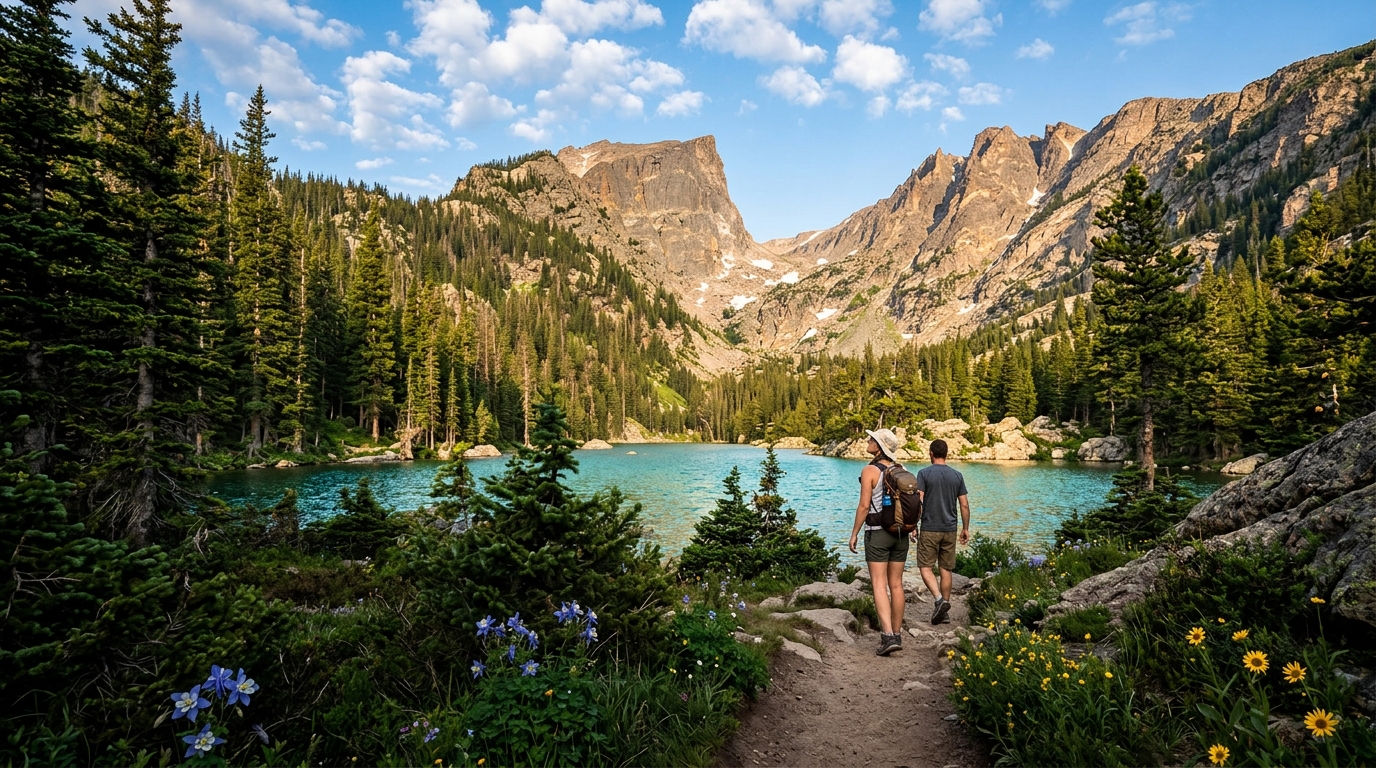
Moderate to challenging full-day routes in Rocky Mountain National Park reward hikers with stunning alpine views and pristine water features. The Emerald Lake trail ranks among the most popular choices because it passes multiple scenic lakes, including Nymph Lake and Dream Lake, before reaching Emerald Lake. This moderate trek covers about three and a half miles round-trip and climbs steadily through pine forests and rocky granite terrain. For experienced hikers seeking a more strenuous adventure, the Sky Pond trail delivers dramatic cliffs, rushing waterfalls, and a stunning alpine lake tucked beneath steep rock walls. Sky Pond requires careful footing over boulder fields and steep sections, making proper footwear and preparation essential. Hikers on these longer routes should always keep an eye on changing sky conditions because alpine storms can develop rapidly during afternoon hours.
Waterfall Hikes and Scenic Routes in Rocky Mountain National Park
Trails featuring rushing water and unique forest scenery provide specific natural landmarks for visitors exploring Rocky Mountain National Park. Alberta Falls is a roaring waterfall located along a popular route that branches off toward major alpine lakes. The hike to Alberta Falls is relatively short, making it accessible for families who want to see rushing mountain water up close without committing to a full-day trek. Timber Lake Trail offers a longer, quieter forest journey that leads to a remote lake tucked away on the western side of the park. Exploring these water-focused paths showcases the diverse ecosystems thriving within Rocky Mountain National Park while offering quieter moments away from the busiest central corridors.

Essential Practical Tips for Hiking in Rocky Mountain National Park
Managing altitude sickness, packing layers, monitoring weather changes, and checking official park entry rules remain crucial for a successful trip. High-altitude sun is strong, and afternoon thunderstorms develop quickly during summer months, requiring hikers to start early in the morning and carry waterproof jackets. Dehydration happens faster in thin air, so drinking plenty of water before and during the hike is vital. Additionally, visitors should always check official park websites for current timed-entry permit systems, parking updates, and shuttle schedules before driving to trailheads.
For outdoor enthusiasts who enjoy comparing different regional trails across the United States, checking out other mountain regions like our rugged high-altitude mountain routes guide provides great inspiration for future adventures.
Frequently Asked Questions About Rocky Mountain National Park Hikes
What is the most popular hike in Rocky Mountain National Park?
The Emerald Lake trail is widely considered the most popular hike because it offers incredible alpine lake views without requiring an overly long trek.
Are there easy trails for beginners and families?
Yes, Bear Lake Nature Trail and Sprague Lake provide flat, short walks that are perfect for families and visitors who are still getting used to the altitude.
Do I need a permit to hike in Rocky Mountain National Park?
The park frequently uses a timed-entry permit system during peak months to manage visitor numbers, so visitors must check official rules before arriving.
How can I avoid altitude sickness on the trails?
Staying well-hydrated, eating enough food, and giving your body a day or two to rest at lower elevations before tackling strenuous hikes helps prevent altitude sickness.
When is the best time of year to hike in the park?
July through September offers the most reliable snow-free trail conditions, although afternoon thunderstorms are common during these summer months.
Can I take a shuttle to popular trailheads?
Yes, the park operates a seasonal hiker shuttle system that connects major trailheads and reduces parking congestion in popular areas.
Are dogs allowed on hiking trails in Rocky Mountain National Park?
No, pets are not permitted on any dirt hiking trails or tundra areas within the park to protect local wildlife and natural resources.

I’m Muhammad Ubaid, founder of YBR Magazine. I research and write detailed guides on America’s National Parks — covering entry fees, permits, best times to visit, and planning tips — using official NPS sources and up-to-date information.